
If you’ve tried gym memberships, restrictive diets, or intense workout apps and still haven’t found something that sticks, yoga might be exactly what you’re missing. It’s not about forcing your body into extreme positions or burning the most calories possible in an hour — it’s about building a sustainable practice that supports weight loss from multiple angles: movement, muscle, metabolism, and mindset.
This guide breaks down everything a beginner needs to know about yoga for weight loss — how it actually works, which styles are most effective, the best poses to start with, and a complete beginner routine you can follow from day one.
Does Yoga Actually Help with Weight Loss?
Yes — though not in the same way a high-intensity cardio session does. Yoga supports weight loss through several combined effects:
1. It builds lean muscle. More active styles engage your arms, legs, and core repeatedly through bodyweight poses. More muscle mass raises your resting metabolic rate, meaning you burn more calories even when you’re not exercising.
2. It elevates your heart rate. Dynamic styles like Vinyasa and Power Yoga link continuous movement with breath, creating a workout that can meaningfully raise your heart rate and support calorie burn, even though it’s gentler than running or HIIT.
3. It lowers cortisol. Chronic stress raises cortisol, a hormone linked to increased fat storage and cravings. Yoga’s breathing techniques and mindful movement help bring stress hormones down over time.
4. It reduces emotional eating. The mindfulness cultivated through yoga practice can help you notice emotional eating patterns and make more intentional choices around food.
5. It improves sleep. Better sleep quality is closely tied to healthy weight regulation, and gentler yoga styles are known to support deeper, more restful sleep.
Keep in mind: yoga is not a substitute for a balanced diet, but as part of a broader lifestyle approach, it’s a powerful and sustainable tool.
Best Yoga Styles for Weight Loss
Not all yoga is created equal when your goal is weight loss. Some styles are far more physically demanding than others.
- Vinyasa (Flow) Yoga — Poses flow continuously from one to the next, synced with breath. This constant movement raises your heart rate and burns more calories than static styles.
- Power Yoga — A more vigorous, fitness-focused variation of Vinyasa, often incorporating strength-building sequences.
- Ashtanga Yoga — A structured series of poses performed in a set order. It’s physically demanding and builds both strength and cardiovascular conditioning through repetition.
- Hot Yoga — Practiced in a heated room, which can increase sweat and heart rate, though it requires careful hydration.
- Hatha Yoga — Slower-paced and beginner-friendly, ideal for building foundational strength and flexibility before progressing to more dynamic styles.
- Restorative or Yin Yoga — Very gentle and slow-paced. While it won’t burn many calories directly, it’s excellent for stress reduction and recovery, both of which indirectly support weight management.
Beginner tip: Start with Hatha Yoga to learn proper alignment, then gradually incorporate Vinyasa or Power Yoga sessions as your strength and confidence build.
How Often Should Beginners Practice?
If yoga is your primary form of exercise, aim for 3–5 sessions per week, mixing more dynamic flows with gentler, restorative sessions to allow recovery. If you’re combining yoga with other workouts, 1–2 sessions per week can support flexibility and recovery alongside your main training. Even a simple 15–20 minute daily routine can produce noticeable results when practiced consistently over several weeks.
14 Beginner-Friendly Yoga Poses for Weight Loss
1. Mountain Pose (Tadasana)

Stand tall with feet together, arms by your sides, shoulders relaxed. Engage your thighs and core, lengthen your spine, and breathe deeply for several breaths.
Why it helps: Establishes proper alignment and body awareness — the foundation every other pose builds on.
2. Sun Salutations (Surya Namaskara)

A flowing sequence linking Mountain Pose, Forward Fold, Halfway Lift, Plank, Cobra, and Downward Dog together with breath. Repeat the full sequence 5–10 times.
Why it helps: Engages your entire body, raises your heart rate, and builds strength, flexibility, and stamina all in one flow — making it one of the most efficient weight-loss sequences in yoga.
3. Downward-Facing Dog (Adho Mukha Svanasana)

From all fours, tuck your toes and lift your hips up and back into an inverted V-shape, pressing your heels toward the floor. Hold for 20–30 seconds.
Why it helps: Engages your arms, shoulders, core, and legs simultaneously while stretching the hamstrings and calves.
4. Plank Pose (Phalakasana)
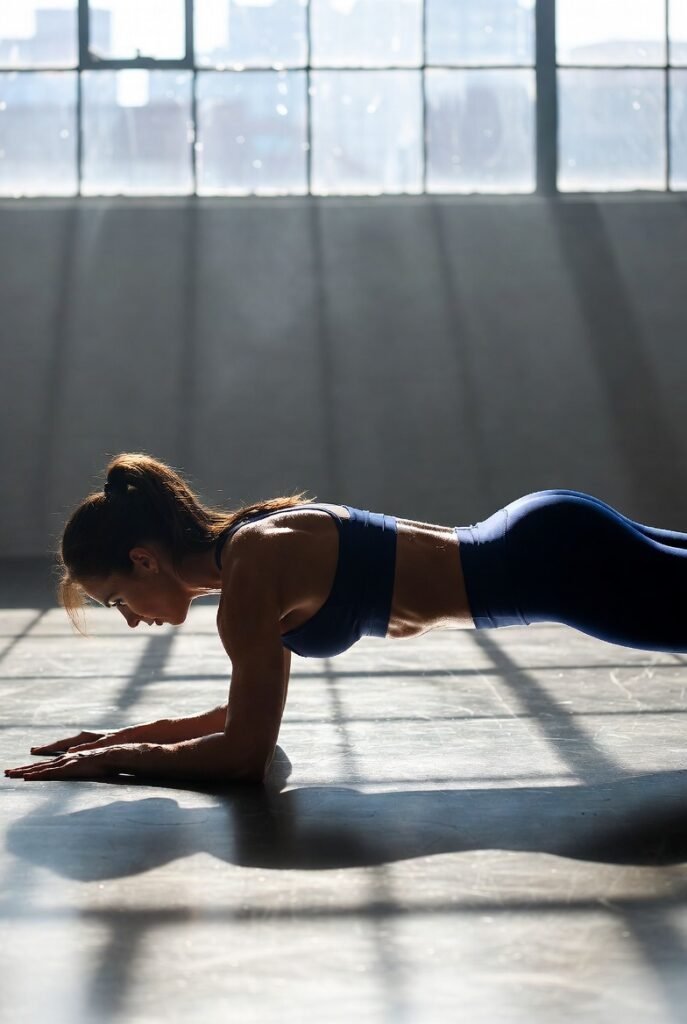
From a push-up position, keep your body in a straight line from head to heels, engaging your core. Hold for 20–40 seconds.
Why it helps: One of the most effective full-body strength builders in yoga, activating your core, shoulders, and legs at once.
Read Also: Well Fit Look
5. Chair Pose (Utkatasana)

Stand with feet together, bend your knees as if sitting into an invisible chair, and raise your arms overhead. Hold for 20–30 seconds.
Why it helps: Builds serious strength in the thighs, glutes, and core — a highly effective calorie-burning pose for beginners.
6. Warrior I (Virabhadrasana I)
Step one foot back into a lunge, back foot angled slightly outward, front knee bent to 90 degrees. Raise both arms overhead and hold for 20–30 seconds per side.
Why it helps: Builds lower-body strength and stamina while improving balance and hip mobility.
7. Warrior II (Virabhadrasana II)

From a wide stance, bend your front knee to 90 degrees while keeping your back leg straight. Extend your arms parallel to the floor, gazing over your front hand. Hold for 20–30 seconds per side.
Why it helps: Strengthens the legs and core while building the stamina needed for more dynamic flows.
8. Boat Pose (Naukasana)
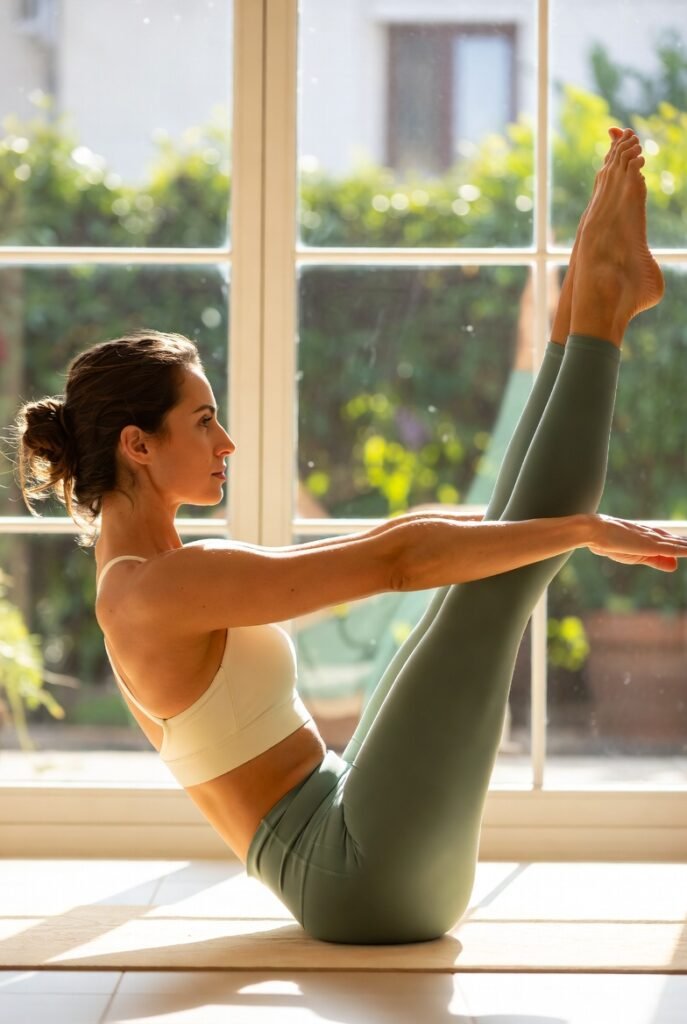
Sit with knees bent, lean back slightly, and lift your feet off the floor, extending your legs if comfortable. Extend your arms forward and hold for 15–30 seconds.
Why it helps: Directly targets the core and hip flexors, helping tone the midsection.
9. Bridge Pose (Setu Bandhasana)

Lie on your back, knees bent, feet flat. Press into your feet and lift your hips toward the ceiling. Hold for 20–30 seconds.
Why it helps: Strengthens the glutes, hamstrings, and core while also improving posture.
10. Triangle Pose (Trikonasana)
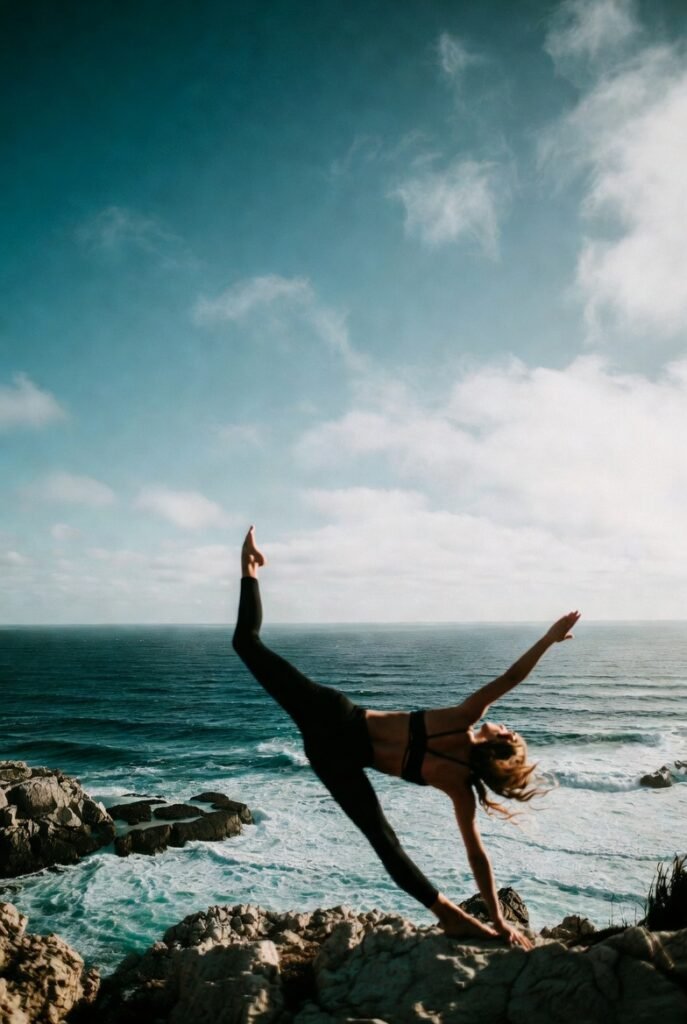
Stand with feet wide apart, one foot turned out. Extend your torso sideways over the front leg, reaching one hand toward your shin and the other toward the ceiling.
Why it helps: Works the obliques and legs together, building strength through a deep stretch.
11. Goddess Pose (Utkata Konasana)
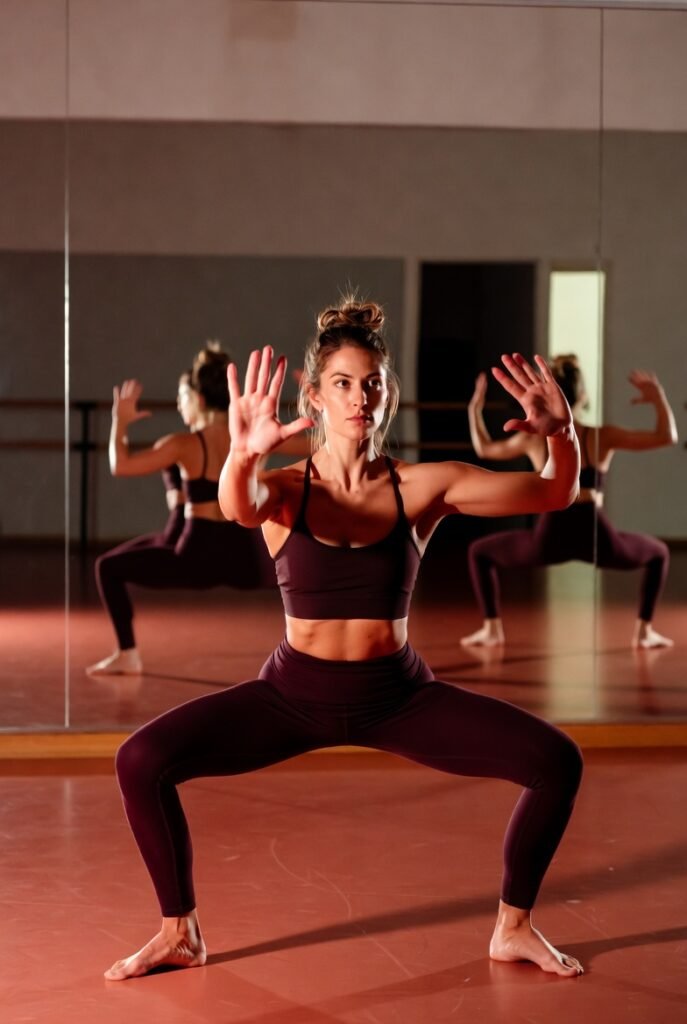
Stand with feet wide apart, toes turned out, and lower into a wide squat. Bend your elbows at shoulder height, palms facing forward. Hold for 20–30 seconds.
Why it helps: Engages the glutes, inner thighs, and core simultaneously, making it an excellent strength-building pose for beginners.
12. Cobra Pose (Bhujangasana)
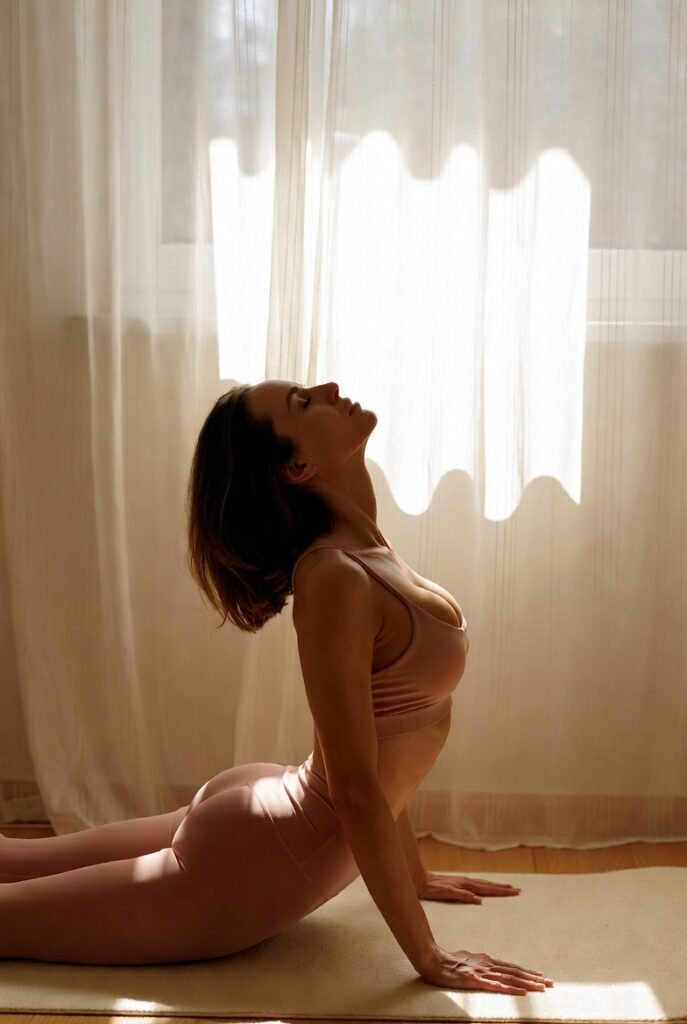
Lie face down, palms under your shoulders. Press into your hands and lift your chest, keeping your shoulders relaxed. Hold for 15–20 seconds.
Why it helps: Gently strengthens the back and abdominal area, often recommended as an accessible starting pose for beginners.
13. Seated Forward Fold (Paschimottanasana)
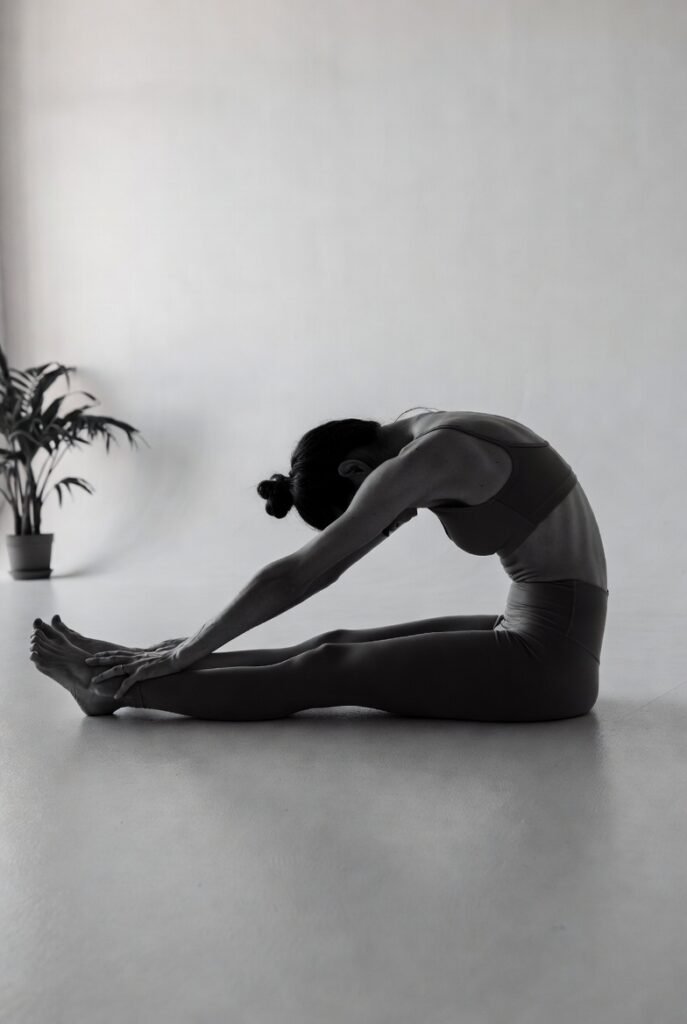
Sit with legs extended, inhale to lengthen your spine, then fold forward from your hips, reaching toward your feet or shins.
Why it helps: Stretches the entire back body while calming the nervous system, helping balance more intense poses in your routine.
14. Child’s Pose (Balasana)
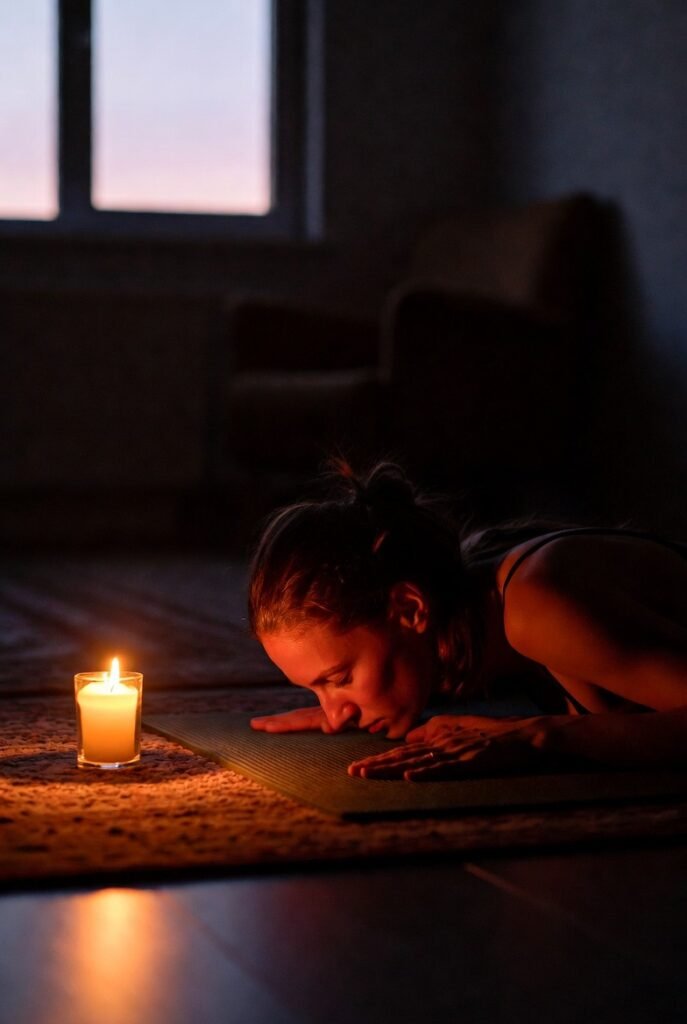
Kneel, sit back onto your heels, and stretch your arms forward on the floor, resting your forehead down. Hold for 30–60 seconds.
Why it helps: A restorative pose used to recover between more demanding poses, and to close out your practice calmly.
A Simple 20-Minute Beginner Routine for Weight Loss
- Mountain Pose – 1 minute (settle in and breathe)
- Sun Salutations – 5 rounds
- Warrior I – 30 seconds per side
- Warrior II – 30 seconds per side
- Chair Pose – 30 seconds
- Goddess Pose – 30 seconds
- Plank Pose – 30 seconds
- Boat Pose – 3 rounds of 20 seconds
- Bridge Pose – 30 seconds
- Seated Forward Fold – 1 minute
- Child’s Pose – 1–2 minutes (cool down)
Practice this 4–5 times per week, gradually adding more rounds of Sun Salutations or extending hold times as your strength builds.
Tips to Maximize Weight Loss Results with Yoga
- Prioritize consistency over intensity. A moderate 20–30 minute daily practice beats one exhausting weekly session.
- Combine styles. Mix dynamic sessions (Vinyasa, Power Yoga) with restorative practices to build strength while avoiding burnout.
- Pair yoga with a balanced diet. No exercise style can outperform poor nutrition — focus on whole foods, adequate protein, and portion awareness alongside your practice.
- Track progress beyond the scale. Improved energy, better sleep, reduced stress, and increased strength are all meaningful markers of progress.
- Stay hydrated, especially if practicing more vigorous or heated styles.
- Consider working with a teacher, at least initially, to ensure proper alignment and prevent injury as you build toward more advanced poses.
Common Mistakes Beginners Make
- Expecting yoga alone to replace all other exercise or diet changes. Yoga works best as part of a broader lifestyle approach, not a standalone quick fix.
- Jumping into advanced or hot yoga too soon. Build a foundation with beginner-friendly styles before progressing to more intense formats.
- Skipping warm-ups. Moving straight into deep poses without preparation increases injury risk.
- Focusing only on calories burned per session. Yoga’s biggest weight-loss benefits often come from indirect effects like reduced stress and better sleep, not just the calories burned during class.
- Giving up too early. Meaningful results from any consistent practice typically take several weeks to become noticeable.
Frequently Asked Questions
Q1: How many calories does a beginner yoga session burn?
This varies by style and intensity, but calorie burn tends to be moderate for beginner sessions, with more dynamic styles like Vinyasa or Power Yoga burning noticeably more than restorative or Hatha classes.
Q2: Can yoga alone help me lose belly fat?
Spot-reducing fat isn’t possible with any single exercise, but yoga can support overall fat loss — including around the belly — through muscle building, stress reduction, and improved sleep, while certain poses help tone and strengthen the core specifically.
Q3: How soon will I see results?
Many beginners notice improved energy, reduced stress, and better sleep within a couple of weeks, while visible changes in strength and body composition typically take 6–8 weeks of consistent practice combined with healthy eating habits.
Q4: Is yoga enough exercise on its own for weight loss?
For some people, yes — especially with more dynamic styles practiced regularly. For others, combining yoga with additional cardio or strength training accelerates results.
Q5: What’s the best time of day to practice yoga for weight loss?
There’s no single best time — morning sessions can boost energy and metabolism for the day ahead, while evening sessions can relieve accumulated stress. Consistency matters more than timing.
Final Thoughts
Yoga for weight loss isn’t about punishing workouts or rigid rules — it’s a sustainable, whole-body approach that builds strength, reduces stress, and supports healthier habits over time. Start with the beginner poses and routine in this guide, stay consistent, and pair your practice with balanced nutrition. Small, steady steps on the mat can add up to real, lasting change.