
You don’t need a spa day, a free weekend, or a perfect morning routine to feel better. You need a few small, repeatable habits that fit into the life you already have. These 10 self-care ideas are built for exactly that.
If you’ve ever looked at a self-care list and thought, “Who has time for a bubble bath and a three-course meal?”, this one is for you. Every idea below has a time tag, a simple way to start, and a reason it works. Some take five minutes. Pick one today and see how it feels.
📌 Save this post for the day you feel overwhelmed. It’s easier to find a plan than to invent one when you’re tired.
First, What Self-Care Really Means
Self-care is any small, intentional act that looks after your mental, physical, or emotional health. That’s the whole definition.
It isn’t indulgence. It isn’t buying things, and it isn’t a reward you earn after everything else is done. Real self-care is closer to maintenance, like charging your phone before it hits one percent.
Here’s the catch most lists miss. The best self-care often feels slightly boring. Sleep, water, and a short walk don’t make good photos, but they change how your whole day feels.
To keep this list balanced, the ten ideas are grouped into three parts: calm your mind, care for your body, and feed your heart.
Part 1: Calm Your Mind
1. Do a 5-Minute Brain Dump ⏱ 5 minutes
Your mind is not built to store everything. When you carry every worry, task, and half-formed thought in your head, it feels loud and heavy.
A brain dump gets it all onto paper. Set a timer for five minutes and write without editing. Include tasks, fears, random thoughts, and things you’re annoyed about. Don’t organize anything.
When the timer ends, circle just one item you can do today. Leave the rest on the page.
Why it works: writing a worry down makes it feel smaller and more manageable. You aren’t solving your whole life, just clearing the mental clutter.
Start here: keep a notebook by your bed or on your desk so there’s no setup involved.
2. Give Yourself a Phone-Free First Hour ⏱ 30–60 minutes
Here’s something worth trying tomorrow. Before you check messages, news, or social media, give yourself time that belongs only to you.
When the first thing you see each day is other people’s updates, emails, and bad news, your brain starts the day in reaction mode. A phone-free start puts you back in charge of your own attention.
Use the time for water, stretching, a warm drink, or just looking out the window. If a full hour feels impossible, start with fifteen minutes.
Pro tip: charge your phone across the room tonight so you aren’t tempted to reach for it first.
3. Take a “No Destination” Walk ⏱ 15–30 minutes

Most of us only walk to get somewhere. This walk has no goal, no step count, and no podcast you need to finish.
Walk slowly. Notice three things you can see, two you can hear, and one you can feel, like the breeze or the ground under your feet. This simple trick pulls you out of your head and into the present moment.
Fresh air and gentle movement together are one of the easiest ways to shift a stuck mood. You don’t need special shoes or a perfect park. A quiet street or even a balcony works.
Start here: if you can’t leave home, step outside for five minutes and take ten slow breaths.
Part 2: Care for Your Body
4. Create a Warm Shower or Bath Reset ⏱ 10–20 minutes
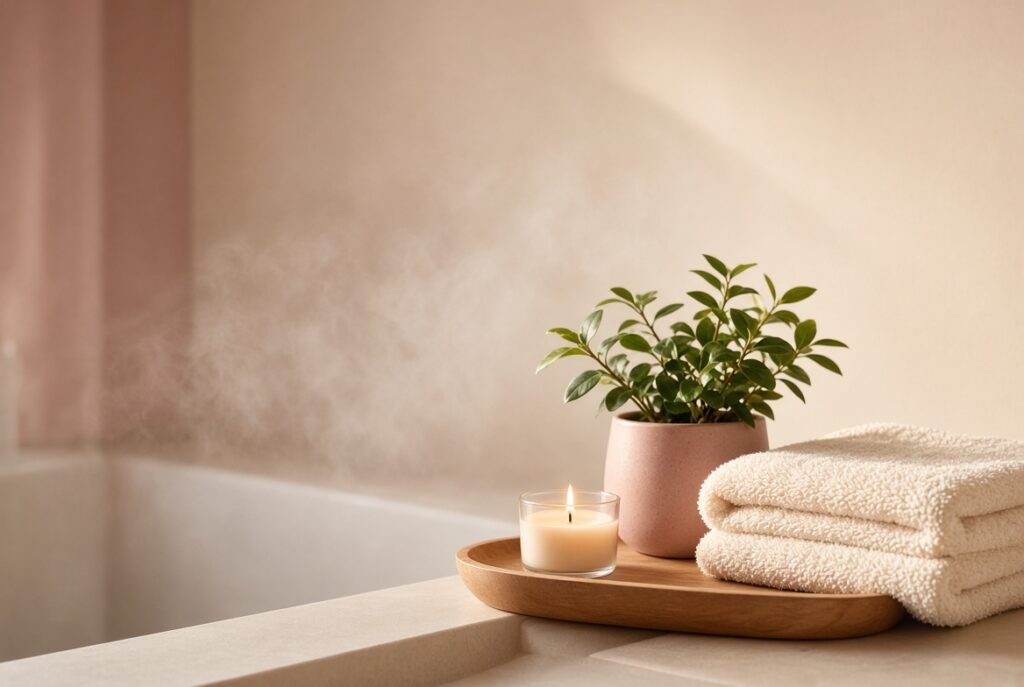
Your body holds stress in your shoulders, jaw, and back, and warmth helps release it.
Turn this ordinary routine into a deliberate reset. Dim the lights if you can. Use a scent you love. Let the water run over your neck and shoulders, and breathe out slowly, longer than you breathe in.
Here’s the part that makes it self-care and not just hygiene: do nothing else while you’re in there. No planning, no scrolling, no replaying conversations.
Make it special: keep a clean towel and a fresh set of comfortable clothes ready. Stepping out into comfort completes the ritual.
5. Feed Yourself One Nourishing Meal ⏱ 15–30 minutes
When life gets stressful, meals are often the first thing to go. We skip them, grab whatever is nearby, or eat standing up.
Choose one meal a day to treat with care. That doesn’t mean it has to be fancy. A bowl of warm soup, eggs with toast and fruit, or rice with vegetables counts.
Sit down. Put your phone away. Eat slowly enough to taste your food. Add a glass of water too, because mild dehydration can make you feel tired and unfocused without you realizing it.
Start here: prepare a simple option ahead of time, like chopped fruit or boiled eggs, so the easy choice is also the kind one.
6. Build a Gentle Wind-Down Routine ⏱ 20–30 minutes

If you only try one idea from this list, make it this one. Good sleep supports your mood, focus, patience, and energy, and a calm evening makes it easier to get.
Choose three small steps and repeat them in the same order each night. For example:
- Dim the lights and put your phone on charge
- Wash your face and change into soft clothes
- Read a few pages, stretch, or write one line about your day
Your brain learns that this sequence means it’s safe to rest now. After a week or two, the routine does half the work for you.
💡 Pinnable thought: You don’t need a perfect bedtime. You need a predictable one.
Part 3: Feed Your Heart
7. Make Something Badly on Purpose ⏱ 15–30 minutes
Somewhere along the way, many of us decided that a hobby only counts if we’re good at it. That belief quietly kills joy.
So try this: draw, color, bake, paint, arrange flowers, or write a silly poem, and aim to do it badly. Nobody will see it. The goal is the process, not the result.
Creative play shifts you out of your productive, judging mind. It’s a gentle way to feel lighter and more like yourself.
Start here: keep a small sketchbook or a set of colored pencils somewhere you can see them.
8. Reach Out to One Real Person ⏱ 5–15 minutes

Loneliness can build quietly, even if you’re surrounded by people. A single honest moment of connection can ease it.
Send a voice note to a friend, call a family member, or message someone you haven’t spoken to in a while. Keep it simple: “I was thinking of you. How are you really doing?”
You don’t have to share your heavy feelings unless you want to. Sometimes laughing about something small is exactly what helps.
Quick tip: voice notes feel more personal than text and take less pressure than scheduling a phone call.
9. Declutter One Tiny Space ⏱ 10 minutes
Your environment shapes your mood more than you might think. A messy corner can quietly add to a feeling of being overwhelmed.
You don’t need to clean the whole house. Choose one small area, like your bedside table, a bag, a single drawer, or your desktop screen. Set a ten-minute timer, clear it, and stop when it rings.
The reward is a quick, visible win. That small sense of order often gives you the energy to handle the next thing.
Start here: clear just your bedside table tonight, so tomorrow morning starts a little calmer.
10. Practice Saying “No” to One Thing This Week ⏱ 2 minutes
This one takes the least time and sometimes feels the hardest. Saying yes to everything leaves you with nothing left for yourself.
This week, say no to one thing that drains you and isn’t truly necessary. It could be an extra commitment, a late-night call, or a favor you don’t have room for.
A kind, clear no works well:
- “I can’t take that on right now, but thank you for thinking of me.”
- “I’m not available, but I hope it goes well.”
You don’t need a long explanation. Protecting your energy is a form of self-respect.
Quick Recap: Your 10 Self-Care Ideas at a Glance
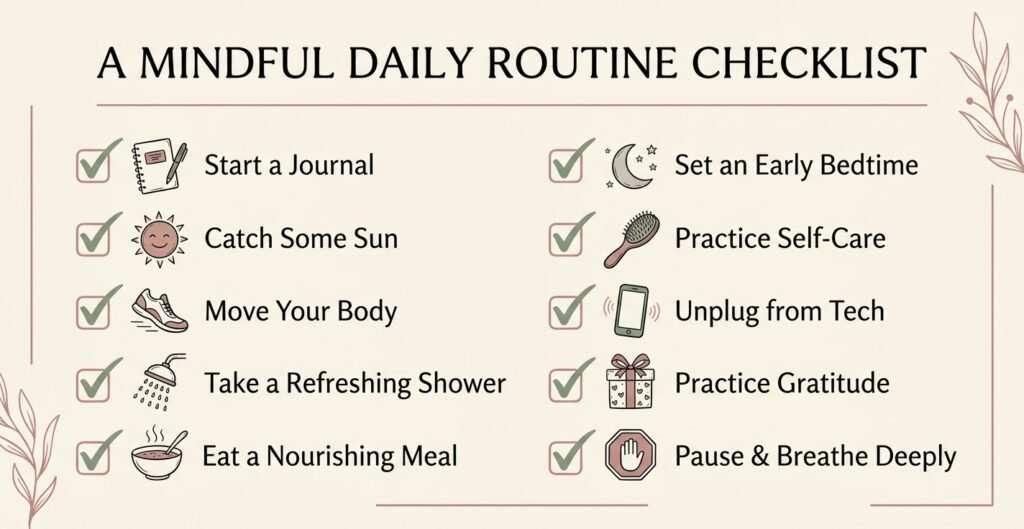
- Brain dump for 5 minutes to clear your head
- Phone-free first hour to start the day on your terms
- No-destination walk to reset your mood
- Warm shower or bath ritual to release tension
- One nourishing meal to fuel your body
- Gentle wind-down routine for better rest
- Create something badly for the joy of it
- Reach out to one person to feel connected
- Declutter one tiny space for a quick win
- Say no to one thing to protect your energy
How to Build a Self-Care Routine That Actually Sticks
Knowing the ideas is the easy part. Making them regular takes a little strategy.
Start with one, not ten. Choose the idea that feels easiest and repeat it for a week. Trying everything at once is the fastest way to quit.
Attach it to something you already do. Brain dump while your tea brews. Stretch right after brushing your teeth. Habits stick better when they ride on existing ones.
Lower the bar on hard days. Two minutes of deep breathing still counts. A small version done is better than a perfect version skipped.
Match the idea to your energy. Low energy? Try a shower reset or a voice note. A bit more energy? Take a walk or declutter a drawer.
Don’t treat it like a test. If you miss a day, simply begin again. Self-care shouldn’t become another source of pressure.
Common Self-Care Mistakes to Avoid
- Treating it as a reward. You don’t have to earn rest by being productive first.
- Choosing what looks good online. The best self-care is what actually works for you, not what photographs well.
- Doing it only when you’re falling apart. Small regular habits protect you better than emergency rescues.
- Feeling guilty. Looking after yourself helps you show up better for others too.
Frequently Asked Questions
What are some simple self-care ideas I can do every day?
Small daily habits work best: a short walk, a glass of water, five minutes of journaling, a phone-free start to the morning, or a warm shower with no distractions. Choose one that takes under ten minutes.
How much time should I spend on self-care each day?
There’s no fixed number. Even 10 to 15 minutes of intentional care can make a difference. Consistency matters more than length.
What are free self-care ideas?
Many of the best ones cost nothing: walking, journaling, deep breathing, decluttering a small space, calling a friend, stretching, and building a wind-down routine for better sleep.
Can self-care help with stress and anxiety?
Regular self-care habits can support your mood and help you manage everyday stress. If stress or anxiety feels constant or overwhelming, please speak with a doctor or qualified mental health professional. Self-care supports your wellbeing but doesn’t replace professional help.
How do I practice self-care when I’m too busy?
Shrink it. Use two-to-five-minute versions, like deep breaths between tasks, a quick brain dump, or a voice note to a friend. Attach habits to routines you already have.
What is the difference between self-care and being selfish?
Selfishness ignores others’ needs for your own gain. Self-care keeps you healthy and steady enough to handle your life and relationships well.
Final Thoughts: Start Small, Start Today
Self-care isn’t about doing everything. It’s about doing something, consistently, that tells you your wellbeing matters.
Look back at the list and choose just one of these 10 self-care ideas to try in the next 24 hours. Not the hardest one, just the one that feels doable. Small, kind actions repeated over time are what rebuild your energy and your calm.
📌 Pin this guide for the next time you need a gentle reset, and tell us in the comments which idea you’re trying first.
Disclaimer: This article is for general wellness information and isn’t a substitute for professional medical or mental health advice.
Pingback: 10 Minute Home Workout for Women: The Full-Body Routine You Can Actually Stick To -