
You’ve told yourself “I’ll work out tomorrow” more times than you can count. Not because you’re lazy, but because a 45-minute workout feels impossible between work, family, and life.
Here’s the good news: a 10 minute home workout for women can be enough to build real strength, lift your energy, and make exercise a habit you keep. No gym, no equipment, no special outfit.
Below is a complete full-body routine with exact timing, easy modifications, and a weekly plan. And the move most women skip (number five) is the one that makes the biggest difference. Save this guide so you can find it on your busiest days.
Why a 10 Minute Home Workout for Women Actually Works

Ten minutes sounds almost too small to matter. But the research on short workouts has changed how experts think about exercise.
Older guidelines said activity only counted in blocks of at least 10 minutes. The current U.S. guidelines say the total amount of activity matters more than session length, and that even short episodes of activity are beneficial. The same guidelines recommend 150 to 300 minutes of moderate activity a week, plus muscle-strengthening work on two or more days.
Here’s what that means for you:
- Five 10-minute sessions add up to 50 minutes of your weekly total.
- Strength moves like squats and push-ups count toward your muscle-strengthening days.
- Short workouts are easier to repeat, and repeating is what changes your body.
Pin-worthy takeaway: The best workout isn’t the longest one. It’s the one you’ll actually do tomorrow.
A quick note on expectations. Ten minutes won’t “melt belly fat” or spot-reduce any body part, and nobody honest will promise that. What it will do is build strength, raise your heart rate, improve your mood, and create a routine that supports every other health goal.
What You Need Before You Start
Almost nothing:
- A clear floor space about the size of a yoga mat
- Comfortable clothes and sneakers (or bare feet on a non-slip surface)
- A timer: your phone, a smartwatch, or a free interval-timer app
- A towel and water
Please read this first: If you’re pregnant, postpartum, managing an injury or a health condition, or haven’t exercised in a long time, check with your doctor before starting. Move slowly, and stop if you feel sharp pain, dizziness, or chest discomfort.
10 Self-Care Ideas That Actually Calm Your Mind (Even on Your Busiest Days)
The 10-Minute Full-Body Workout (Minute by Minute)
This routine has three parts: a 1-minute warm-up, an 8-minute strength-and-cardio circuit, and a 1-minute cool-down. The circuit uses 8 moves, each done for 40 seconds with 20 seconds of rest. That adds up to exactly 8 minutes.
| Time | Move | Focus |
|---|---|---|
| 0:00–1:00 | Warm-up flow | Joints and heart rate |
| 1:00–2:00 | Bodyweight squats | Legs and glutes |
| 2:00–3:00 | Reverse lunges | Legs and balance |
| 3:00–4:00 | Push-ups (full or modified) | Chest, arms, shoulders |
| 4:00–5:00 | Glute bridges | Glutes and hamstrings |
| 5:00–6:00 | Mountain climbers | Cardio and core |
| 6:00–7:00 | Forearm plank | Deep core |
| 7:00–8:00 | Dead bugs | Core control |
| 8:00–9:00 | Skater hops (or steps) | Cardio and legs |
| 9:00–10:00 | Cool-down stretch | Recovery |
Set your timer for 40 seconds on and 20 seconds off, and let’s go.
Minute 0–1: Warm-Up Flow
Don’t skip this. A cold body gets tight, and tight bodies get sore or hurt.
Spend 60 seconds on easy movement. March in place, roll your shoulders, swing your arms wide, and circle your hips. Add a few gentle squats with your arms reaching forward. By the end you should feel slightly warmer and a little more awake.
Move 1: Bodyweight Squats
Squats train the biggest muscles in your body, which is why they give you the most return for your time.
Stand with your feet shoulder-width apart and toes slightly out. Sit your hips back and down as if lowering into a chair, keep your chest tall, then push through your heels to stand.
Coach’s tip: Keep your knees tracking over your toes, not caving inward.
Easier: Squat to a chair and tap lightly before standing.
Move 2: Reverse Lunges
Stepping backward is gentler on the knees than stepping forward, which makes this a smart choice for most beginners.
Step one foot back, lower until both knees bend to roughly 90 degrees, then press through your front foot to return. Alternate legs for the full 40 seconds.
Easier: Hold a wall or chair for balance.
Harder: Add a small pulse at the bottom.
Move 3: Push-Ups (Full or Modified)
Upper-body strength is the piece most women’s routines miss, and it matters for posture, daily tasks, and long-term bone and muscle health.
Place your hands slightly wider than your shoulders and keep your body in one straight line. Lower your chest toward the floor, then press back up.
Easier: Drop to your knees, or put your hands on a countertop or sturdy table.
Harder: Slow the lowering phase to three seconds.
Move 4: Glute Bridges
Sitting all day switches your glutes off. This move wakes them back up.
Lie on your back with knees bent and feet flat, hip-width apart. Press through your heels, lift your hips until your body forms a straight line from shoulders to knees, squeeze at the top, and lower slowly.
Coach’s tip: Think “squeeze” instead of “arch.” Your lower back shouldn’t do the work.
Harder: Lift one foot off the floor and alternate sides.
Move 5: Mountain Climbers (The Secret Weapon)
This is the move that raises your heart rate and challenges your core at once, and it’s the one most beginners avoid because it looks intense.
Start in a high plank with your hands under your shoulders. Drive one knee toward your chest, switch, and keep going at a pace you can control.
Low-impact version: Move slowly, one leg at a time, as if you’re stepping rather than running.
Easier: Place your hands on a bench or sofa edge.
Move 6: Forearm Plank
Planks teach your core to stabilize your spine, which protects your back in everyday life.
Rest on your forearms with your elbows under your shoulders. Squeeze your glutes, brace your abs, and keep your body in one long line. Don’t let your hips sag or pike up.
Easier: Plank from your knees, or shorten the hold and rest in the gaps.
Harder: Lift one foot an inch off the floor for a few seconds at a time.
Move 7: Dead Bugs
It looks simple and feels surprisingly tough. Dead bugs train deep core muscles without any strain on your neck or lower back.
Lie on your back with your arms pointing to the ceiling and your knees bent over your hips. Slowly lower your opposite arm and leg toward the floor, keeping your lower back pressed down, then return and switch.
Coach’s tip: Slow beats fast here. If your back lifts off the floor, shrink the movement.
Move 8: Skater Hops (or Skater Steps)
This finishes the circuit with a little cardio and lateral movement, which most women’s workouts leave out.
Leap or step sideways from one foot to the other, swinging your arms for balance, and land softly.
Low-impact version: Step wide to the side and tap your back foot behind you instead of hopping.
Minute 9–10: Cool-Down Stretch
Slow your breathing and stretch the muscles you just used. Spend about 15 seconds on each: a standing quad stretch, a forward fold with soft knees, a figure-four hip stretch, and a chest-opening stretch with your hands behind your back.
Finish with three slow deep breaths. You just completed a full workout.
Pin-worthy takeaway: Warm up for 1 minute, work for 8, recover for 1. That’s the whole formula.
Low-Impact and Beginner Modifications

Not everyone wants to jump, and many women shouldn’t. Maybe you live in an apartment with downstairs neighbors. Maybe you’re recovering from a baby, an injury, or a long break from exercise. Here’s how to keep every move gentle:
- Replace mountain climbers with slow plank knee drives.
- Replace skater hops with side steps and a toe tap.
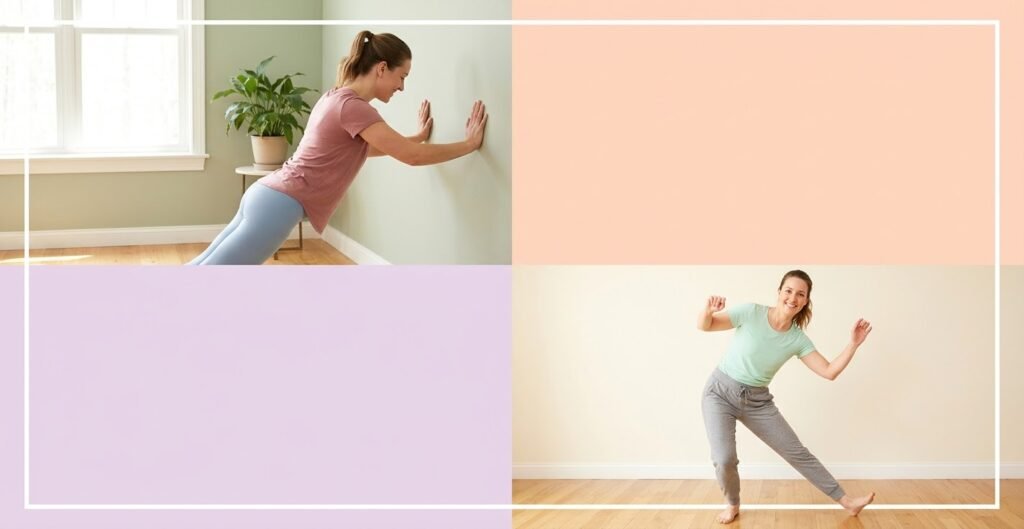
- Replace full push-ups with wall or counter push-ups.
- Shorten the work interval to 30 seconds and lengthen rest to 30 seconds.
- Do one round of fewer moves (pick 5) until the full circuit feels comfortable.
Pain is a signal, not a challenge. Effort should feel tough but controlled, somewhere around a 6 or 7 out of 10.
How to Make Your 10-Minute Workout Harder
After two to three weeks, the same routine will start to feel easier. That’s progress, and it’s your cue to build on it.
- Add reps and quality. Slow your tempo so each rep takes three or four seconds.
- Add resistance. Hold a backpack of books, a filled water jug, or a light dumbbell during squats and lunges.
- Shorten the rest. Go from 20 seconds to 15, then to 10.
- Repeat sooner. Fit in a second 10-minute round on days you have more time.
Progress doesn’t need to be dramatic. Small increases that you can repeat will beat big jumps that leave you sore and discouraged.
Your Weekly 10 Minute Home Workout Plan
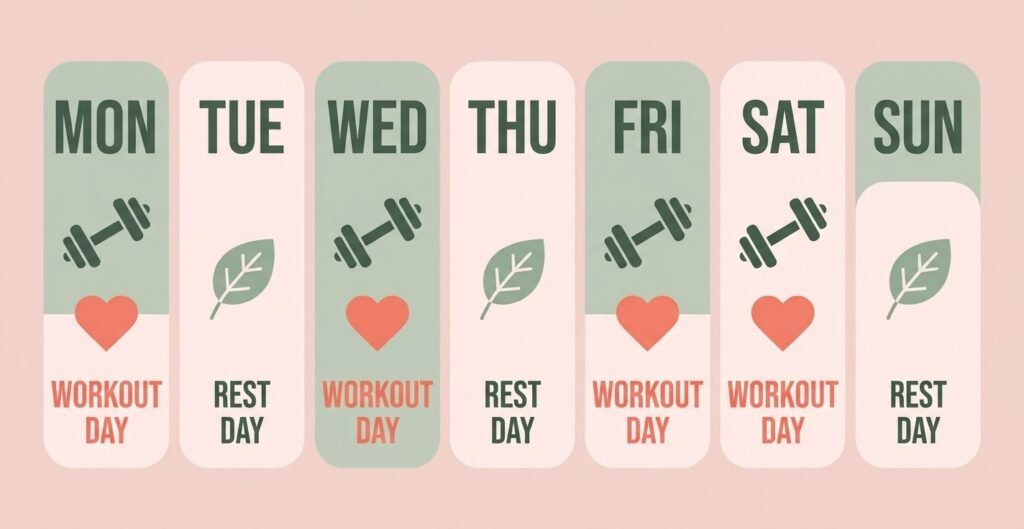
Consistency matters more than intensity. Here’s a simple schedule that fits real life:
- Monday: Full-body circuit (above)
- Tuesday: 10-minute walk or gentle stretch
- Wednesday: Full-body circuit
- Thursday: Rest or light mobility work
- Friday: Full-body circuit
- Saturday: Fun movement (dancing, a longer walk, a bike ride)
- Sunday: Rest
That gives you three strength-focused sessions a week, which comfortably covers the muscle-strengthening recommendation. Add walking and playful movement on the other days and your weekly total climbs without feeling like a chore.
Three More 10-Minute Workouts to Swap In
Once the main routine is familiar, rotate in these themed versions to keep things fresh. Use the same 40-on, 20-off timing.
Lower-body burner: Squats, reverse lunges, glute bridges, side lunges, calf raises, wall sit (repeat the list).
Core focus: Dead bugs, forearm plank, bicycle crunches, bird dogs, side plank (each side), glute bridge march.
Cardio boost: March in place with high knees, step jacks, skater steps, squat reaches, low-impact boxing punches, fast feet.
Mixing these in works your body in new ways and stops boredom before it starts.
Common Mistakes to Avoid
- Rushing the reps. Slow, controlled movement builds more strength than sloppy speed.
- Skipping the warm-up. Those 60 seconds protect your joints.
- Holding your breath. Breathe out on the effort, in on the return.
- Comparing yourself to workout influencers. Their routines, schedules, and editing have nothing to do with your starting point.
- Quitting after one missed day. A missed workout is just a missed workout. Start again tomorrow.
- Expecting overnight results. Most people notice better energy and mood first, and visible changes take weeks of repeated effort.
How to Make It a Habit You Keep
The hardest part of any 10 minute home workout for women isn’t the exercise. It’s showing up. A few tricks that make it easier:
- Anchor it to something you already do. Work out right after brushing your teeth or right before your morning shower.
- Lay out your clothes the night before. Remove every tiny obstacle.
- Use the two-minute rule. On low-energy days, tell yourself you’ll do just the warm-up. You’ll usually keep going.
- Track it visibly. A calendar with a checkmark for each workout builds momentum faster than you’d expect.
- Pick a consistent time. Your brain starts to expect it.
Pin-worthy takeaway: Don’t wait for motivation. Build a routine so small you can’t say no.
Frequently Asked Questions
Is a 10 minute workout enough for women?
For general health and building a habit, yes. Ten minutes done consistently counts toward your weekly activity, and strength moves count toward your muscle-strengthening days. If you have bigger goals, like marathon training or major muscle gain, you’ll eventually need more volume.
How many times a week should I do a 10 minute home workout?
Three to five days is a great target. Beginners can start with three non-consecutive days and add more as the routine feels easier.
Can I lose weight with a 10-minute workout?
Exercise supports weight management, but weight changes depend mostly on overall habits, including eating, sleep, stress, and daily movement. Short workouts help most when they’re part of a bigger routine you can sustain.
Do I need equipment for a 10 minute home workout?
No. Everything in this routine uses your body weight. If you want more challenge later, resistance bands, dumbbells, or a loaded backpack are easy upgrades.
What’s the best time of day to do a 10-minute workout?
The best time is whenever you’ll do it consistently. Morning workouts tend to protect you from a busy day taking over, but an afternoon energy reset or an evening wind-down works just as well.
Is this workout safe for beginners?
Yes, with the modifications above. If you have a medical condition, are pregnant or postpartum, or are returning from injury, talk with your doctor first.
Final Thoughts: Start Small, Start Today
You don’t need a gym membership, a perfect schedule, or an hour of free time. You need ten minutes and a floor.
This 10 minute home workout for women gives you a complete plan: a warm-up, eight strength-and-cardio moves, a cool-down, modifications for every level, and a weekly rhythm to keep you going. Start with what feels doable, repeat it, and build from there.
Pin this guide, save it to your workout board, and press start on your timer today. Your future self will thank you