
Your chest feels tight. Your thoughts are spinning faster than you can catch them. And you’re standing in your own kitchen, in your own home, feeling like you need to escape something you can’t even name. If that sounds familiar, you already know anxiety doesn’t wait for a convenient moment — and you don’t need to leave your house, book an appointment, or spend a dollar to start feeling calmer.
The tips below are simple enough to use the moment anxiety hits, and grounded enough in real research that they actually work — not just distraction tricks, but techniques that calm your nervous system at the source. Keep reading, because tip #6 is the one most people skip, and it’s often the fastest one for stopping a spiral in its tracks.
Save this list so it’s ready the next time anxiety shows up uninvited.
Understanding Why At-Home Anxiety Relief Works
Anxiety isn’t just “in your head” — it’s a full-body response. Your nervous system floods your system with stress hormones like cortisol and adrenaline, preparing you for a threat that, in everyday life, usually isn’t actually there. That’s why the most effective at-home strategies target your body first: your breath, your muscles, your senses.
Once your body calms down, your mind tends to follow. Here are 13 ways to make that happen, right where you are.
1. Practice Slow, Deep Breathing
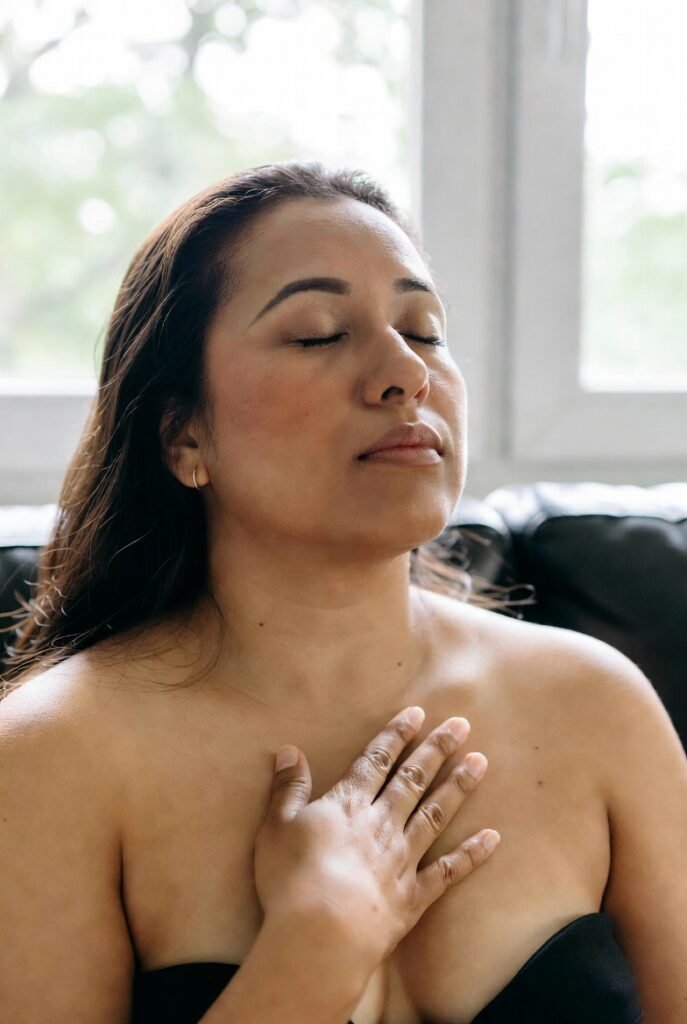
When anxiety spikes, your breathing gets shallow and fast, which tells your brain the danger is real and ongoing. Slowing your breath on purpose interrupts that signal.
Try inhaling for 4 counts, holding for 4, exhaling for 6. The longer exhale is key — it activates your parasympathetic nervous system, the part responsible for calming you down. Repeat for two to three minutes, or until your shoulders visibly drop.
2. Use the 5-4-3-2-1 Grounding Technique
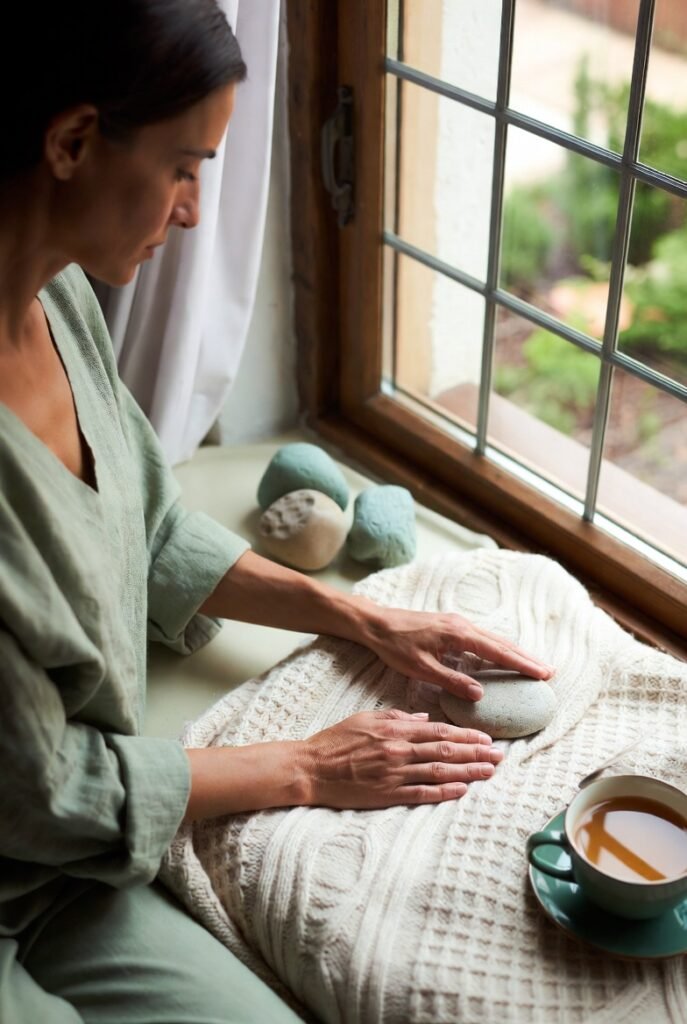
Grounding pulls your mind out of anxious “what if” thinking and back into the present moment, where you’re usually much safer than your thoughts suggest. Name:
- 5 things you can see
- 4 things you can touch
- 3 things you can hear
- 2 things you can smell
- 1 thing you can taste
This is the technique most people underestimate — and the fastest one for interrupting a spiral once it’s already started.
3. Move Your Body, Even for 5 Minutes
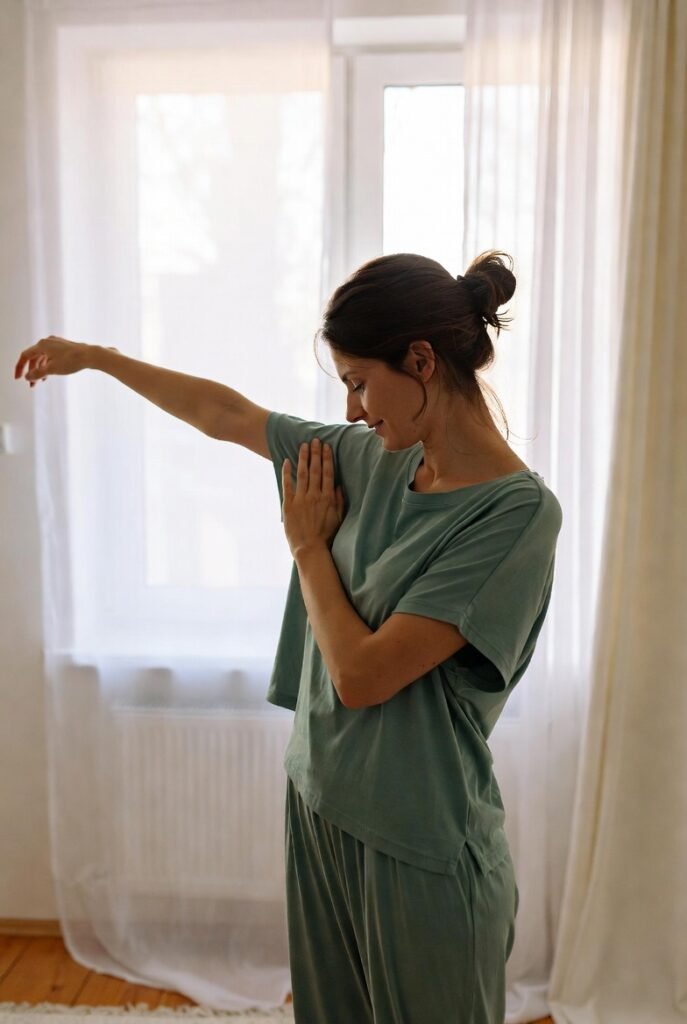
Exercise releases endorphins, your body’s natural mood boosters, and burns off some of the excess adrenaline anxiety produces. You don’t need a workout — pace around your living room, do a few jumping jacks, or dance to one song.
Movement gives anxious energy somewhere to go instead of building up inside you.
4. Try Progressive Muscle Relaxation
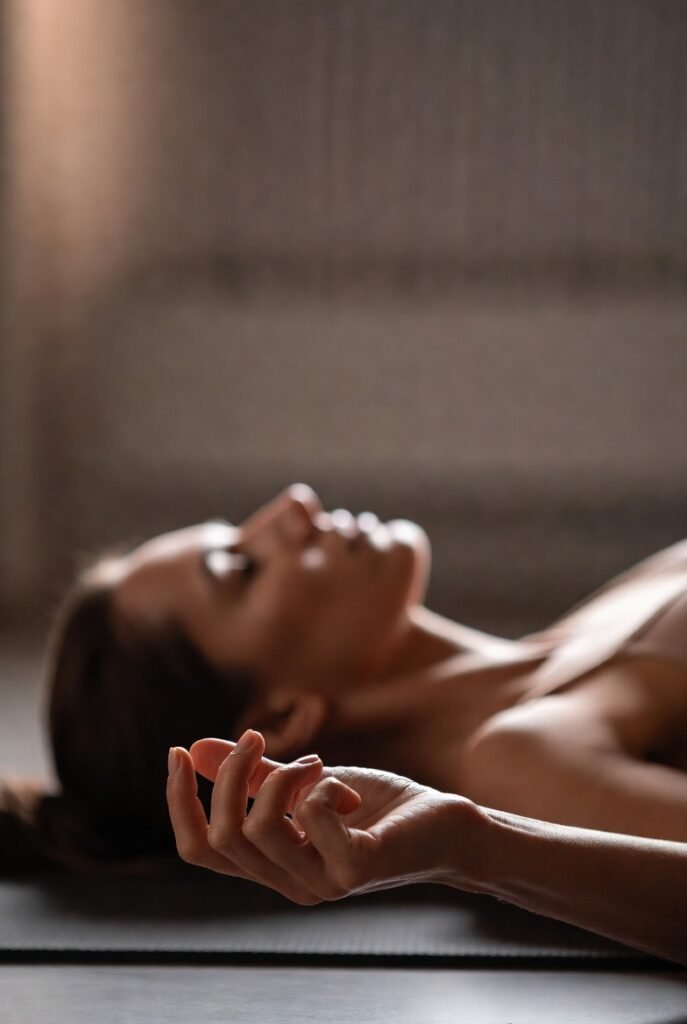
Anxiety often shows up as physical tension you don’t even notice — clenched jaw, tight shoulders, curled fists. Progressive muscle relaxation works by tensing each muscle group for 5 seconds, then releasing.
Start at your feet and work upward: feet, calves, thighs, stomach, hands, arms, shoulders, face. By the time you reach the top, your body has a clear physical memory of what “relaxed” feels like.
Read Also: Well Fit Look
5. Splash Cold Water on Your Face

This sounds almost too simple, but cold water triggers your body’s dive reflex, which slows your heart rate almost immediately. Splash cool water on your face or hold a cold, damp cloth against your cheeks and temples for 30 seconds during an anxiety spike.
It’s one of the fastest physical resets available, and it takes zero setup.
6. Write Down What’s Actually Bothering You

Anxious thoughts feel enormous when they’re looping silently in your head. Putting them on paper — even messily, even for two minutes — often shrinks them down to something more manageable.
Try a simple prompt: “Right now I’m anxious about ___, and the worst realistic outcome is ___.” Seeing your fear in plain words often reveals it’s smaller, or more solvable, than it felt in your head.
Quick tip: keep a small notebook somewhere accessible — nightstand, kitchen counter, desk — so this never requires extra effort to start.
7. Limit Caffeine and Alcohol

Caffeine mimics the physical sensations of anxiety — a racing heart, jittery hands, shallow breath — which can make your brain interpret those cues as a genuine threat. Alcohol, meanwhile, disrupts sleep and can worsen anxiety the following day as it wears off.
You don’t have to cut either out completely. Simply noticing your intake, and scaling back on days you already feel anxious, can meaningfully soften your symptoms.
8. Step Outside, Even for a Few Minutes
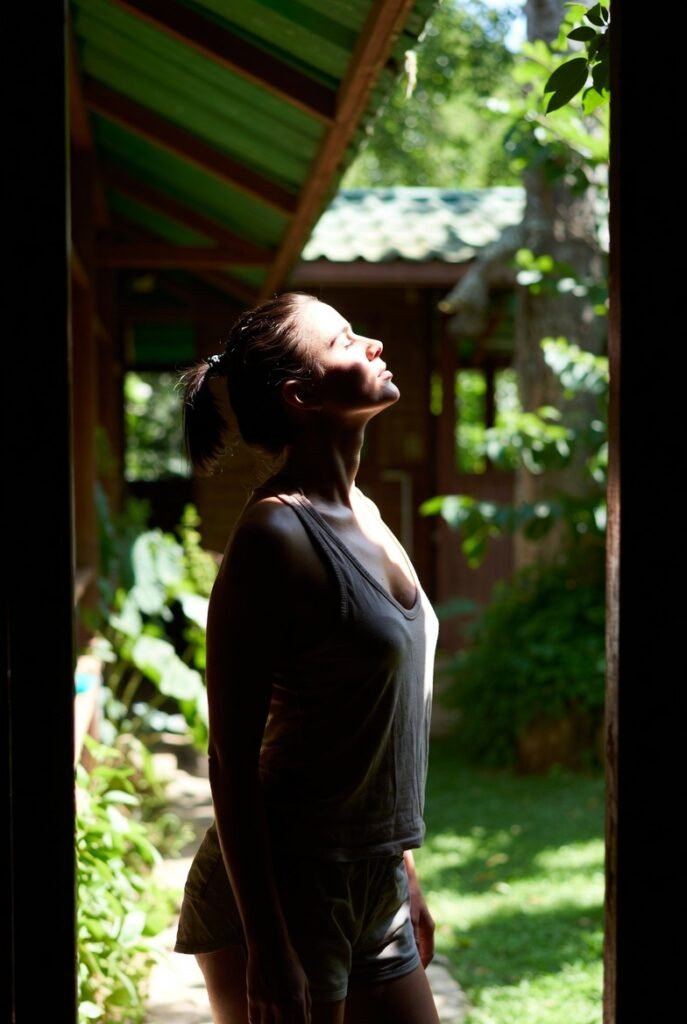
Time in natural light and fresh air has been linked to lower stress and reduced anxiety symptoms, partly because it supports healthy circadian rhythm and partly because it interrupts indoor rumination. You don’t need a hike — a walk around the block or a few minutes on your porch counts.
If you can add a plant, open window, or natural light source to your regular indoor spaces too, that ongoing exposure compounds the benefit.
9. Take a Warm Bath With Epsom Salts

A warm bath relaxes tense muscles and gives your nervous system a clear physical cue to downshift. Adding Epsom salts, which contain magnesium, may offer additional calming benefits, since magnesium plays a role in regulating your stress response.
Dim the lights, skip your phone, and treat it as a full sensory reset rather than a quick rinse.
10. Reach Out to Someone You Trust

Anxiety thrives in isolation. A short text, call, or voice memo to someone who cares about you can lower feelings of anxiety by releasing oxytocin, your body’s natural bonding hormone, and reminding your brain you’re not facing things alone.
You don’t need to explain everything. Even “having a rough moment, just wanted to say hi” is enough to open the door.
11. Declutter One Small Space
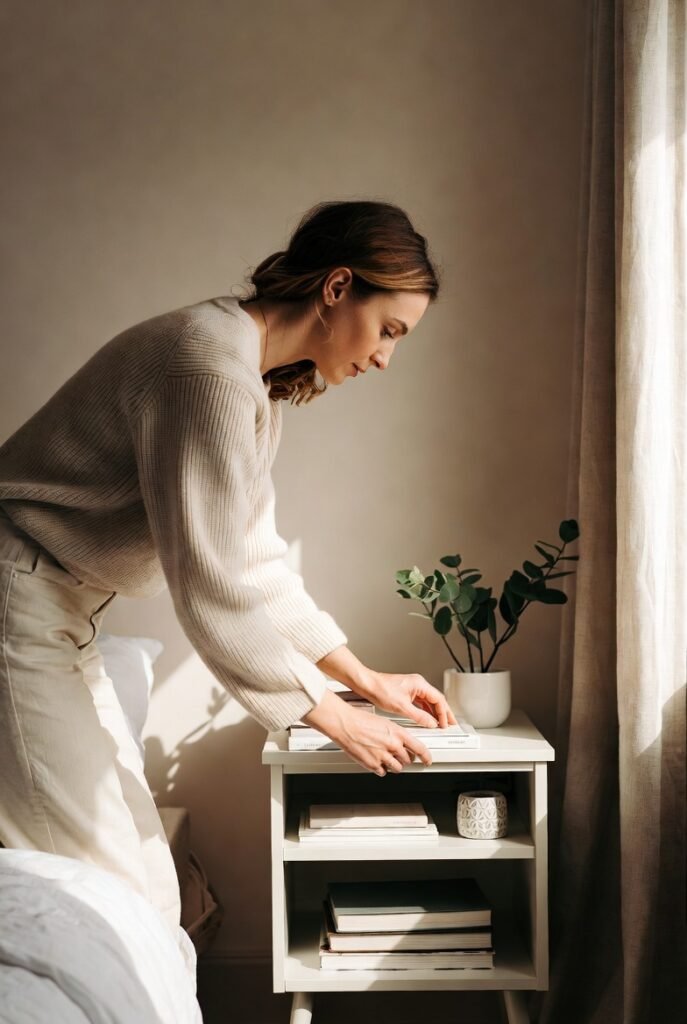
A cluttered environment can quietly feed anxious, overstimulated feelings, especially for people who are sensitive to visual chaos. You don’t need to clean your whole house — clear one surface: your desk, your nightstand, your kitchen counter.
A tidy corner won’t fix everything, but it gives your eyes, and your brain, one less thing to manage.
12. Use Aromatherapy to Calm Your Senses
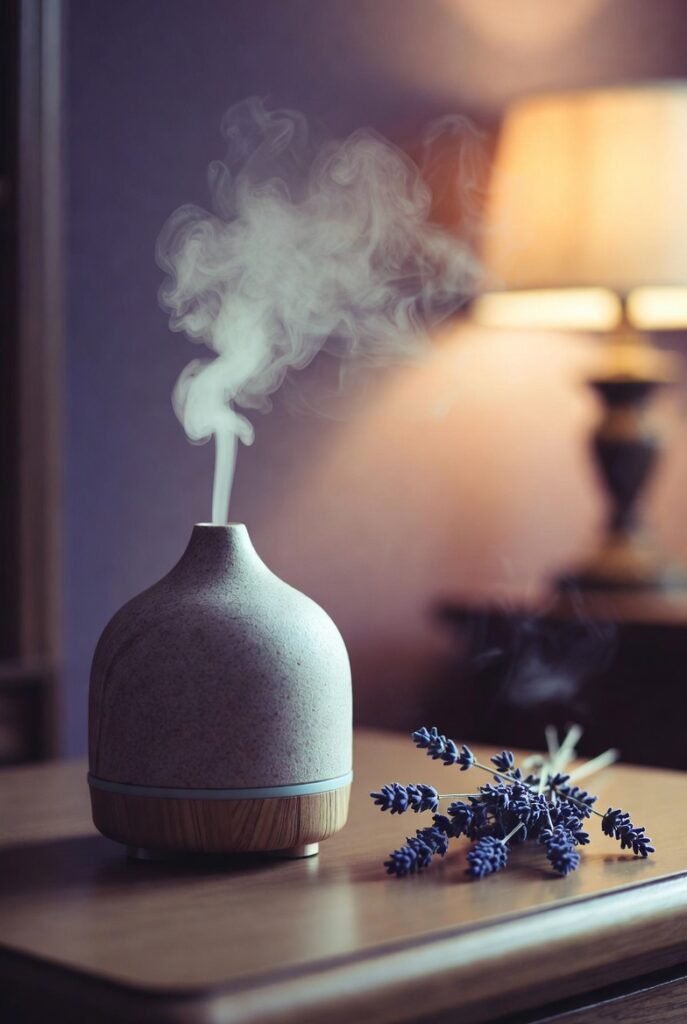
Certain scents, particularly lavender, chamomile, and bergamot, have been associated with reduced anxiety symptoms in several studies. Try a diffuser, a scented candle, or a few drops of essential oil on a tissue you keep nearby.
Pair this with your breathing exercise (tip #1) for a combined sensory-and-physiological calming effect.
13. Do One Low-Effort, Enjoyable Activity
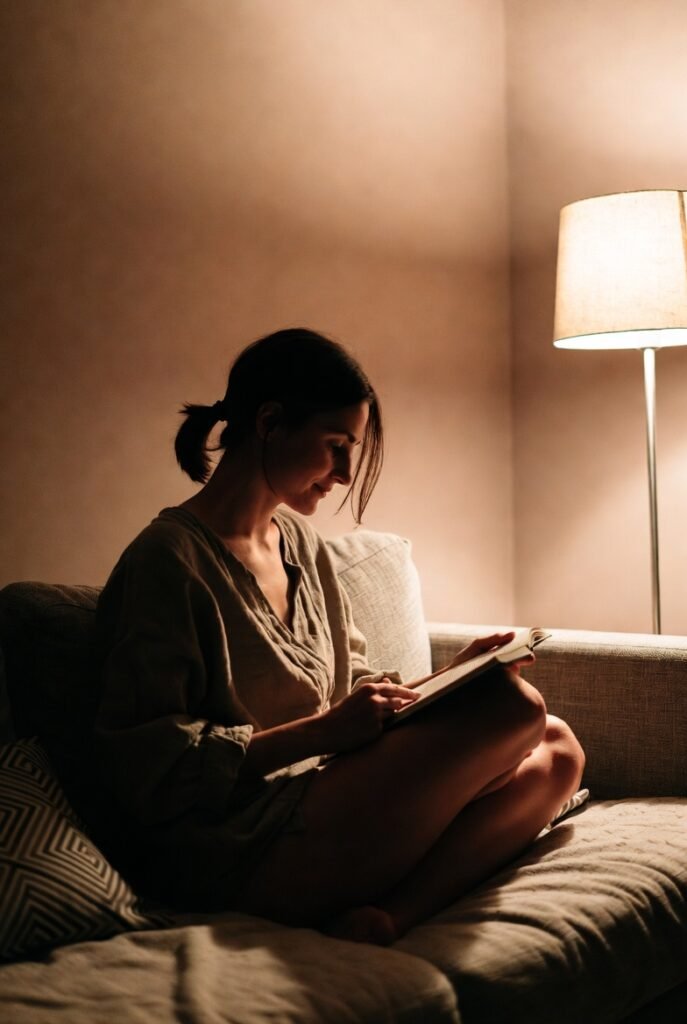
When your mind is stuck in anxious loops, giving it something absorbing but low-stakes to focus on can help break the cycle. A puzzle, a familiar show, a hobby you enjoy, or even folding laundry mindfully can shift your brain out of threat mode.
The goal isn’t to “fix” the anxiety immediately — it’s to give your nervous system a break from constant vigilance.
Building Your Own At-Home Anxiety Toolkit
You won’t need all 13 of these tips every time anxiety shows up, and that’s the point. Different situations call for different tools:
- Feeling panicky right now? Try grounding (tip 2) or cold water (tip 5).
- Anxious thoughts won’t stop looping? Try journaling (tip 6) or a low-effort activity (tip 13).
- Anxiety building over days? Focus on caffeine/alcohol (tip 7), sleep, movement (tip 3), and connection (tip 10).
Pick two or three that feel realistic for your life, keep them easy to reach (a notebook, a playlist, a diffuser), and practice them even on calm days. Anxiety-relief tools work best when they’re already familiar, not learned for the first time in the middle of a hard moment.
Frequently Asked Questions
What is the fastest way to relieve anxiety at home?
Cold water on your face and slow, deep breathing tend to work the fastest because they directly calm your nervous system’s physical response within a minute or two.
Can anxiety be managed without medication?
For many people with mild to moderate anxiety, lifestyle strategies like the ones above make a real difference. However, if anxiety is interfering with daily life, sleep, or relationships, it’s worth speaking with a doctor or therapist about additional support.
How do I stop anxious thoughts from looping?
Grounding techniques and journaling are both effective at interrupting repetitive thought loops by shifting your attention to something concrete and present.
Is it normal to feel anxious for no clear reason?
Yes. Anxiety doesn’t always have an obvious trigger, and that doesn’t make it any less valid or manageable. The tips above work whether or not you can pinpoint the exact cause.
Your Next Step
You don’t need a perfect environment or hours of free time to start feeling calmer — you need one small, doable step. Pick one tip from this list and try it the next time anxiety creeps in.
Pin this guide so it’s there the moment you need it.