
Most people troubleshoot bad sleep by focusing on habits — cutting caffeine, going to bed earlier, trying supplements. But there’s a factor that gets overlooked constantly: the bedroom itself. You can have a perfect bedtime routine and still sleep poorly if your room is too warm, too bright, or too noisy.
Below you’ll find 12+ bedroom setup ideas for better sleep, covering temperature, lighting, sound, and comfort — the exact factors sleep experts point to again and again. Some of these are free five-minute fixes; others are worth a small investment. Either way, your bedroom is one of the highest-leverage places to start if you’re serious about sleeping better. Save this list and work through it one change at a time.
Why Your Bedroom Setup Matters More Than You Think
A sleep environment is the full combination of physical and sensory conditions in your bedroom that either promote or prevent quality rest — temperature, darkness, sound, humidity, and the quality of your mattress and bedding all working together. Even with an ideal bedtime schedule, a suboptimal bedroom can quietly undo a lot of that effort.
Experts generally agree that light exposure is one of the most critical factors, since it directly controls your circadian rhythm and melatonin production — even small amounts of light can disrupt your sleep. That said, if your mattress is causing you pain or your room is uncomfortably hot, those issues take priority. A useful approach is to identify whichever factor is most “wrong” in your current setup and fix that first, rather than trying to overhaul everything at once.
12+ Bedroom Setup Ideas for Better Sleep
Temperature Control

1. Keep Your Room Between 60-67°F (15-19°C)
As you fall asleep, your body temperature naturally drops, and this is part of what triggers the sleep-inducing process. Keeping your bedroom in this cooler range supports that natural drop, making it easier to both fall asleep and stay asleep, whereas a warm room actively works against it.
2. Use a Fan for Airflow and White Noise
A simple fan does double duty — it circulates air to help regulate temperature, and its steady hum provides gentle background noise that can mask disruptive sounds. It’s one of the cheapest, most effective additions to almost any bedroom setup.
3. Choose Breathable, Season-Appropriate Bedding
Cooling sheets made from materials like bamboo or Tencel help regulate body temperature, and layering a breathable duvet with a lighter summer option gives you flexibility across seasons. If you tend to wake up sweaty, this is often the first thing worth changing before assuming your mattress is the problem.
Read Also: Well Fit Look
4. Add a Humidifier in Dry Months
Dry indoor heat during winter can leave the air uncomfortably dry, which affects sleep comfort more than people expect. Aiming for roughly 40-50% humidity with a humidifier can make the room feel noticeably more comfortable to breathe and sleep in.
Lighting & Darkness
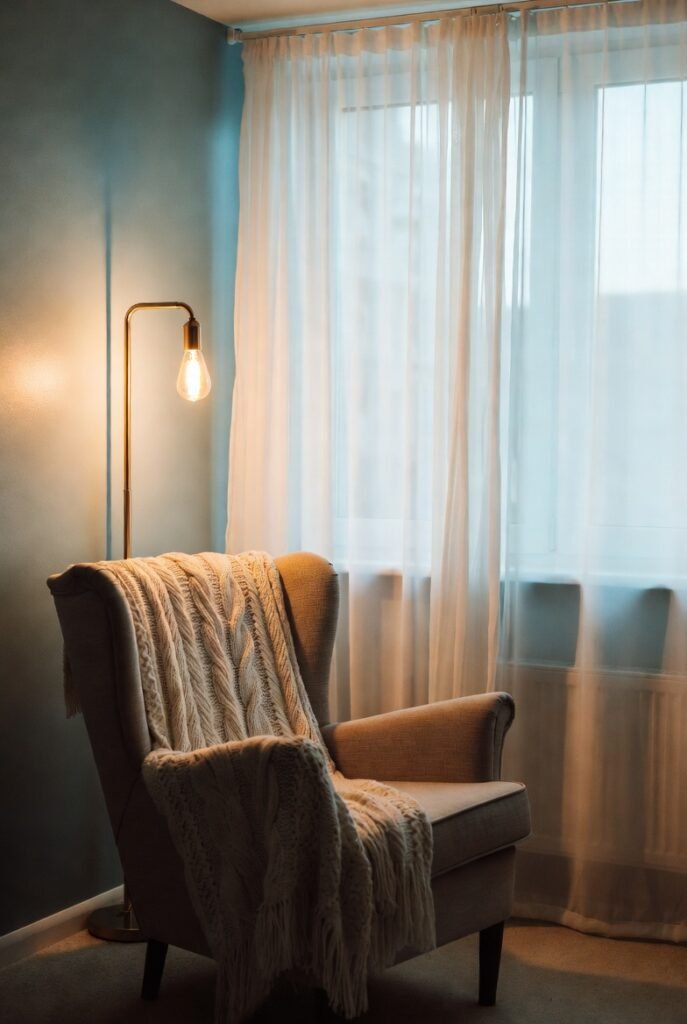
5. Install Blackout Curtains or Shades
Darkness is essential for deep, restorative sleep, and even small amounts of light exposure can disrupt your body’s natural sleep signals. Blackout curtains are one of the highest-impact changes you can make if streetlights, early sunrise, or neighboring windows are an issue.
6. Layer Warm, Dimmable Lighting
Swap a single harsh overhead light for a combination of sources — a bedside lamp, a wall sconce, maybe accent lighting — all using warm-toned bulbs in the 2700K-3000K range. Layered, dimmable lighting lets you gradually lower brightness in the evening, which supports your body’s natural wind-down process far better than one bright switch flipping to total darkness.
7. Remove or Cover Small Electronic Lights
Standby lights from chargers, TVs, or alarm clocks are easy to overlook, but they add up. Covering or unplugging them removes small but real sources of light disruption from the room.
8. Reduce Blue Light Exposure Before Bed
Turn off screens and switch your phone to night mode in the evening, since continued blue light exposure can interfere with melatonin production even if your room lights are already off. Keeping devices out of the bedroom entirely is the most effective version of this fix.
Sound & Sensory Environment

9. Use a White Noise Machine or Earplugs
Blocking out disruptive sounds — traffic, a partner’s snoring, street noise — with a white noise machine or comfortable earplugs can meaningfully increase the amount of deep sleep you get. Sudden noise changes, like a TV switching off, can be just as disruptive as constant noise, so consistency matters as much as volume.
10. Add Calming Scents
Lavender, chamomile, and similar calming scents are commonly used to support falling and staying asleep. A diffuser, a few drops of essential oil on a pillow, or a scented candle used earlier in the evening can add a subtle sensory cue that it’s time to wind down.
11. Choose a Mattress That Matches How You Sleep
Your ideal mattress firmness depends on your sleep position, body type, and any past injuries — there’s no single “best” option for everyone. If you sleep hot, cooling mattress toppers or pads can help regulate your temperature throughout the night without needing to replace the whole mattress.
12. Check Your Bed’s Foundation, Not Just the Mattress
A sagging foundation or bed frame can undo even a great mattress, so it’s worth checking that your bed frame or slats are still providing solid, even support. This is an easy thing to overlook since attention usually goes straight to the mattress itself.
Layout & Room Organization

13. Give Your Bed Some Breathing Room
Where possible, avoid cramming your bed tightly into a corner or directly in line with the door. Some bedroom design approaches suggest placing your bed where you can see the entrance without being directly in line with it, which can add a subtle sense of security that makes it easier to relax.
14. Reserve the Bed for Sleep Only
Working, eating, or watching TV in bed weakens the mental association between your bed and sleep, making it harder for your brain to switch into “sleep mode” once you actually lie down. Keeping other activities out of bed, even a small change, strengthens that connection over time.
15. Declutter Surfaces Near Your Bed
A visually calm space, with a tidy nightstand and minimal clutter nearby, supports a calmer mental state as you wind down. This is a free change that pairs well with any of the other setup upgrades on this list.
A Simple 4-Week Bedroom Upgrade Plan
If overhauling everything at once feels overwhelming, work through it gradually:
- Week 1: Adjust your thermostat toward the 60-67°F range and add a fan if needed.
- Week 2: Turn off screens and reduce other light sources 30 minutes earlier than usual.
- Week 3: Extend your screen-free window to 60 minutes before bed and introduce a white noise machine if useful.
- Week 4: Evaluate your mattress, pillows, and bedding, and consider removing electronics from the bedroom entirely if you haven’t already.
Not every change will matter equally for you — the key is identifying your biggest current sleep disruptor and starting there.
Frequently Asked Questions
What is the ideal bedroom temperature for sleep?
Most sleep experts recommend keeping your bedroom between 60-67°F (15-19°C), since this supports your body’s natural temperature drop as you fall asleep.
Do blackout curtains really make a noticeable difference?
Yes. Even small amounts of light can disrupt sleep by interfering with melatonin production, so blackout curtains or shades are one of the more impactful, one-time changes you can make, especially if your room gets streetlight or early morning sun.
Should I remove all electronics from my bedroom?
It’s not required, but reducing screens and standby lights in the bedroom, especially in the hour before bed, supports better sleep by limiting blue light exposure and small light disruptions throughout the night.
Is it worth buying a new mattress just for better sleep?
If your current mattress is causing pain, sagging, or making you sleep hot, it’s often one of the highest-priority fixes. If it’s simply comfortable but your room is bright, warm, or noisy, addressing those factors first may bring noticeable improvement before you need to invest in a new mattress.
Final Thoughts
You don’t need to redesign your entire bedroom overnight to sleep better — small, targeted changes to temperature, light, and sound add up quickly. Start with whichever factor feels most “off” in your current setup, whether that’s a too-warm room or a too-bright morning, and build from there. A bedroom tuned for sleep isn’t just more comfortable — it becomes one of the simplest, most reliable tools you have for better rest.