
Your heart is racing before you even know why. Your shoulders are up by your ears. Your mind is replaying a conversation from three days ago while also worrying about a meeting that has not happened yet. If that sounds familiar, you are not alone, and more importantly, you are not stuck there.
Yoga will not erase every stressful moment life throws at you, but it gives your body a way out of the loop. Research on mindful movement shows that yoga can interrupt anxious thought patterns and calm an overactive nervous system, often within a single session. It works because it targets both sides of the anxiety equation at once: the racing mind and the tense body.
Below you will find more than 12 yoga poses for anxiety and stress relief, organized from calming floor poses to grounding standing shapes, plus a simple breathing technique and a short routine you can use any time your day starts to spiral. Keep reading, because the pose near the end of this list is the one therapists mention most often for immediate relief, and it takes almost no effort at all.
Why Yoga Helps Calm Anxiety and Stress
Anxiety is not just a thought pattern. It lives in the body too, in a tight jaw, a shallow breath, restless legs, or a stomach in knots.
Slow, mindful movement shifts your nervous system out of fight or flight mode and into a calmer, rest and digest state. Deep breathing built into every pose signals safety to your brain, which lowers the stress hormones circulating through your body. Grounding poses bring your attention back to the present moment, away from the spiral of what if thoughts. Gentle stretching releases the physical tension that anxiety quietly builds up in your shoulders, neck, and chest.
Here’s the thing: you do not need a quiet mind to start yoga. You need a few poses you trust, and the willingness to breathe through them even when your thoughts are loud.
A Quick Note Before You Begin
Yoga is a wonderful supportive tool, but it is not a replacement for professional mental health care. If anxiety is significantly affecting your daily life, relationships, or wellbeing, consider speaking with a doctor or therapist alongside any yoga practice you build. Think of the poses below as one part of a larger toolkit, not a stand alone fix.
With that said, let’s get into the practice itself.
Grounding Floor Poses for Anxiety Relief
These poses are ideal when anxiety feels like it is speeding you up. They slow everything down.
1. Child’s Pose
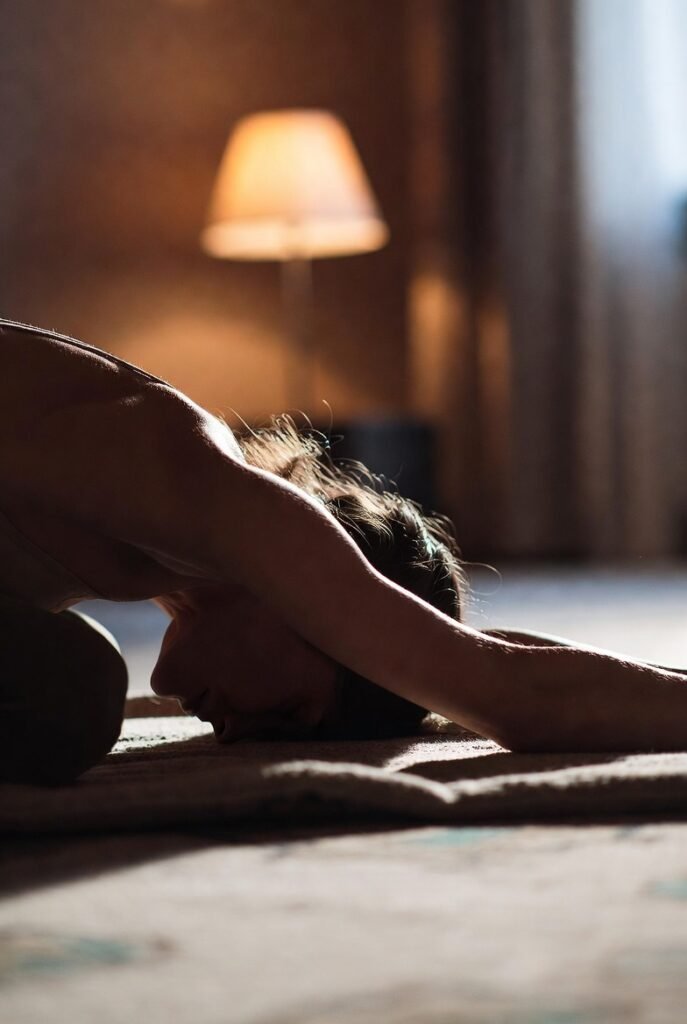
Many therapists and yoga teachers point to Child’s Pose as one of the fastest ways to find relief in a stressful moment. It is easy to enter, quiet, and deeply calming.
Kneel with your big toes touching and knees spread wide. Sink your hips back toward your heels and rest your forehead on the mat, a block, or a folded blanket. Let your arms rest forward or alongside your body. Breathe slowly here for two to three minutes.
2. Cat Cow Pose
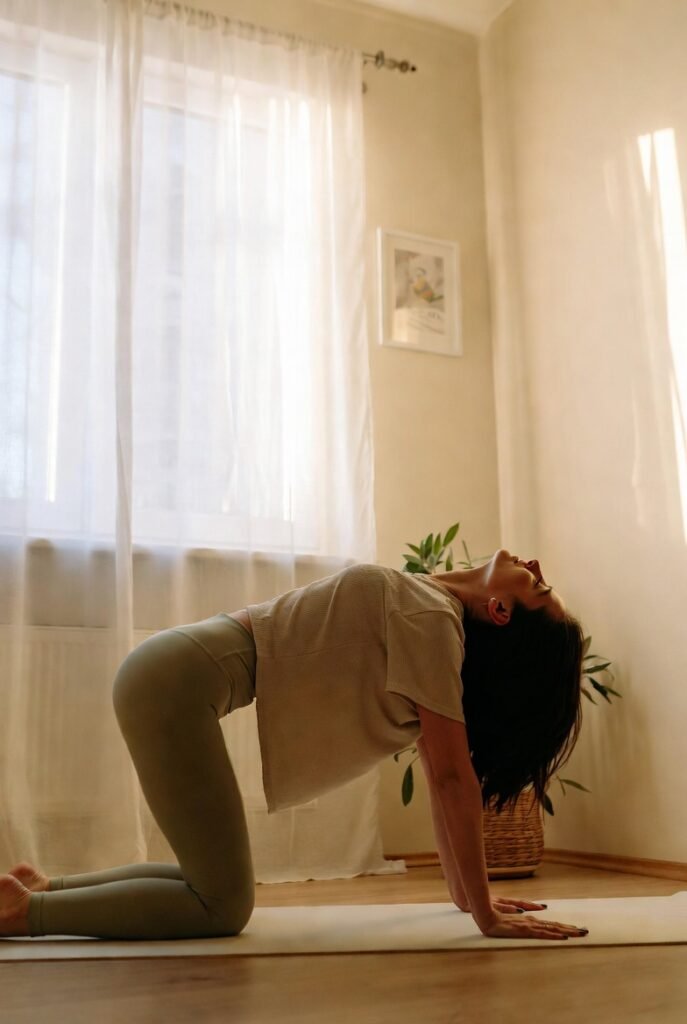
A gentle reset for a racing mind: Cat Cow pairs breath with movement, which naturally slows down both.
Come onto your hands and knees, wrists under shoulders, knees under hips. Inhale, lift your chest and tailbone into Cow. Exhale, round your spine into Cat, tucking your chin. Move slowly for 8 to 10 rounds, letting each breath lead each movement.
3. Seated Forward Fold
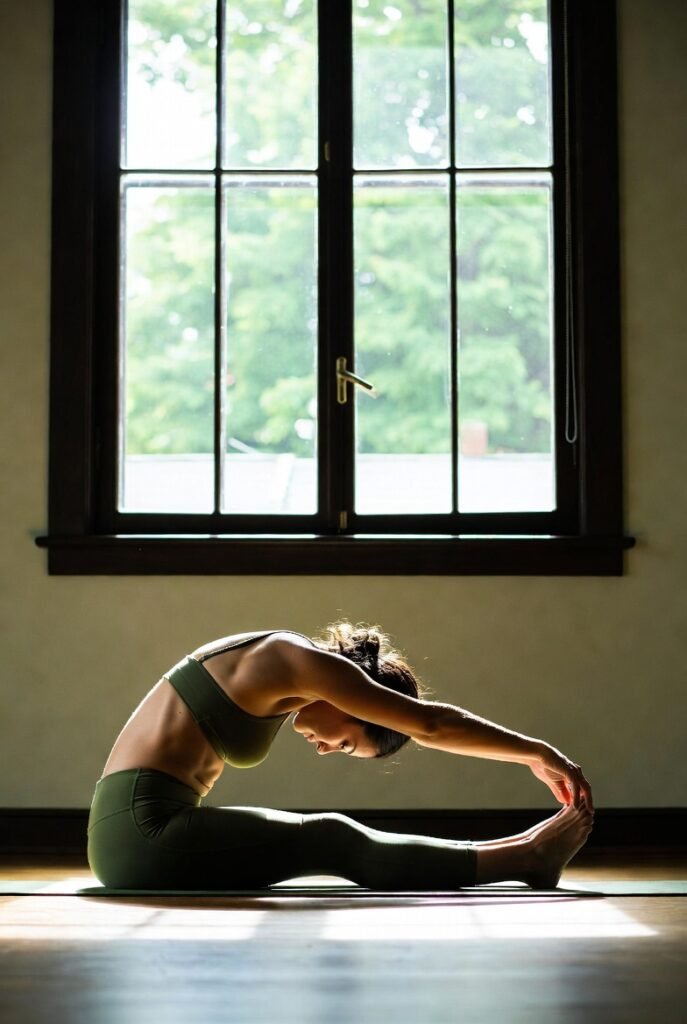
This pose turns your attention inward, away from external stress and toward your own breath.
Sit with legs extended in front of you. Inhale to lengthen your spine, then hinge forward from your hips, reaching toward your feet or shins. Keep a soft bend in your knees. Rest here, breathing slowly, for a minute or longer.
4. Reclined Bound Angle Pose (Supta Baddha Konasana)
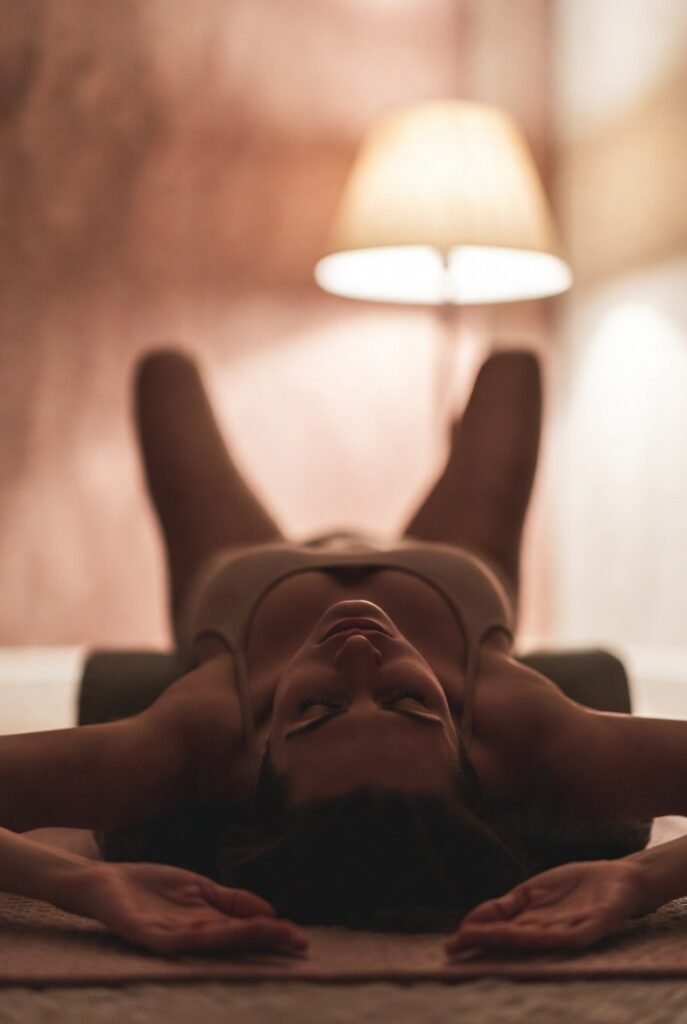
A deeply restorative shape that opens the chest and hips while letting your whole body soften into the floor.
Lie on your back, bring the soles of your feet together, and let your knees fall open to the sides. Support your knees with pillows or blocks if needed. Rest your hands on your belly and feel it rise and fall with each breath.
Read Also: Well Fit Look
5. Knees to Chest Pose (Apanasana)
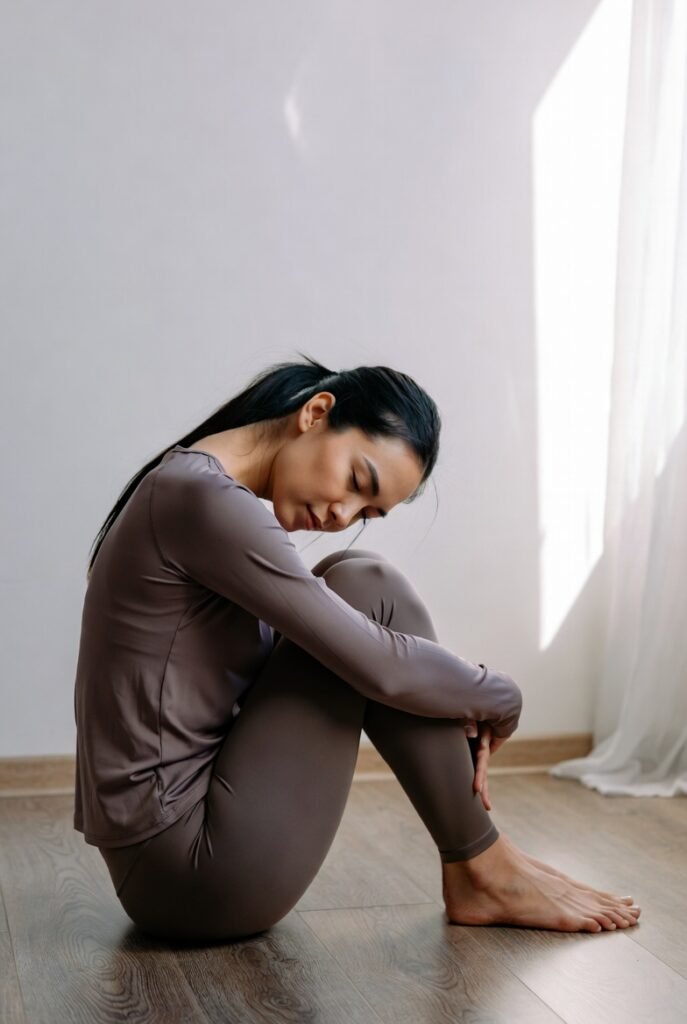
Sometimes called the “hug your worries out” pose, this simple shape releases tension while creating a feeling of self soothing comfort.
Lie on your back and draw both knees toward your chest, wrapping your arms around your shins. Rock gently side to side, or hold still and breathe deeply for a minute.
6. Supine Spinal Twist
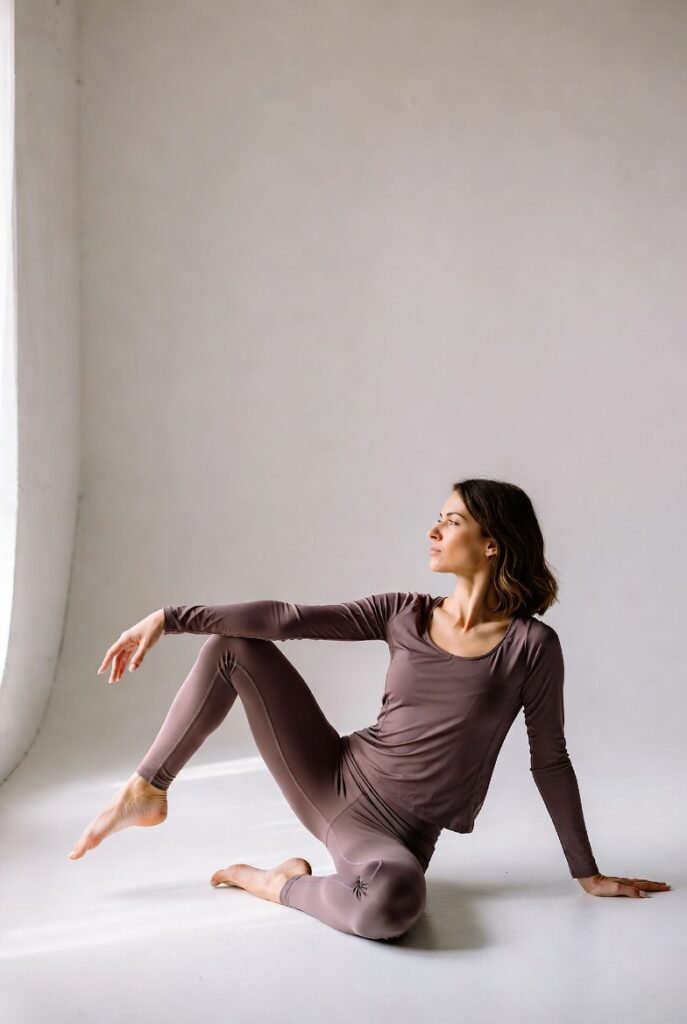
Twists are known for wringing out physical tension, and they also encourage slower, deeper breathing almost automatically.
From your back, draw your knees toward your chest, then let them fall gently to one side while your arms open into a T shape. Turn your gaze the opposite direction. Hold for 30 to 60 seconds, then switch sides.
7. Legs Up the Wall Pose
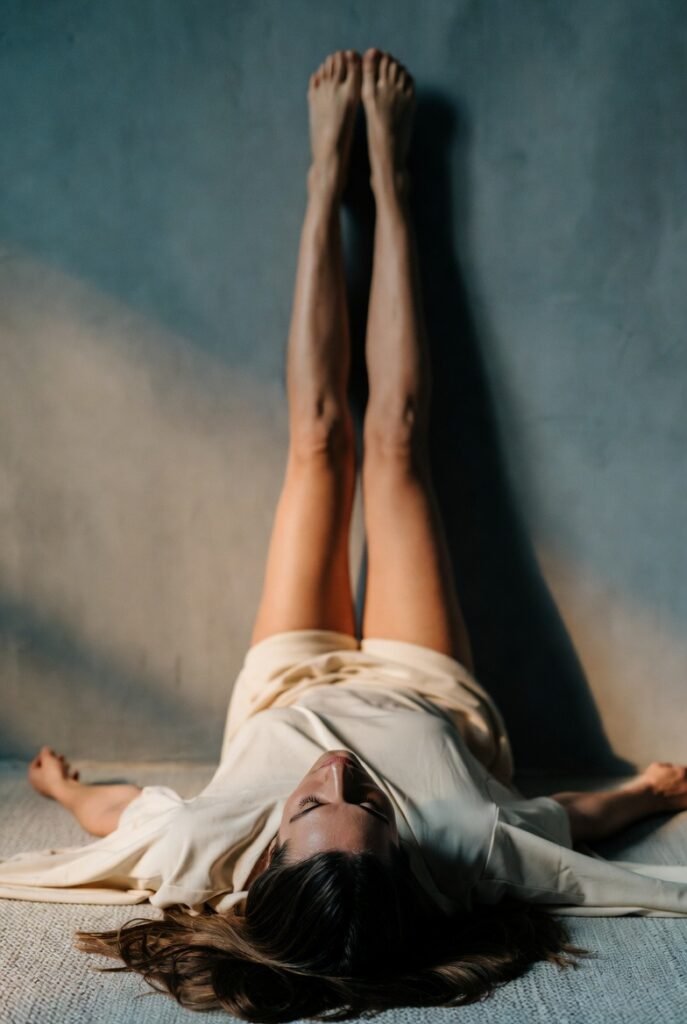
Often called the pose that can help with almost anything, Legs Up the Wall is one of the most reliable tools for calming an anxious nervous system quickly.
Sit sideways next to a wall, then swing your legs up as you lower your back to the floor. Rest your arms out to the sides, palms facing up. Close your eyes and stay for 5 to 15 minutes, focusing only on your breath.
8. Corpse Pose (Savasana)
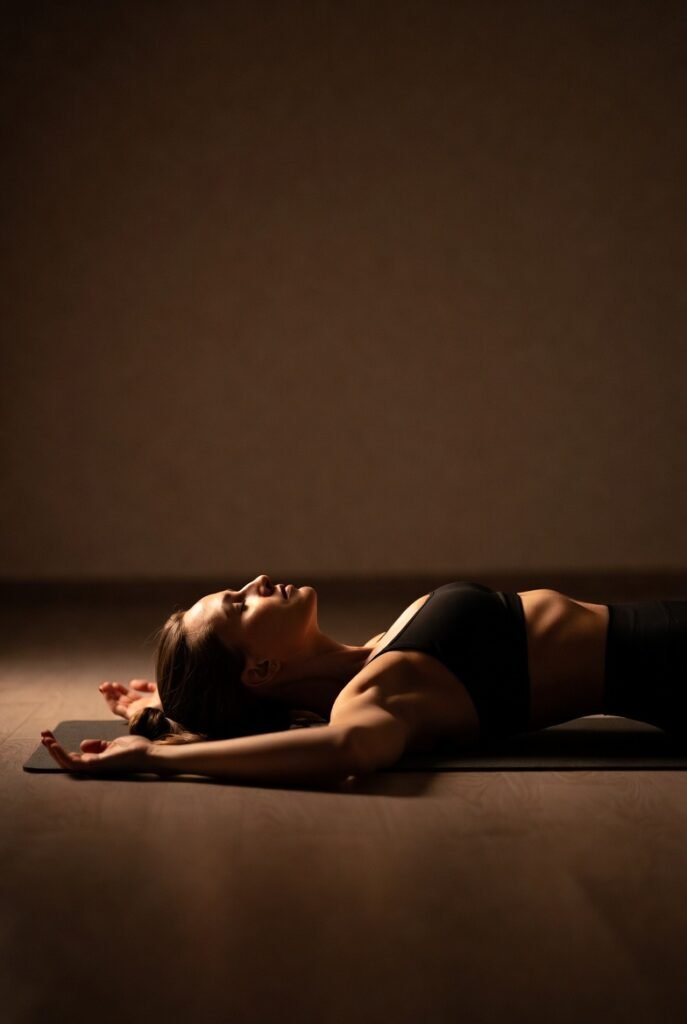
Do not underestimate this one simply because it looks like doing nothing. Savasana gives your nervous system the time it needs to fully register that it is safe.
Lie flat on your back, legs relaxed and slightly apart, arms resting by your sides with palms facing up. Close your eyes and let your entire body grow heavy. Stay for 3 to 10 minutes.
Seated Poses for a Calmer, Clearer Mind
9. Easy Pose (Sukhasana)
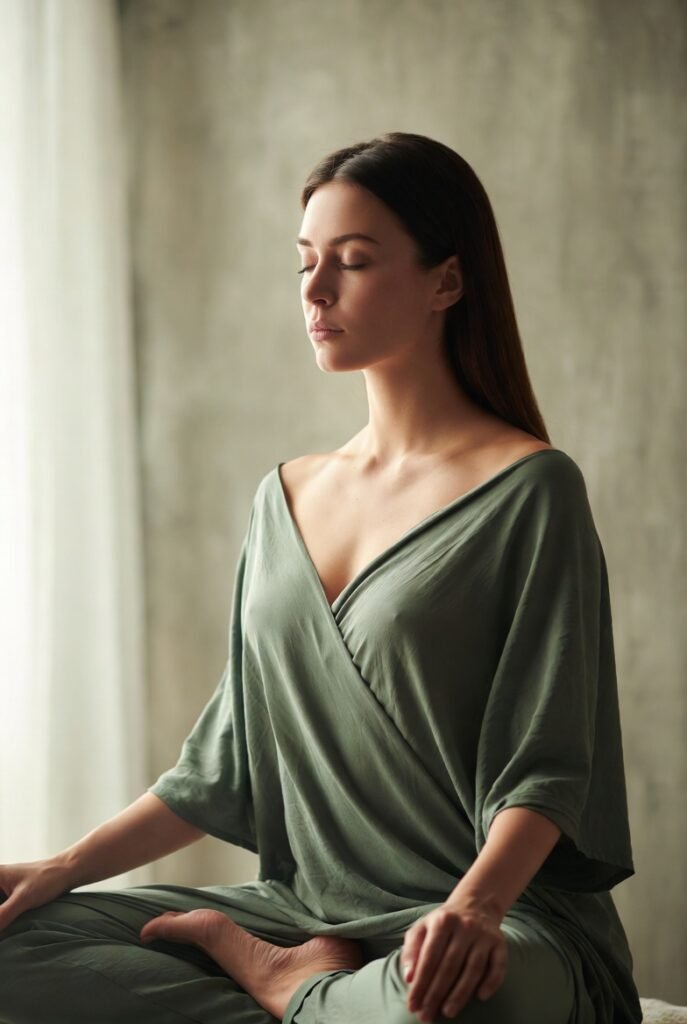
This is the classic cross legged seated posture, and it is more powerful than it looks. The stability of the position itself can help you feel steadier when your thoughts are not.
Sit on the floor or a cushion with your legs crossed comfortably. Lengthen your spine, relax your shoulders, and rest your hands on your knees. Close your eyes and take slow, even breaths for one to three minutes.
10. Seated Cat Cow
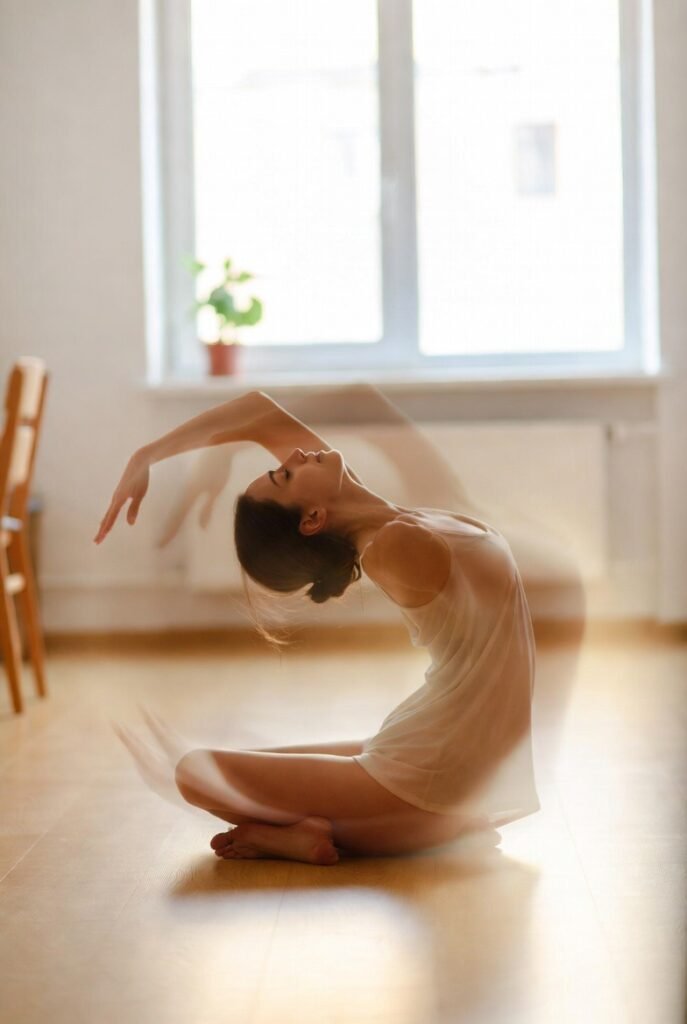
A desk friendly variation for whenever anxiety strikes in the middle of a workday and you cannot get down onto the floor.
Sit tall in a chair. Inhale, arch your back and lift your chest. Exhale, round your spine and drop your chin toward your chest. Repeat slowly for several rounds, matching each movement to your breath.
11. Cow Face Pose
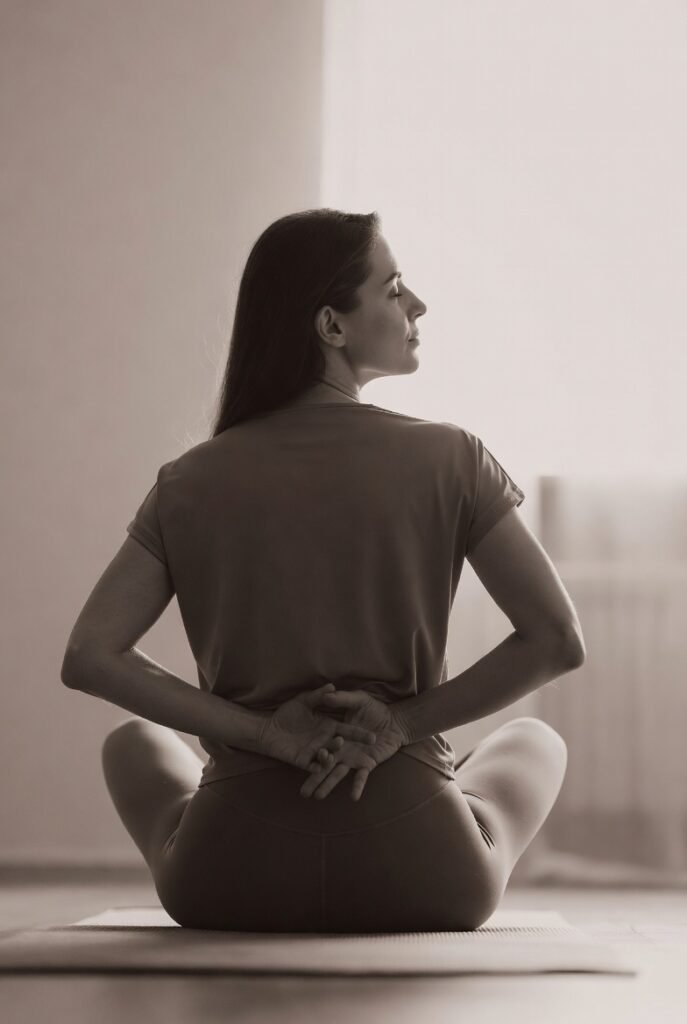
This seated shape gently opens the chest and shoulders, two areas that hold a surprising amount of anxiety related tension.
Sit and stack your right knee directly over your left, bringing your feet out to either side of your hips. If comfortable, reach your right arm up and over your shoulder, and your left arm up your back, trying to clasp your hands. Sit tall and breathe. Switch sides.
Standing and Balancing Poses for Grounding
12. Mountain Pose
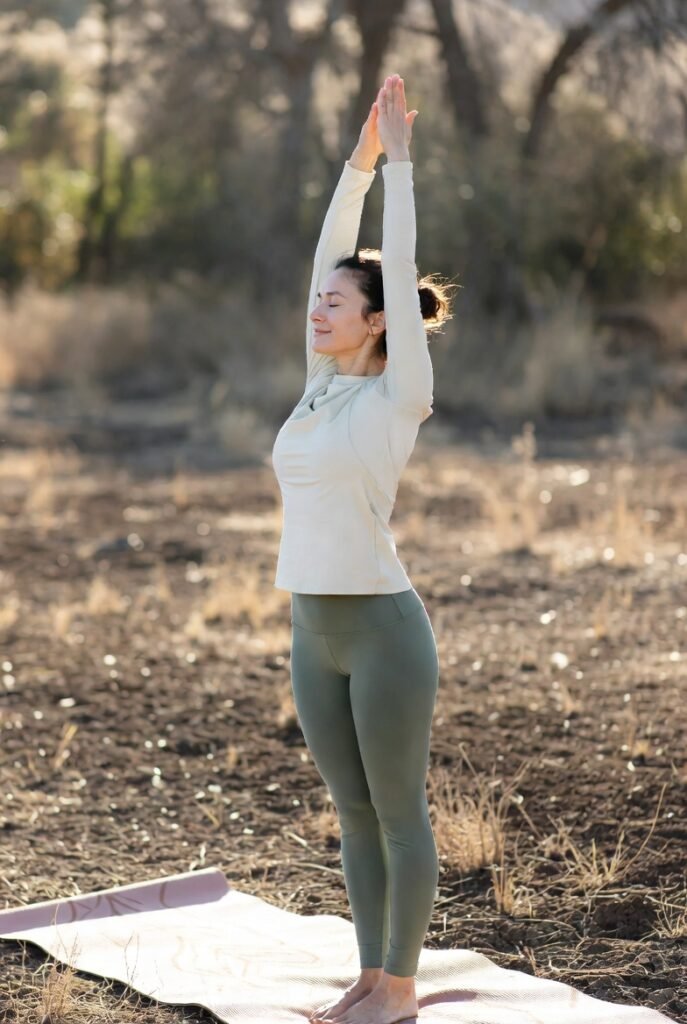
Save this one for the moments you feel completely scattered. Mountain Pose brings you back into your body through nothing more than standing still with intention.
Stand with feet hip width apart, weight even across both feet. Lengthen through your spine, relax your shoulders down and back, and take five slow breaths, noticing the ground beneath you.
13. Tree Pose
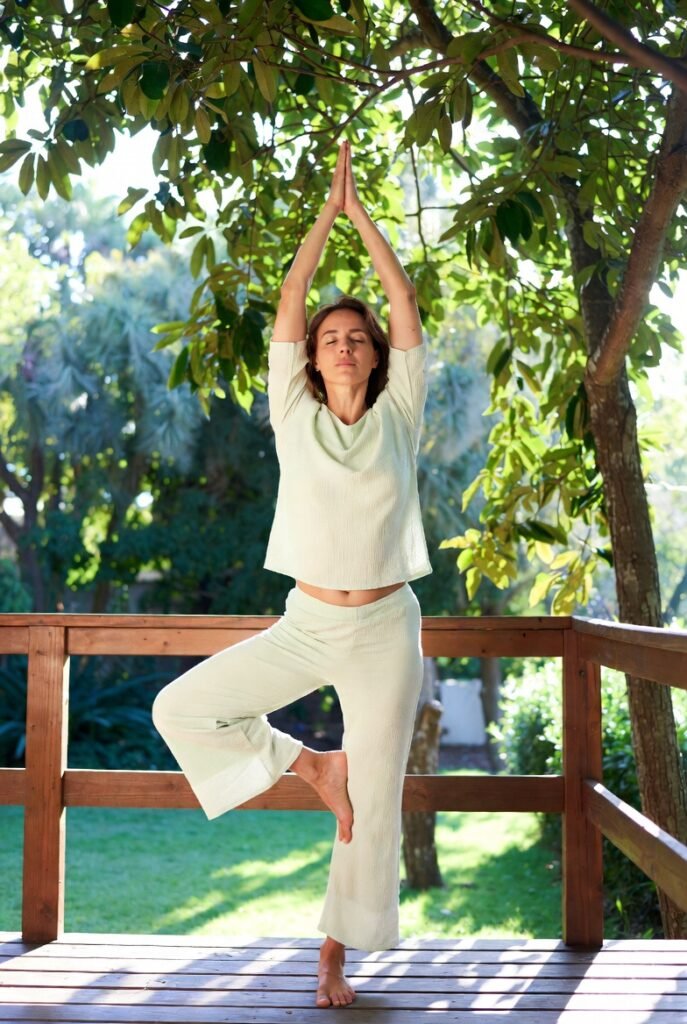
Balancing poses demand your full attention, which naturally quiets a racing, anxious mind, at least for the length of the pose.
From Mountain Pose, shift your weight onto your left foot. Place the sole of your right foot against your inner left calf or thigh, avoiding the knee. Bring your hands together at your heart or reach them overhead. Hold for 5 to 10 breaths, then switch sides.
14. Standing Forward Fold
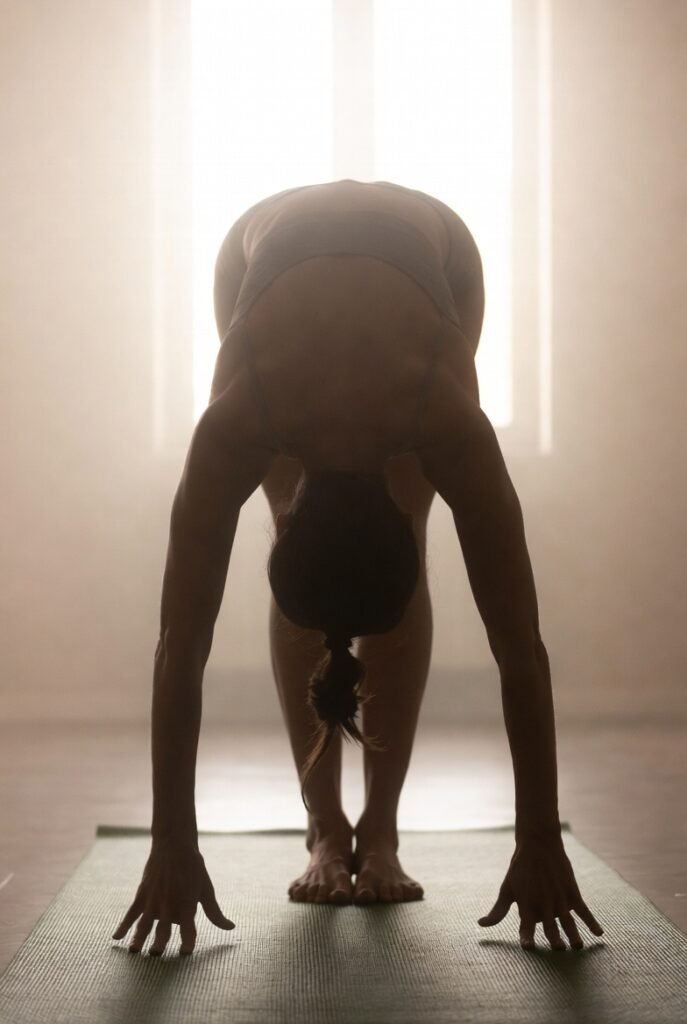
This pose uses gravity to release tension from the neck and shoulders, exactly where stress tends to settle first.
Stand with feet hip width apart. Exhale and hinge forward from your hips, letting your head and arms hang heavy. Bend your knees generously if your hamstrings are tight, and gently sway side to side to release any lingering tightness.
The Breathing Technique That Makes Every Pose More Effective
Poses alone help, but breath is where the real calming power lives. Try this simple pattern in any seated or resting pose above.
Inhale slowly through your nose for a count of 4. Hold gently for a count of 2. Exhale slowly through your nose or mouth for a count of 6. Repeat for at least 6 rounds.
The longer exhale is the key. It signals your nervous system to shift out of stress mode and into a calmer, more grounded state, and it works whether you are on a yoga mat or stuck in traffic.
A Simple 10 Minute Anxiety Relief Routine
Whenever stress starts to build, come back to this short sequence. It moves from grounding, into release, into full relaxation.
- Easy Pose with 4 count breathing, 1 minute
- Cat Cow Pose, 8 rounds
- Child’s Pose, 2 minutes
- Seated Forward Fold, 1 minute
- Supine Spinal Twist, 1 minute per side
- Legs Up the Wall Pose, 5 minutes
- Savasana, remaining time
Here’s the payoff: practiced consistently, even just a few times a week, this short sequence trains your body to find calm faster each time you return to it.
Tips for Practicing Yoga for Anxiety
- Move slowly. Rushing through poses works against the calming effect you are trying to create.
- Breathe through your nose whenever possible, since nasal breathing naturally slows and deepens each breath.
- Practice in a quiet, low light space if you can, free from notifications and screens.
- Some days a faster paced practice may feel more helpful than stillness, especially when anxiety feels very high. Both approaches are valid.
- Consistency matters more than duration. Five focused minutes daily builds more resilience than one long session a week.
When to Seek Additional Support
Yoga is a genuinely helpful tool, but it works best alongside proper support, not instead of it. Consider reaching out to a doctor or mental health professional if:
- Anxiety is interfering with work, relationships, or daily functioning
- You are experiencing panic attacks
- Feelings of worry are constant and difficult to control
- You are using avoidance, substances, or other coping methods that concern you
There is no weakness in asking for support. A yoga practice and professional care can absolutely work together.
Frequently Asked Questions
Which yoga pose is best for anxiety?
There is no single best pose, but Child’s Pose and Legs Up the Wall Pose are two of the most commonly recommended for fast, reliable relief.
How quickly does yoga help with anxiety?
Many people notice a calmer state within a single session, particularly with slow breathing and grounding poses. Long term reductions in overall anxiety typically build over several weeks of consistent practice.
Is fast paced or slow yoga better for anxiety?
It depends on the day and the person. Slower, restorative styles suit a racing, overwhelmed mind, while a faster paced practice can help burn off restless, anxious energy on other days.
Can yoga replace anxiety medication or therapy?
No. Yoga is a supportive tool that can reduce stress and improve overall wellbeing, but it should not replace medical or mental health treatment when that treatment is needed.
Do I need experience to start yoga for anxiety?
Not at all. Every pose above can be modified with props, and simply sitting and breathing counts as a valid, complete practice on its own.
How often should I practice yoga for stress relief?
Aiming for a short daily practice, even five to ten minutes, tends to build calm more effectively than one long weekly session.
Final Thoughts
Anxiety can make your body feel like it is working against you, but it does not have to stay that way. Each pose on this list is a small, doable way to remind your nervous system that it is safe to slow down.
You do not need an hour, a perfect quiet room, or years of practice. You need one pose, one slow breath, and a willingness to start exactly where you are today.
If this guide brought you even a little bit of calm, save it to your stress relief board on Pinterest so it is there the next time anxiety shows up.