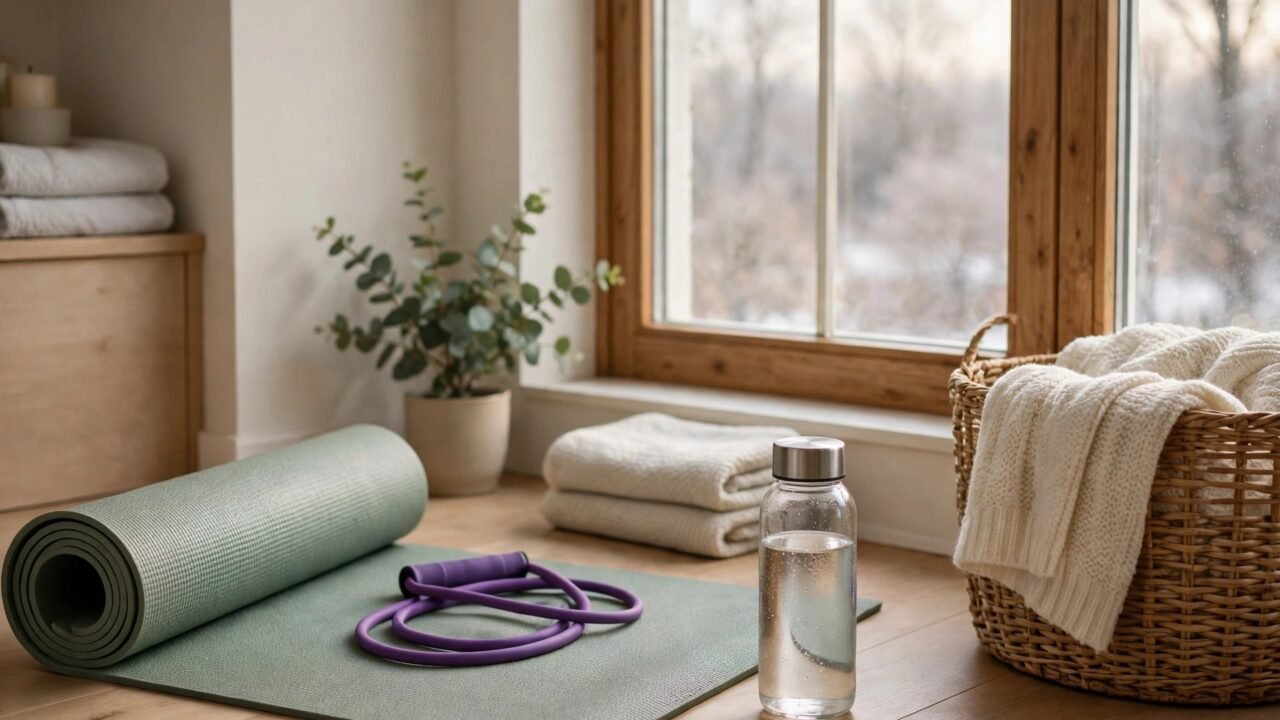
10 beginner indoor winter workouts can keep you active when cold days, dark mornings and icy paths make outdoor exercise hard. You do not need a gym, a large room or special equipment. A small clear space, a chair and a few minutes are enough to start.
These 10 beginner indoor winter workouts use slow, controlled moves that suit a fresh start. They build strength, balance and stamina without jumping or hard landings, so your joints stay comfortable on cold days. Each workout tells you what it is, who it suits, how to do it, a pro tip and a mistake to avoid.
If you are new to exercise or returning after a break, these 10 beginner indoor winter workouts give you a safe place to begin. Start with two or three moves, rest when you need to, and build up a little at a time.
Table of Contents

Why Indoor Workouts Work Well in Winter
Winter changes how we move. Cold air, short days and slippery paths can make a walk outside feel unappealing, and many people move less without planning to. An indoor routine removes those barriers, so you can train in a warm room at any time of day, with no travel and no weather to check.
Exercise means planned movement that builds fitness, strength and health, as described in the overview of exercise. At home, that can mean marching in place, rising from a chair or a gentle stretch. Small moves done often can build real strength over a few weeks, and these 10 beginner indoor winter workouts use that simple idea.
Cold muscles also need a gentle start, so a warm-up of easy marching and arm circles helps your body feel ready before you work harder. That is one reason these 10 beginner indoor winter workouts begin slowly and build up.
You do not need to finish every move on your first day, since a short session you enjoy is better than a long one that leaves you sore. Pick a time that suits you and let the routine fit your day.
10 Beginner Indoor Winter Workouts
Work through these moves in order, or pick two or three for a short session. Rest for 30 seconds between moves, and stop if you feel pain or dizziness. Talk with your doctor first if you have a health condition or an injury.
1. Indoor Walking and Marching
What it is: A gentle cardio move where you walk around your home or march in place, lifting your knees a little with each step.
Who it suits: Among the 10 beginner indoor winter workouts, this one suits complete beginners, older adults and anyone returning to exercise after a long break.
How to do it: Walk around your living room or march in place for five to ten minutes. Swing your arms gently, keep your back tall and breathe in a steady rhythm.
Pro tip: March during a song you like or while you wait for the kettle, since a daily habit makes it easier to keep.
Mistake to avoid: Do not rush the pace on your first day, since a calm, steady march warms your body better than a fast start.
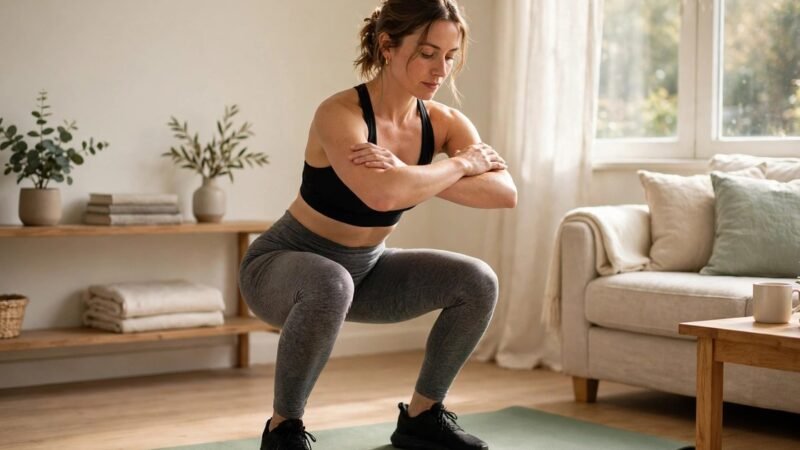
2. Chair Squats
What it is: A lower-body move where you lower yourself toward a chair and stand back up, using the chair as a safe guide.
Who it suits: This move is one of the 10 beginner indoor winter workouts that suits beginners who want stronger legs and people who sit for long hours.
How to do it: Stand in front of a sturdy chair, feet hip-width apart. Push your hips back, lower until you just touch the chair, then press through your feet to stand. Do 8 to 10 slow reps.
Pro tip: Keep your weight in your heels and your chest lifted, which protects your knees and helps your legs do the work.
Mistake to avoid: Do not drop onto the chair or bounce back up, since a slow, controlled lowering builds more strength.
3. Wall Push-Ups
What it is: A gentle upper-body move where you push away from a wall, building arm and chest strength without floor work.
Who it suits: This is one of the 10 beginner indoor winter workouts that suits beginners, people with wrist discomfort on the floor and anyone who wants a simple strength move.
How to do it: Stand an arm’s length from a wall, place your hands flat on it at shoulder height, bend your elbows to bring your chest closer, then push back. Do 8 to 10 slow reps.
Pro tip: Keep your body in one straight line from head to heels, so the move works your chest and arms.
Mistake to avoid: Do not let your elbows flare wide or your hips sag, since both can strain your shoulders.
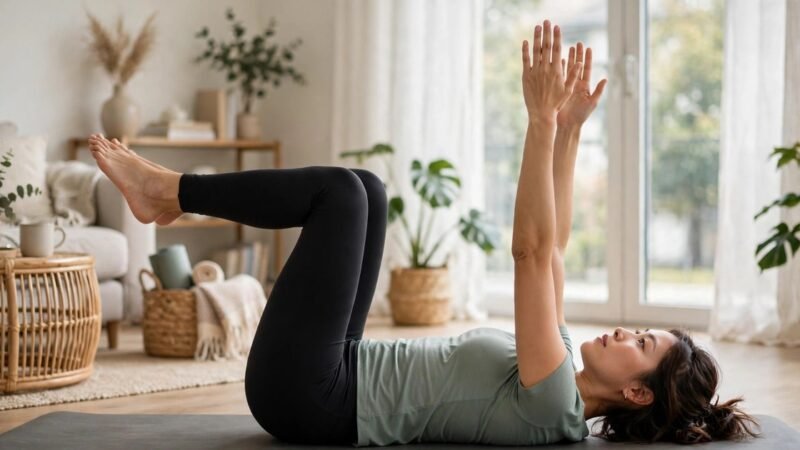
4. Glute Bridges
What it is: A floor move where you lie on your back, bend your knees and lift your hips, building strength in your glutes and lower back.
Who it suits: This move suits beginners, people who sit most of the day and anyone who wants a gentle move for hips and posture.
How to do it: Lie on your back with knees bent and feet flat. Press through your heels, lift your hips until your body forms a straight line, hold for a breath, then lower slowly. Do 10 reps.
Pro tip: Squeeze your glutes at the top and keep your ribs relaxed, which adds strength without arching your back.
Mistake to avoid: Do not lift your hips too high, since an overarched back can leave your lower back sore.
5. Standing Knee Lifts
What it is: A balance and core move where you lift one knee at a time while standing tall, with a chair nearby for support.
Who it suits: Of the 10 beginner indoor winter workouts, this one suits beginners working on balance, older adults and anyone who wants a gentle core move without floor work.
How to do it: Stand tall near a chair, lift one knee to hip height, lower it slowly, then lift the other knee. Do 8 lifts on each side, moving at a calm pace.
Pro tip: Hold the chair lightly with one hand at first, and try the move with just a fingertip touch as your balance improves.
Mistake to avoid: Do not lean back or rush from side to side, since a tall, steady posture builds balance far better.
6. Gentle Step-Ups
What it is: A leg and balance move where you step up onto a low, sturdy step and step back down, one foot at a time.
Who it suits: This move suits beginners who want stronger legs and better balance, and people who have a safe step or low platform at home.
How to do it: Stand in front of a low step, place one foot on it, press through that foot to step up, then step back down slowly. Do 6 to 8 reps on each side.
Pro tip: Use a low, wide step against a wall so it cannot slide.
Mistake to avoid: Do not use a high step or a wobbly stool, since a step that is too high strains the knee.
7. Resistance Band Rows
What it is: A seated or standing pull move with a light resistance band, building strength in your upper back and arms.
Who it suits: Among the 10 beginner indoor winter workouts, this one suits beginners who sit at a desk, people with rounded shoulders and anyone who wants a simple band move.
How to do it: Hold a light band in both hands, arms forward, then pull it toward your chest and squeeze your shoulder blades together. Return slowly and do 10 reps.
Pro tip: Choose the lightest band first, so you can learn the shape before you move to a stronger band.
Mistake to avoid: Do not shrug your shoulders toward your ears; keep them low so your back muscles do the pulling.
8. Knee Plank Hold
What it is: A gentle core hold where you rest on your forearms and knees, keeping your body in a straight line for a short time.
Who it suits: This move suits beginners building core strength, people who find a full plank too hard and anyone who wants a steady, low-impact hold.
How to do it: Kneel on a mat, rest on your forearms, and walk your knees back until your body forms a straight line. Hold for 15 to 20 seconds, breathing normally.
Pro tip: Breathe out slowly as you hold, which keeps your core engaged without tensing your neck.
Mistake to avoid: Do not hold your breath or let your hips drop, since both make the hold harder than it needs to be.
9. Bird Dog
What it is: A slow balance move on hands and knees, where you reach one arm forward and the opposite leg back, then return.
Who it suits: This is one of the 10 beginner indoor winter workouts that suits beginners who want better balance and core control, and people who spend long hours sitting.
How to do it: Start on hands and knees, reach your right arm forward and your left leg back, hold for a breath, then return. Do 6 reps on each side.
Pro tip: Move slowly and keep your hips level, since a slow, level move builds more control.
Mistake to avoid: Do not lift your arm or leg too high, since a small, level reach keeps your back safe.
10. Gentle Yoga Flow at Home
What it is: A slow sequence of easy yoga poses, linked with calm breathing, that stretches the body and helps you cool down.
Who it suits: This move suits beginners, people who feel stiff in winter and anyone who wants a calm end to a home session, and it rounds off these 10 beginner indoor winter workouts well.
How to do it: Move through a few easy poses, such as a forward fold, a gentle twist and a seated stretch, holding each for three slow breaths. Finish lying down for a minute of quiet breathing.
Pro tip: Keep the flow short, about five minutes, and choose poses that feel comfortable.
Mistake to avoid: Do not push into a deep stretch or hold your breath, since gentle, steady breathing is what makes this flow useful.

A Simple Weekly Plan for Cold Days
A weekly plan helps these 10 beginner indoor winter workouts become a habit. Aim for three short sessions a week, with a rest day or a gentle walk between them, and keep each session to 15 to 20 minutes.
Health guidance from the CDC suggests adults aim for at least 150 minutes of moderate activity each week, plus muscle-strengthening activity on two or more days, as set out in its adult activity guidelines. You do not need to reach that total in your first week. Build toward it a little at a time with these 10 beginner indoor winter workouts, and count your walks and home sessions together.
A simple weekly workout plan ideas list can help you shape your three sessions around your week, with strength moves on Monday, a gentle flow on Wednesday and a short circuit on Friday. Keep the plan light, and change it when your week changes.
How to Stay Warm and Safe at Home
Start each session with three to five minutes of easy marching and arm circles, since cold muscles need time to warm up. Wear layers you can remove as you warm up.

Clear a space about the size of a yoga mat, and move any rugs or cords that could trip you. Use a sturdy chair for support, keep a wall close for balance moves, and keep the light good so you can see your footing.
Listen to your body as you work. Mild effort and warm muscles are normal, but sharp pain, dizziness or chest discomfort are signs to stop and rest. If you feel unwell, talk with your doctor before you train again, since these 10 beginner indoor winter workouts are meant to help you feel stronger, not to push you past a safe limit.
Frequently Asked Questions About 10 Beginner Indoor Winter Workouts
Can 10 beginner indoor winter workouts help me get fit at home?
Yes. These 10 beginner indoor winter workouts build strength, balance and stamina with simple moves you can repeat three times a week. You may not see big changes in a week, but steady practice over a month can make daily tasks feel easier.
How long should a beginner home workout last?
A beginner session of these 10 beginner indoor winter workouts can last 15 to 20 minutes, including a warm-up and a cool-down. Start with ten minutes if that feels right, and add a few minutes each week. A short session done often is better than a long session done once.
Do I need equipment for indoor winter workouts?
No. Most of these moves use only your body weight and a chair. A light resistance band adds variety for the row, but you can skip it and do wall push-ups instead.
What is the best time of day to work out indoors in winter?
The best time for these 10 beginner indoor winter workouts is the time you will keep. Many people like a morning session because it warms the body and sets a steady tone for the day. If mornings feel hard, a short session after lunch or before dinner works just as well.
How do I add yoga to my indoor winter routine?
A gentle yoga flow works well as a cool-down or as a calm session on a rest day. You can follow gentle yoga for beginners at home for simple poses and breathing, and use the flow in this guide to finish a strength session.
For a weight goal, yoga for weight loss beginners offers a next step when you feel ready, and it builds on the same easy moves in these 10 beginner indoor winter workouts.
Is it safe to work out at home if I have a health condition?
Talk with your doctor before you start, and begin with the easiest moves in this guide. A short session with rest breaks is a safe start, but your doctor can advise on moves to avoid.
Your First Winter Week at Home
These 10 beginner indoor winter workouts give you a warm, simple way to stay active through the cold months. You do not need a gym or a long session to feel the difference, since a few short sessions each week can build strength and lift your mood.

Start these 10 beginner indoor winter workouts this week with three short sessions, keep your space clear and your pace calm, and rest when you need to. If you would like a calm habit to pair with movement, calm daily mental health habits can help you build a steady winter routine.


2 Comments