
10 winter running tips for beginners can turn a cold, grey morning into the best part of your day. You do not need to be fast, fit, or used to the cold to run outside in winter, and you do not need expensive gear to start. You need warm layers, a gentle plan, and a few simple habits that keep you safe on icy paths and in cold air.
Running outside in winter feels different from a summer jog, and that is part of the charm. The air is crisp, the streets are quiet, and a short run can leave you feeling awake and calm in a way that indoor exercise rarely matches. The 10 winter running tips for beginners in this guide are written for a first-timer, so every tip is simple, practical, and easy to try on your very next run.
Each of the 10 winter running tips for beginners below tells you what it is, who it suits, how to do it, a pro tip, and a mistake to avoid. Start with the first three or four, add more as they feel natural, and follow the four-week plan at the end to build from short run-walk intervals into a steady winter running habit.
Table of Contents
Why Winter Running Feels Different (and Doable)
Cold air changes how a run feels from the first step, and knowing what to expect makes it much easier. Your muscles feel stiffer at the start, your breathing feels sharper, and your body takes longer to warm up than it does on a mild day. The 10 winter running tips for beginners in this guide work with those changes instead of fighting them, so you start slow, warm up properly, and finish feeling good.

Winter running has quiet rewards that keep people coming back once they try it. The paths are empty, the light is soft, and a short run in cold air can clear your head in a way that a busy gym never does. The 10 winter running tips for beginners below help you enjoy those rewards without shivering through them, because comfort in winter running comes from preparation, not toughness.
December is a kind month to start, because the days are short and the air is cold but rarely at its worst. If you like a gentle way to build your outdoor habit between run days, these December walking challenge ideas give you short walking goals that pair well with the 10 winter running tips for beginners in this guide.
You do not need to run far to call yourself a winter runner. A ten-minute run-walk on a cold morning counts, and three short outings a week will teach your body more than one long, miserable slog. The 10 winter running tips for beginners in this guide are built around that idea: small, steady runs that you can repeat, week after week, all winter long.
Before Your First Cold Run: The Safety Basics
Check the weather and the wind chill before you step outside, and let the forecast decide whether you run or rest. Cold plus wind steals body heat fast, and a day with an icy wind, falling snow, or a storm warning is a day to stay inside. The 10 winter running tips for beginners in this guide are written for ordinary cold days, not for ice storms or extreme cold, so skip the run when conditions turn dangerous.
Check with your doctor before you start if you have a heart condition, asthma, or a breathing problem that cold air makes worse, or if you take medicine that affects how your body handles cold. This guide gives general information only, and it is not a treatment plan. A doctor can tell you which precautions suit your situation, and that short conversation is worth having before your first cold run.
Learn the early signs of frostbite and hypothermia, and take them seriously on every run. Frostbite often starts as numbness, tingling, or a stinging feeling on exposed skin. Hypothermia can show up as intense shivering, slurred speech, clumsiness, or unusual tiredness, and it needs help right away. The cold-weather training guidance from Mayo Clinic explains these warning signs and the layering checks that keep a cold run safe.
Tell someone where you are running and when you expect to be back, especially if you run alone in the dark. A short message to a partner, a friend, or a family member costs nothing and means someone knows where to look if you are late. Stick to lit, familiar routes where other people walk, and carry your phone in a pocket where you can reach it easily.
On a day when the forecast says stay inside, the 10 winter running tips for beginners in this guide wait for a better morning, and you can still move at home. These indoor walking workouts for 10000 steps give you short walking sessions that keep your legs moving without stepping into a storm, and they are a kind fallback for a day the weather wins.
Warm up before you leave the house, and cool down inside after you finish. Cold muscles are stiffer and more likely to complain, so a few minutes of gentle movement indoors makes the first cold steps much kinder. The 10 winter running tips for beginners below include a simple indoor warm-up, a cool-down habit, and a pacing plan that keeps your first weeks easy.
10 Winter Running Tips for Beginners
Use this list as a menu, not a test. Each tip below tells you what it is, who it suits, how to do it, a pro tip, and a mistake to avoid. The 10 winter running tips for beginners cover clothing, footing, breathing, visibility, and pacing, so every part of a cold run gets a turn without any single tip doing all the work.

Pick three or four tips to start, and practise them on your first few runs. When a tip feels like second nature, add another one from the list. A routine built this way grows with you, and the four-week plan later in this guide shows you exactly how to add the 10 winter running tips for beginners week by week.
1. Dress in Three Layers
What it is: A simple clothing system with a thin base layer that moves sweat away from your skin, a middle layer that traps warmth, and a windproof outer layer that blocks cold air and light snow. It keeps you warm without making you sweat through one heavy coat.
Who it suits: This tip suits every beginner, and it is one of the 10 winter running tips for beginners that matters most on your very first cold run.
How to do it: Start with a thin synthetic top that wicks moisture, and skip cotton next to your skin because it stays wet and cold. Add a fleece or wool layer over it for warmth, then finish with a light windproof jacket that you can unzip as you warm up. Wear thermal tights or leggings on your legs, and add a hat, gloves, and warm socks to protect the places that get cold first.
Pro tip: If you feel a little chilly during your indoor warm-up, you have layered correctly, since your body will warm up fast once you start running.
Mistake to avoid: Do not wear a thick cotton sweatshirt as your main layer, since cotton holds sweat against your skin and leaves you colder than when you started.
2. Start Slightly Chilly
What it is: A dressing rule that stops you from piling on too many layers before you run. You dress as if the air were about ten degrees warmer than it really is, because running generates heat and your body warms up within a few minutes.
Who it suits: This tip suits beginners who tend to overdress, and it is one of the 10 winter running tips for beginners that saves you from finishing a run soaked in sweat.
How to do it: Before you leave the house, step outside for a minute and notice how the air feels. If you feel warm and cosy standing still, take off one layer before you start. Aim to feel slightly cool in the first minute of running, and trust that the warmth will come as your legs find their rhythm.
Pro tip: Tie a spare layer around your waist instead of leaving it at home, so you can put it back on for the walk home when your body cools down.
Mistake to avoid: Do not dress for the coldest minute of the run, since overdressing makes you sweat, and sweat in cold wind is what makes you shiver.
3. Warm Up Indoors for Five Minutes
What it is: A short, gentle warm-up done inside your home before you step into the cold. It wakes up your muscles, loosens your joints, and raises your body temperature, so the first cold steps feel far less stiff.
Who it suits: This tip suits every beginner, and it is one of the 10 winter running tips for beginners that makes the biggest difference on a freezing morning.
How to do it: March in place for one minute, then do ten slow leg swings on each side while you hold a chair for balance. Follow with ten arm circles, ten gentle squats, and a slow walk around the room for the last minute. Step outside only when your body feels warm and your legs feel loose.
Pro tip: Do your warm-up in the layers you will run in, so your body is already used to them before the cold air hits.
Mistake to avoid: Do not skip the warm-up and sprint out of the door, since cold muscles are stiff and a fast start is the quickest way to strain something.
4. Shorten Your Stride on Snow and Ice
What it is: A running style for slippery ground, where you take small, quick steps and land with your feet underneath your body instead of reaching far ahead. It keeps your weight centred and gives you a better chance of staying upright.
Who it suits: This tip suits anyone running on snow, slush, or patchy ice, and it is one of the 10 winter running tips for beginners that prevents the most common winter falls.
How to do it: When the ground turns slippery, slow down and shorten your steps until your feet land close beneath your hips. Keep your knees slightly bent and your arms out a little wider for balance, like a skater finding their footing. Walk the icy patches instead of running them, and never feel embarrassed about it, since walking a bad patch is the smart choice.
Pro tip: Look a few steps ahead, not down at your feet, so you can spot ice and slush early and change your line before you reach it.
Mistake to avoid: Do not take long, reaching strides on ice, since a foot landing far ahead of your body is the classic recipe for a slip.
5. Choose Shoes With Grip
What it is: Footwear that holds its grip on snow, slush, and wet pavement, so every step feels steady. Trail running shoes with deep tread work well, and slip-on traction devices that fit over your shoes add extra bite on icy days.
Who it suits: This tip suits beginners who run on untreated paths, and it is one of the 10 winter running tips for beginners that matters most after fresh snow.
How to do it: Pick running shoes with a deep, lugged sole that can bite into soft snow, and wear them with warm wool socks that stay warm even when they get damp. On icy mornings, pull a pair of slip-on traction devices over your shoes and test them on your doorstep before you set off. Keep your shoes by the door so they are dry and ready for the next run.
Pro tip: Go up half a shoe size if your winter socks are thick, since cramped toes get cold faster and sore sooner.
Mistake to avoid: Do not run in smooth-soled trainers on snow or ice, since a flat sole slides on a frozen surface no matter how careful you are.
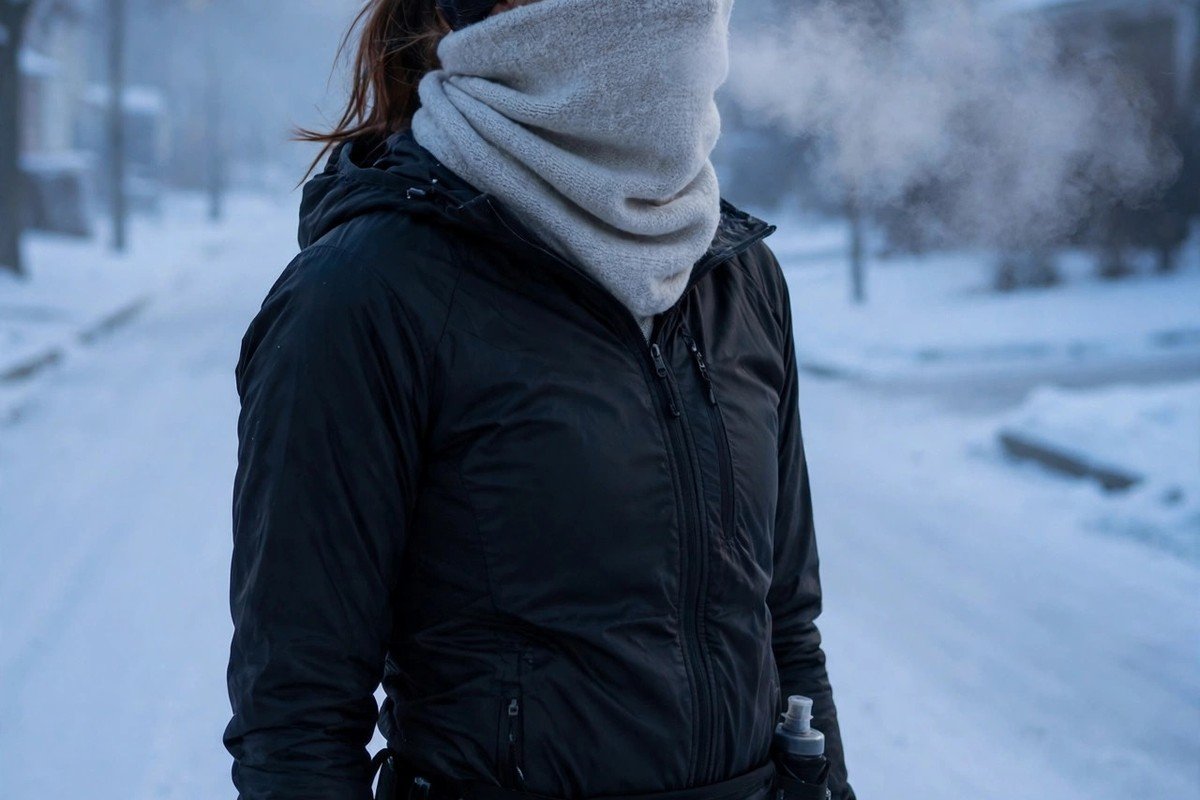
6. Breathe Through a Scarf or Buff
What it is: A simple way to soften cold air before it reaches your lungs, by breathing through a light scarf, a neck buff, or a thin balaclava. The fabric warms and moistens the air a little, so each breath feels less sharp.
Who it suits: This tip suits beginners who cough or feel a tight chest in cold air, and it is one of the 10 winter running tips for beginners that makes cold mornings far more comfortable.
How to do it: Pull a light buff or a thin scarf up over your mouth and nose before you leave the house, and breathe in through your nose when you can. Slow your pace if breathing feels hard, and switch to a gentle run-walk rhythm until your breathing settles. If you have asthma or a breathing problem that cold air triggers, talk to your doctor about the best way to protect yourself before you run.
Pro tip: Carry a spare buff in your pocket, since a damp one loses its warmth and a dry one feels much better halfway through a run.
Mistake to avoid: Do not force fast, open-mouthed breathing in very cold air, since a slower pace with calmer breathing is kinder to your chest.
7. Be Seen in the Dark
What it is: A visibility habit for winter’s short days, when many runs happen in dim light or full darkness. Bright colours, reflective strips, and a small light make you easy for drivers and cyclists to spot.
Who it suits: This tip suits anyone who runs before sunrise or after sunset, and it is one of the 10 winter running tips for beginners that keeps you safe on every dark run.
How to do it: Wear a bright top or jacket in yellow, orange, or white, and add reflective strips on your arms, legs, or shoes so car headlights catch you. Clip on a small headlamp or a chest light for unlit paths, and choose well-lit streets over dark shortcuts whenever you can. Run facing oncoming traffic on roads without pavements, so you can see cars coming and step aside early.
Pro tip: Put your light and reflective gear by the door with your shoes, so you never leave without them on a dark morning.
Mistake to avoid: Do not run in dark clothes on an unlit road, since a driver cannot avoid what they cannot see.
8. Run Into the Wind First
What it is: A route-planning habit where you run against the wind on the way out and let it push you home. It means you face the coldest, hardest part while you are still fresh, and you finish with the wind at your back.
Who it suits: This tip suits beginners on windy winter days, and it is one of the 10 winter running tips for beginners that stops a run from ending in a cold, tired struggle home.
How to do it: Check which way the wind is blowing before you leave, then plan your out-and-back route so the first half runs into it. When you turn for home, the wind will be behind you, and your sweaty clothes will stay warmer in the tailwind. On a loop route, start into the wind and let the sheltered side of the loop carry you back.
Pro tip: Save the downhill or the easy stretch for the way home, so the last part of your run feels kind even on a blustery day.
Mistake to avoid: Do not run with the wind at your back first, since you will arrive at the far point warm and sweaty, then face a freezing headwind all the way home.
9. Drink Water Even When You Are Not Thirsty
What it is: A hydration habit for cold runs, where you drink before, during, and after your run even though the cold makes you feel less thirsty. You still sweat in winter, and cold air dries you out with every breath.
Who it suits: This tip suits every beginner, and it is one of the 10 winter running tips for beginners that people forget most often.
How to do it: Drink a glass of water before you leave, and carry a small bottle on runs longer than twenty minutes. Sip little and often, and finish with a glass of water when you get home. The American Heart Association cold-weather activity guide notes that thirst is not the best guide to hydration in cold weather, and that staying warm and dry depends on layers and fluids.
Pro tip: Keep your water bottle upside down in a pocket or inside your jacket on very cold days, so the opening does not freeze shut.
Mistake to avoid: Do not wait until you feel thirsty to drink, since thirst arrives late in cold weather and dehydration can leave you tired and chilled.
10. Cool Down Indoors and Change Fast
What it is: A finish-line habit where you walk the last few minutes, step inside, and change out of damp clothes straight away. It stops your body temperature from dropping fast once you stop moving, which is when winter runs feel coldest.
Who it suits: This tip suits every beginner, and it is one of the 10 winter running tips for beginners that turns a good run into a comfortable ending.
How to do it: Slow to a walk for the last three to five minutes of your run, so your breathing and heart rate settle before you stop. Step inside, take off your damp base layer, and put on dry clothes and warm socks right away. Stretch gently for a few minutes in the warm room, then enjoy a warm drink and a few slow breaths before you sit down for the day.
Pro tip: Lay your dry clothes out before you leave, so changing is quick and easy when you walk back through the door.
Mistake to avoid: Do not stand outside chatting in sweaty clothes after your run, since a still body in damp layers cools down fast and leaves you shivering.
A Simple 4-Week Start-Slow Plan
A plan turns ten separate tips into a habit you can follow without thinking. The 10 winter running tips for beginners above work best when you practise a few of them on every run, rather than trying to remember all ten on day one and feeling overwhelmed.

In week one, run three times, with each session lasting about twenty minutes in total. Warm up indoors for five minutes, then alternate one minute of gentle running with two minutes of walking, and finish with a walk home and a change into dry clothes. This first week is about learning the layers, the footing, and the breathing, so keep every run slow and every step short.
In week two, keep the same three sessions, but stretch the running intervals to two minutes with one minute of walking between them. Practise running into the wind on the way out, and check your shoes and socks after each run to see what kept you warm. The 10 winter running tips for beginners are meant to be added one or two at a time, so your body and your routine have a chance to settle before the next step.
In week three, run for three minutes and walk for one, for about twenty-five minutes, and try one run in light snow if the ground feels safe. Keep your pace easy enough to talk in short sentences, and walk any icy patch without hesitating. To understand that easy pace better, these zone 2 cardio workouts for beginners explain how gentle effort builds fitness, and they sit well beside the 10 winter running tips for beginners in this guide.
In week four, run for five minutes and walk for one, for a total of about thirty minutes per session, and try a new route that you have checked in daylight first. Keep the sessions to three times a week, and take at least one rest day between runs so your legs recover. On rest days, keep moving gently or simply rest, since recovery is part of getting fitter.
After four weeks, repeat the plan with the 10 winter running tips for beginners, using slightly longer running intervals or one extra session a week, and notice which tips feel automatic now. That quiet progress is the real result, and it usually shows up first as warmer feet, steadier footing, and a run that ends with a smile instead of a shiver.
Frequently Asked Questions About 10 Winter Running Tips for Beginners
The 10 winter running tips for beginners above cover clothing, footing, breathing, visibility, and pacing, so here are answers to the questions readers ask most often. If you are new to winter running, start with short run-walk sessions and add more as the habit settles, and remember to check with your doctor first if you have a heart condition, asthma, or a breathing problem that cold air triggers.
How cold is too cold for 10 winter running tips for beginners?
Skip the run when the temperature drops below zero, when the wind chill is extreme, or when an ice storm or heavy snow makes the ground dangerous. The 10 winter running tips for beginners are written for ordinary cold days, so a day like that is a good day to stay inside. If you want to move on a day you cannot run, these beginner indoor winter workouts offer short sessions you can do at home.
What should I wear for my first winter run?
Wear three layers on top: a thin synthetic base layer, a fleece or wool middle layer, and a light windproof jacket, with thermal tights, warm socks, gloves, and a hat. The 10 winter running tips for beginners above explain each layer in detail, and the key is to feel slightly chilly at the start, since you will warm up fast. Avoid cotton next to your skin, because it stays wet and cold once you sweat.
How do I breathe in cold air without coughing?
Breathe through a light scarf or buff, slow down until your breathing settles, and breathe in through your nose when you can. The 10 winter running tips for beginners suggest a run-walk rhythm when the air feels sharp, so you never have to gasp through a whole run. If cold air triggers coughing, wheezing, or chest tightness, talk to your doctor before your next run, since they can help you find a safer way to run in winter.
Can I run in snow and ice as a beginner?
Yes, on light snow and well-trodden paths, with short steps, shoes that grip, and a willingness to walk the icy patches. The 10 winter running tips for beginners above cover footing and footwear in detail, and the golden rule is to slow down rather than push through. Skip the run when the ground is sheet ice, when a storm is falling, or when you cannot see where you are stepping.
How often should I run in my first winter?
Three times a week is a good start, with at least one rest day between runs. The 10 winter running tips for beginners work best with regular, short sessions rather than one long run, so twenty to thirty minutes on three days beats a single hour-long push. Your legs need rest days to recover and grow stronger, so treat the days between runs as part of the plan.
10 Winter Running Tips for Beginners to Start This Week
The 10 winter running tips for beginners in this guide prove that winter running does not need speed, toughness, or expensive gear. Three layers, a five-minute indoor warm-up, short steps on slippery ground, and a gentle run-walk plan are enough to start running outside in the cold.

Lay out your layers tonight, check the forecast, and try your first short run tomorrow morning with the 10 winter running tips for beginners in your pocket. Then keep exploring the guides on Well Fit Look for more gentle, practical ideas for a warm, active winter.




1 Comment