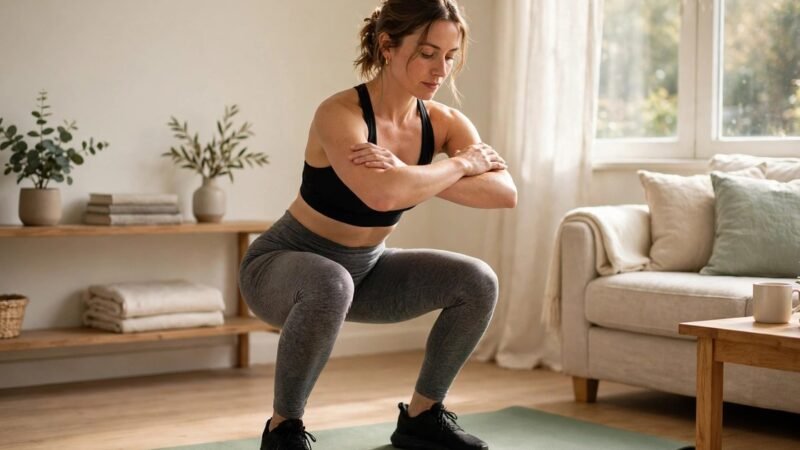
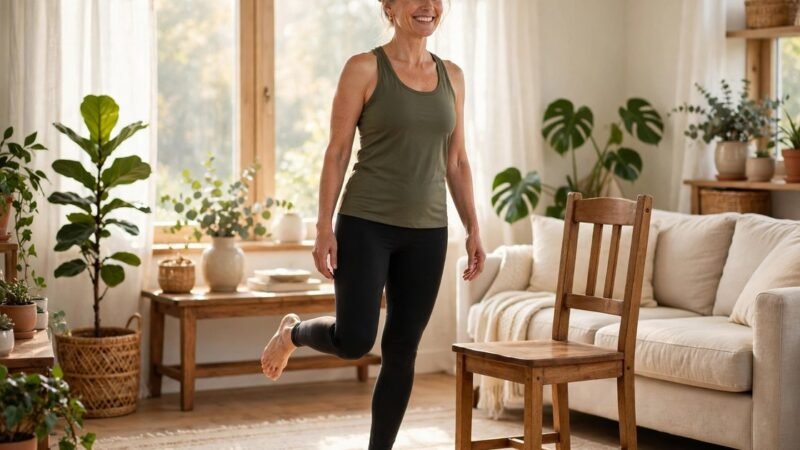
10 core exercises for beginners at home can turn a wobbly first session on the living-room floor into a routine you actually look forward to. You need no equipment, no gym, and no past experience, just a mat or a rug and ten quiet minutes. These moves build the deep muscles around your belly, back, and hips that hold you steady when you lift, twist, reach, and walk.
A strong core is not about visible stomach muscles. It is about feeling steady when you carry groceries, stand up from a low chair, or reach for a shelf without thinking twice. The 10 core exercises for beginners at home in this guide work those supporting muscles gently, one slow move at a time, so you build strength without rushing or straining.
Each exercise below tells you what it is, who it suits, how to do it, a pro tip, and a mistake to avoid. Start with the first three or four, add more as they feel easy, and follow the four-week plan at the end to turn ten separate moves into one simple routine.
Table of Contents
Why a Strong Core Makes Everyday Life Easier
Your core is the group of muscles around your middle that keeps your spine steady while the rest of your body moves. When those muscles are weak, everyday jobs like bending to tie your shoes or lifting a laundry basket can feel harder than they should. The 10 core exercises for beginners at home in this guide start with that steady base. The 10 core exercises for beginners at home in this guide wake those muscles up with slow, controlled moves that ask for steadiness rather than speed.
A stronger core also helps your balance and your posture. When your middle is steady, your shoulders sit more easily over your hips, and your steps feel more sure on uneven ground. Health guidance supports building this kind of strength little by little, and the CDC physical activity guidelines for adults note that adults benefit from muscle-strengthening activity on two or more days each week, alongside regular movement through the week.
The best part is that core work fits into a small space and a short window of time. Ten minutes on the floor after breakfast or before bed is enough to practise two or three moves well, and a short session you repeat beats a long session you dread. The 10 core exercises for beginners at home below are all floor moves, so you can do them in your living room in comfortable clothes, with the kettle on and no one watching.
Core strength and balance go hand in hand, and one supports the other. If you enjoy the steadiness these moves build, these balance exercises for beginners at home work the same quiet muscles from a standing position, and they pair naturally with the 10 core exercises for beginners at home in this guide.
How to Start Your First Core Routine at Home
Start on a mat, a thick rug, or a folded blanket, with enough floor space to stretch your arms and legs out wide. Wear clothes you can move in, keep a glass of water nearby, and give yourself ten to fifteen minutes without rushing. The 10 core exercises for beginners at home in this guide are designed for a first session, so there is no need to warm up for long: a minute of gentle marching in place and a few slow shoulder rolls is enough.
Breathe steadily through every move in the 10 core exercises for beginners at home, and never hold your breath while you strain. A good rule is to breathe out on the effort, such as when you lift your hips or reach an arm out, and breathe in as you return to the start. If a move makes you hold your breath, you are pushing too hard, so ease off and try a shorter hold or fewer repeats.
Check with your doctor before you start if you have back pain, a recent injury, or post-surgery status, or if you have a health condition that affects how you move. This guide gives general information only, and it is not a treatment plan. A doctor or a qualified exercise professional can tell you which moves suit your situation and which ones to skip for now, and that short conversation is worth having before your first session.
Form matters more than numbers, especially in the first weeks. The Mayo Clinic core exercise guide explains that classic core moves like bridges and planks work best when you keep your back in a neutral position and tighten your stomach muscles gently, rather than arching or forcing the movement. Five slow, well-shaped repeats teach your body more than fifteen rushed ones, and the 10 core exercises for beginners at home below are written with that slow pace in mind.
When the floor moves start to feel easy, you can add variety later rather than adding weight straight away. A longer hold, one extra round, or a slower lowering phase is usually enough of a next step for a beginner. If you later want to try weighted work, these dumbbell workouts for women over 40 show how to add hand weights safely once your form in the 10 core exercises for beginners at home feels steady.
10 Core Exercises for Beginners at Home
Use this list as a menu, not a test. Each move below tells you what it is, who it suits, how to do it, a pro tip, and a mistake to avoid. The 10 core exercises for beginners at home cover lying, hands-and-knees, and side positions, so every part of your middle gets a turn without any single move doing all the work.

Pick three or four moves to start, and practise them two or three times a week. When a move feels steady and your breathing stays calm through it, add one more from the list. A routine built this way grows with you, and the four-week plan later in this guide shows you exactly how to add the 10 core exercises for beginners at home week by week.
1. Dead Bug
What it is: A lying move where you press your lower back gently toward the floor while you slowly lower one arm and the opposite leg. It teaches your core to stay steady while your limbs move, which is the skill behind almost every other exercise in this guide.
Who it suits: This move suits complete beginners, and it is one of the 10 core exercises for beginners at home that works well for anyone who wants a gentle start without sitting up or crunching.
How to do it: Lie on your back with your knees bent over your hips and your arms reaching up toward the ceiling. Press your lower back softly into the mat, breathe out, and slowly lower your right arm and left leg toward the floor. Stop before your back arches, breathe in, and return to the start, then swap sides for five slow repeats on each side.
Pro tip: Move so slowly that you could stop at any point in the lowering phase, since control is the whole point of this move.
Mistake to avoid: Do not let your lower back lift off the mat as your leg drops, since that arch means your core has switched off.
2. Bird Dog
What it is: A hands-and-knees move where you reach one arm forward and the opposite leg back, holding your body still like a table. It builds balance and steadiness through your middle, your hips, and your shoulders at the same time.
Who it suits: This move suits anyone who sits a lot during the day, and it is one of the 10 core exercises for beginners at home that helps stiff backs and wobbly balance in one quiet move.
How to do it: Start on hands and knees with your hands under your shoulders and your knees under your hips. Breathe out and slowly reach your right arm forward and your left leg back until both are long and level with your body. Hold for three slow breaths, return to the start, and swap sides for five repeats on each side.
Pro tip: Imagine a glass of water balanced on your lower back, and keep it still as you reach.
Mistake to avoid: Do not let your hips rock from side to side as you lift your leg, since a rocking hip means your core is not holding steady.
3. Glute Bridge
What it is: A lying move where you lift your hips toward the ceiling while your feet stay flat on the floor. It wakes up the muscles at the back of your hips and your lower back, which support your core every time you stand or walk.
Who it suits: This move suits beginners with tight hips from sitting, and it is one of the 10 core exercises for beginners at home that feels comfortable even on a first try.
How to do it: Lie on your back with your knees bent and your feet flat on the floor, hip-width apart and close enough to touch with your fingertips. Breathe out, press through your heels, and lift your hips until your knees, hips, and shoulders form a straight line. Hold for three slow breaths, lower down with control, and repeat eight to ten times.
Pro tip: Squeeze your buttocks gently at the top, as if you were holding a coin between them, then release as you lower.
Mistake to avoid: Do not arch your lower back at the top of the lift, since your hips should rise from your leg muscles, not from bending your spine.
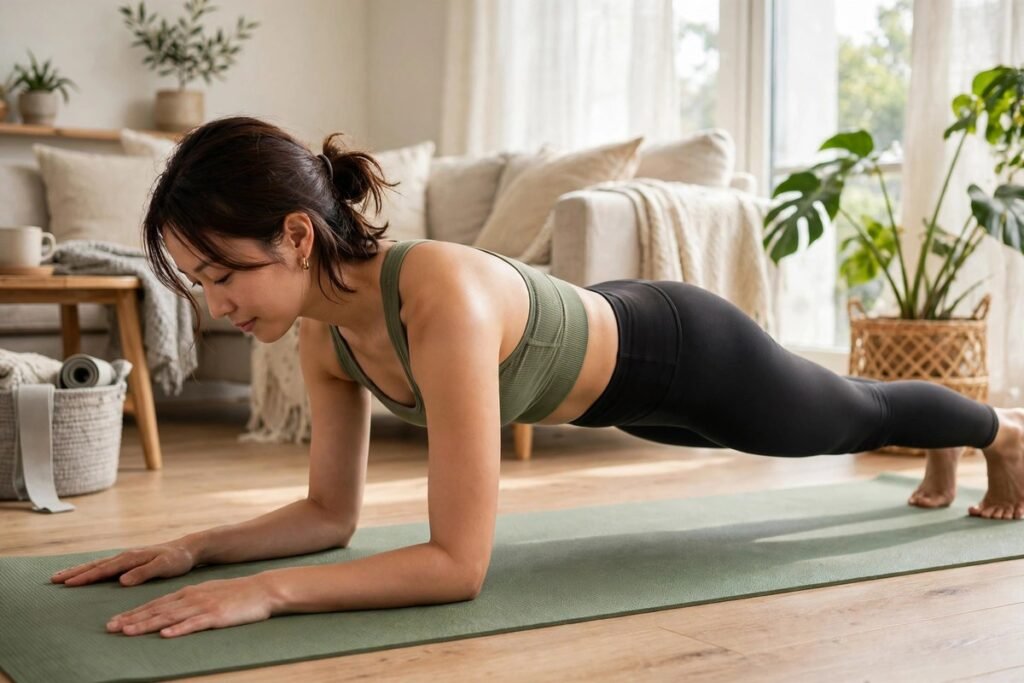
4. Forearm Plank
What it is: A still hold on your forearms and toes, with your body in one long line from head to heels. It asks your whole middle to work together quietly, and it is the simplest way to feel what a braced core actually feels like.
Who it suits: This move suits beginners who want one clear strength test, and it is one of the 10 core exercises for beginners at home that you can scale up simply by holding it a few seconds longer.
How to do it: Lie face down, place your forearms on the floor with your elbows under your shoulders, and tuck your toes under. Breathe out and lift your body into a straight line, keeping your neck long and your gaze down at the mat. Hold for ten to twenty seconds while you breathe steadily, then lower down and rest before a second hold.
Pro tip: Think about gently pulling your elbows toward your toes without actually moving them, since that cue switches your core on.
Mistake to avoid: Do not let your hips sag toward the floor or pike up toward the ceiling, since either shape takes the work away from your core.
5. Side Plank on Your Knee
What it is: A side hold on one forearm with your knees bent, your body in a straight line from head to knees. It works the muscles along the side of your waist that keep you upright when you carry a bag on one side or step sideways.
Who it suits: This move suits beginners who find a full side plank too hard, and it is one of the 10 core exercises for beginners at home that builds side strength without loading your wrists.
How to do it: Lie on your side with your forearm on the floor, elbow under your shoulder, and your knees bent with your feet behind you. Breathe out and lift your hips until your head, hips, and knees form a straight line. Hold for ten to fifteen seconds while you breathe, lower down, and repeat on the other side.
Pro tip: Press your forearm firmly into the mat and think about lifting your waist away from the floor.
Mistake to avoid: Do not roll forward or backward as you hold, since a steady side line is what makes this move work.
6. Heel Taps
What it is: A lying move where you lower one heel at a time to tap the floor while your core holds your lower back still. It is a smaller, kinder cousin of the dead bug, and it suits days when you want a gentle session.
Who it suits: This move suits anyone returning to movement after a break, and it is one of the 10 core exercises for beginners at home that you can do slowly while you watch your breathing.
How to do it: Lie on your back with your knees bent over your hips and your arms resting by your sides, palms down. Press your lower back softly into the mat, breathe out, and slowly lower your right heel to tap the floor. Breathe in as you lift it back, then swap sides for eight slow taps on each side.
Pro tip: Keep the movement small and slow, and stop the tap the moment your back starts to arch.
Mistake to avoid: Do not rush the taps or let your legs swing, since momentum takes the work away from your core.
7. Bear Hold
What it is: A hands-and-knees hold where you lift your knees just off the floor and hover them there. It looks simple, but it asks your core, shoulders, and hips to hold you steady in a small, quiet shape.
Who it suits: This move suits beginners who find planks hard on their wrists or shoulders, and it is one of the 10 core exercises for beginners at home that builds steadiness without lying down.
How to do it: Start on hands and knees with your hands under your shoulders and your knees under your hips. Tuck your toes under, breathe out, and lift your knees about two inches off the floor. Hold for five to ten seconds while you breathe steadily, lower your knees, rest, and repeat four to six times.
Pro tip: Keep your back flat like a tabletop, and breathe out slowly through the hold instead of holding your breath.
Mistake to avoid: Do not lift your knees too high or let your back round, since a small hover with a flat back is the goal.
8. Bent-Knee Hollow Hold
What it is: A lying hold where you lift your head, shoulders, and bent knees slightly off the floor and hold the curved shape. It teaches your front core muscles to work together, and it is a gentle first step toward a full hollow hold.
Who it suits: This move suits beginners who want a little more challenge after the dead bug, and it is one of the 10 core exercises for beginners at home that you can shorten to five seconds when you start.
How to do it: Lie on your back with your knees bent over your hips and your arms reaching toward your knees. Breathe out, lift your head and shoulders a little off the floor, and hold the curved shape while you breathe steadily. Hold for five to ten seconds, lower down gently, rest, and repeat four to six times.
Pro tip: Press your lower back into the mat before you lift, and keep that gentle pressure all through the hold.
Mistake to avoid: Do not pull on your neck with your hands or strain your chin toward your chest, since your stomach muscles should do the lifting.
9. Prone Back Extension
What it is: A face-down move where you lift your chest a few inches off the floor using the muscles along your spine. It balances all the front-focused moves in this guide by strengthening the back of your core.
Who it suits: This move suits anyone who spends long hours sitting, and it is one of the 10 core exercises for beginners at home that helps your posture when your shoulders tend to round forward.
How to do it: Lie face down with your forehead resting on your hands and your legs long behind you. Breathe out and lift your chest a few inches off the floor, keeping your gaze down and your neck long. Hold for three slow breaths, lower down with control, and repeat six to eight times.
Pro tip: Think about lengthening your spine forward as you lift, rather than bending backward as far as you can.
Mistake to avoid: Do not lift so high that your lower back pinches, since a small lift with a long spine works the right muscles.
10. Slow Mountain Climbers
What it is: A plank move where you slowly draw one knee at a time toward your chest while your hands stay planted on the floor. It adds gentle movement to a plank, and it trains your core to stay steady while your legs work.
Who it suits: This move suits beginners who are ready for a slightly livelier finish to their routine, and it is one of the 10 core exercises for beginners at home that still lets you move at your own pace.
How to do it: Start in a high plank on your hands with your shoulders over your wrists and your body in a straight line. Breathe out and slowly draw your right knee toward your chest, then return it and draw your left knee in. Keep the pace slow and your hips level, and do six slow steps on each side.
Pro tip: Move one leg at a time and pause briefly with each knee in, since a pause keeps the move slow and controlled.
Mistake to avoid: Do not bounce your hips or rush the steps, since speed turns a core move into a cardio scramble.
A Simple 4-Week Starter Plan
A plan turns ten separate moves into a routine you can follow without thinking. The 10 core exercises for beginners at home above work best when you practise a few of them regularly, rather than trying all ten on day one and feeling sore the next morning.

In week one, practise the dead bug, the glute bridge, and the bird dog, two or three times a week. Do one or two rounds of each move, rest a minute between rounds, and finish with a slow stretch. This first week is about learning the shapes and breathing calmly, so keep every hold short and every movement slow.
In week two, add the forearm plank and the heel taps to your three week-one moves. Hold the plank for ten seconds, then fifteen when that feels steady, and keep the heel taps slow. The 10 core exercises for beginners at home are meant to be added one or two at a time, so your body has a chance to adjust before the next step.
In week three, add the side plank on your knee and the bear hold, and try two rounds of the full set of seven moves from the 10 core exercises for beginners at home. Rest as long as you need between moves, and skip any move that feels uncomfortable on a given day. A routine you can finish calmly is better than a longer one you cut short.
In week four, add the bent-knee hollow hold, the prone back extension, and the slow mountain climbers, so you are practising all ten moves. Keep the sessions to fifteen or twenty minutes, three times a week, and take at least one rest day between sessions. If you want gentle movement on your rest days, these beginner indoor winter workouts offer short, low-impact sessions that sit well beside a core routine.
After four weeks, repeat the plan with the 10 core exercises for beginners at home, using slightly longer holds or one extra round, and notice which moves feel easiest now. That quiet progress is the real result, and it usually shows up in everyday life first: standing taller, carrying bags more easily, and feeling steadier on your feet.
Frequently Asked Questions About 10 Core Exercises for Beginners at Home
The 10 core exercises for beginners at home above cover lying, hands-and-knees, and side positions, so here are answers to the questions readers ask most often. If you are new to core work, start with three moves and add more as the habit settles, and remember to check with your doctor first if you have back pain or a recent injury.
How often should I do 10 core exercises for beginners at home?
Two or three times a week is a good start, with at least one rest day between sessions. The 10 core exercises for beginners at home work best with regular, short sessions rather than one long session, so ten to fifteen minutes on three days beats a single forty-minute push. Your muscles need rest days to recover and grow stronger, so treat the days between sessions as part of the plan.
How long until I feel stronger?
Most beginners notice small changes within three to four weeks, such as holding a plank a few seconds longer or keeping their back steady through a dead bug. The 10 core exercises for beginners at home build strength gradually, and everyday signs often appear first, like standing taller or feeling steadier when you carry something heavy. Keep your sessions regular, and let the small gains add up week by week.
Do I need any equipment for these core exercises?
No. Every move in this guide uses your body weight on the floor, and a mat or a thick rug is the only thing that makes it more comfortable. If you later want to add variety, a cushion under your knees for the side plank is a kind help, but nothing in the 10 core exercises for beginners at home needs weights, bands, or a gym.
Can I do these exercises if I have a bad back?
Check with your doctor first, and stop any move that causes sharp pain. Some readers with back pain find gentle moves like the glute bridge and the heel taps comfortable, while others need to skip the plank holds for now, so your own situation decides. The 10 core exercises for beginners at home are general information, not a treatment plan, and a doctor or a qualified exercise professional can help you choose the moves that suit your back.
What should I do on rest days?
Walk gently, stretch lightly, or simply rest, since recovery is part of getting stronger. If you like a little structure on rest days, these indoor walking workouts for 10000 steps give you short walking sessions you can do at home, and they pair well with the 10 core exercises for beginners at home in this guide.
10 Core Exercises for Beginners at Home to Start This Week
The 10 core exercises for beginners at home in this guide prove that core strength does not need equipment, a gym, or a single crunch. A dead bug, a glute bridge, a bird dog, and a short plank are enough to start building the steadiness that makes everyday life feel easier.

Roll out your mat tonight, pick three moves from the 10 core exercises for beginners at home, and practise them slowly for ten minutes. Then keep exploring the guides on Well Fit Look for more gentle, practical ideas for a stronger, steadier everyday life.