10 lymphatic drainage workouts for beginners can help you move gently, breathe more deeply, and feel lighter without a hard workout. If you sit most of the day, your body may feel stiff, heavy, or sluggish by the evening.
These moves use slow bouncing, walking, stretching, and breathing to support the natural flow of lymph.
The 10 lymphatic drainage workouts for beginners below are all low impact and easy to do at home. You need little space, no gym, and only a few minutes to start.
Table of Contents
Why Gentle Movement Supports Lymph Flow
Your lymphatic system is a network of vessels and nodes that carries lymph, a clear fluid, through your body. It helps clear away waste and keeps fluids in balance, and it works best when you move often.
Unlike your heart, which pumps blood, your lymphatic system relies on muscle movement and breathing. Slow steps, arm swings, and deep breaths gently squeeze the vessels and help lymph keep moving. That is why the 10 lymphatic drainage workouts for beginners in this guide use short, easy sessions instead of one long, tiring workout.
The 10 lymphatic drainage workouts for beginners in this guide are slow, rhythmic, and kind to your joints. A few minutes, done most days, is a good place to start.
You do not need special skill to begin, and you do not need to push through pain. If you want a simple walking routine to pair with these moves, these simple indoor walking workouts can help you build a steady daily habit at home.
For background on the gentle hands-on technique this idea comes from, read the Cleveland Clinic guide to lymphatic drainage massage explained. It describes how lymph moves through vessels and nodes, and why slow, light pressure is used.
10 Lymphatic Drainage Workouts for Beginners
Use the 10 lymphatic drainage workouts for beginners below as a menu, not a test. Each one tells you what it is, who it suits, how to do it, a pro tip, and a mistake to avoid.

Pick two or three that feel good and try them for a week. You can mix a short bounce, a walk, and a stretch in one ten-minute session, or spread them through your day. If a move feels uncomfortable, slow down or choose a gentler one, and you can also borrow ideas from these cozy winter yoga poses when you want a slower stretch.
1. Gentle Rebounding on a Mini Trampoline
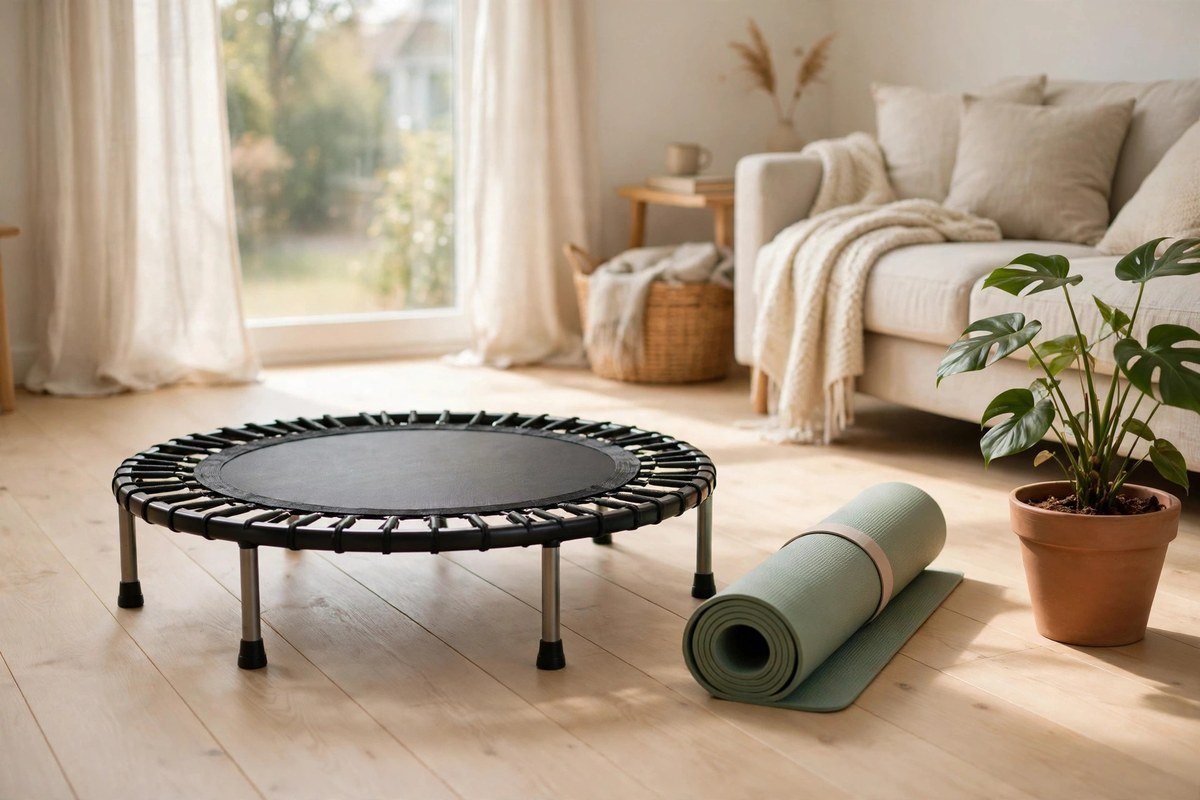
What it is: Gentle rebounding is a soft, low bounce on a small home trampoline, with your feet barely leaving the mat. The up-and-down motion is rhythmic and easy on your knees.
Who it suits: This move suits most beginners, and it is one of the 10 lymphatic drainage workouts for beginners that works well in a small living room.
How to do it: Stand tall in the centre of the trampoline with soft knees. Bounce gently for one to two minutes, keeping your feet low and your arms relaxed at your sides.
Pro tip: Keep the bounce small and quiet, as if you are bouncing on a soft mattress, and breathe out on each gentle landing.
Mistake to avoid: Do not bounce high or jump hard, since a big jump can jar your knees and make the move feel tiring instead of gentle.
2. Slow Indoor Walking
What it is: Slow indoor walking is a relaxed walk around your home, with easy arm swings and a steady, unhurried pace. It is one of the simplest ways to get your whole body moving.
Who it suits: This move suits everyone, and it is one of the 10 lymphatic drainage workouts for beginners that needs no equipment at all.
How to do it: Walk around your living room or hallway for five to ten minutes, swinging your arms gently with your shoulders down.
Pro tip: Walk after meals or during a phone call, so the movement fits into time you already use.
Mistake to avoid: Do not rush or stride hard, since a fast pace turns a gentle lymph session into a cardio workout.
3. Deep Diaphragmatic Breathing With Arm Raises
What it is: This is slow belly breathing paired with gentle arm raises. As your arms lift, your chest opens, and as you breathe out, your arms float back down.
Who it suits: This move suits people who sit a lot, and it is one of the 10 lymphatic drainage workouts for beginners that you can do in a chair or standing.
How to do it: Breathe in through your nose for four counts as you raise your arms overhead. Breathe out slowly for six counts as you lower them, and repeat five to eight times.
Pro tip: Place one hand on your belly and feel it rise as you breathe in.
Mistake to avoid: Do not hold your breath or lift your shoulders toward your ears, since tension in your neck makes the move feel harder.
4. Dry Brushing Before Movement
What it is: Dry brushing is a light, sweeping brush over dry skin with a soft natural brush, always stroking toward the centre of your body. It is a gentle ritual to do just before you move.
Who it suits: This ritual suits people who like a slow morning routine, and it is one of the 10 lymphatic drainage workouts for beginners that pairs well with walking or stretching.
How to do it: Brush your arms and legs with light, upward strokes toward your heart for two to three minutes, then follow with a short walk or a few stretches.
Pro tip: Keep the brush clean and dry, and replace it when the bristles feel rough or bent.
Mistake to avoid: Do not press hard or brush over broken, irritated, or sunburned skin, since firm brushing can hurt and is not needed.
5. Neck and Shoulder Rolls With Light Stretching
What it is: This is a slow series of neck rolls, shoulder rolls, and gentle side stretches. It eases the tight spots where many people hold tension all day.
Who it suits: This move suits desk workers and anyone with a stiff neck, and it is one of the 10 lymphatic drainage workouts for beginners that fits into a two-minute break.
How to do it: Roll your shoulders back five times, then slowly roll your neck in a small circle each way. Finish with a gentle side stretch, one arm overhead.
Pro tip: Move slowly and breathe out as you stretch, since a slow exhale helps tight muscles soften.
Mistake to avoid: Do not force your neck into a deep roll or crack it, since a gentle range is enough and pushing can cause soreness.
6. Seated Ankle Pumps and Calf Raises
What it is: Ankle pumps and calf raises are small, rhythmic foot and leg moves. They gently work the calf muscles, which help move fluid up from your lower legs.
Who it suits: This move suits people who sit for long hours, and it is one of the 10 lymphatic drainage workouts for beginners that you can do at a desk.
How to do it: Sit tall and lift your toes toward you, then point them away, ten times. Then lift both heels off the floor and lower them slowly, ten times, and repeat the set twice.
Pro tip: Do a set every hour while you work, so your legs get regular gentle movement through the day.
Mistake to avoid: Do not rush the lowering part, since the slow return is what makes the calf muscles work gently.
7. Gentle Yoga Flow for Beginners
What it is: A gentle yoga flow links a few easy poses with slow breathing. Cat-cow, child’s pose, and a slow standing forward fold are good places to start.
Who it suits: This flow suits people who like slow stretching, and it is one of the 10 lymphatic drainage workouts for beginners that works well in the morning or evening.
How to do it: Move through cat-cow for five slow breaths, rest in child’s pose for five breaths, then stand and fold forward softly for three breaths.
Pro tip: Keep a folded blanket nearby for your knees, and move only as far as feels comfortable.
Mistake to avoid: Do not hold a deep pose or force a stretch, since gentle range and steady breathing matter more than depth.
8. Arm Circles and Shoulder Opening
What it is: Arm circles are slow, wide circles made with straight arms, followed by a gentle chest opener. They move the shoulders, chest, and upper back.
Who it suits: This move suits people with tight shoulders, and it is one of the 10 lymphatic drainage workouts for beginners that takes less than three minutes.
How to do it: Make ten small circles forward with each arm, then ten back. Finish by clasping your hands behind your back and lifting them slightly as you open your chest.
Pro tip: Keep your ribs down and your neck long, so the circles come from your shoulders and not from shrugging.
Mistake to avoid: Do not swing your arms fast or use weights, since speed and load can strain your shoulders.
9. Legs-Up-the-Wall Restorative Pose
What it is: Legs-up-the-wall is a restful pose where you lie on your back with your legs resting up against a wall. Gravity helps fluid drain gently from your legs while you rest.
Who it suits: This pose suits tired legs at the end of the day, and it is one of the 10 lymphatic drainage workouts for beginners that feels like rest, not exercise.
How to do it: Sit sideways against a wall, swing your legs up, and lie back with a folded blanket under your hips. Rest for five to ten minutes, breathing slowly.
Pro tip: Keep a small cushion under your head and bend your knees slightly if your hamstrings feel tight.
Mistake to avoid: Do not stay in the pose if your legs tingle or go numb, since you should come out slowly and wiggle your feet first.
10. Slow Tai Chi-Inspired Flow
What it is: A slow tai chi-inspired flow is a series of smooth, flowing arm and leg moves done at a calm pace. Weight shifts from one foot to the other as your arms rise and fall like waves.
Who it suits: This flow suits people who enjoy calm, mindful movement, and it is one of the 10 lymphatic drainage workouts for beginners that works well outdoors or in a quiet room.
How to do it: Stand with soft knees and shift your weight slowly from side to side. Let your arms float up as you breathe in and drift down as you breathe out, for five to ten minutes.
Pro tip: Keep your gaze soft and your jaw relaxed, which helps your whole body stay loose while you move.
Mistake to avoid: Do not copy fast martial arts moves or hold deep stances, since this flow is meant to feel slow and easy.
A Simple Weekly Plan to Start Slowly
A simple week of 10 lymphatic drainage workouts for beginners does not need a strict schedule. Start with ten minutes a day, and let the habit grow on its own.

On Monday, Wednesday, and Friday, try rebounding for two minutes, then walk slowly for five minutes and finish with breathing and arm raises. On Tuesday and Thursday, do the yoga flow, shoulder rolls, and legs-up-the-wall for a calmer day.
If you want more beginner home workout ideas to round out your week, these beginner indoor winter workouts offer simple routines you can do in a small space. Keep the pace gentle and stop any move that feels uncomfortable.
The 10 lymphatic drainage workouts for beginners in this plan work best when you repeat them often. Short sessions most days beat one long session a week.
Safety Notes: When to Talk With Your Doctor
These moves are general information only, and they are not a treatment for any health condition. If you have lymphedema, swelling that does not go away, or a circulation problem, talk with your doctor before you start.

Your doctor can tell you which kinds of movement suit you and which to avoid. Bring a short list of the moves you want to try, and ask whether rebounding or dry brushing is right for you. If you have had surgery, an infection, or a recent injury, wait for your doctor’s advice.
For plain background on how the system works, the MedlinePlus page on the lymphatic system and lymphedema explains lymph, vessels, and nodes in simple terms. It is general information only, not personal medical advice.
Stop and rest if you feel dizzy, short of breath, or unwell during any move, and seek medical care if symptoms worry you. If gentle movement leaves you sore the next day, shorten the session and build up more slowly.
If you want a calmer routine on days when you feel tense, these low cortisol workouts for calm days offer slow, low-pressure ideas that pair well with this guide. Keep listening to your body, and let comfort guide how much you do.
Frequently Asked Questions About 10 Lymphatic Drainage Workouts for Beginners
Can 10 lymphatic drainage workouts for beginners help with swelling?
They may help you feel lighter and less stiff, but they are not a treatment for swelling. The 10 lymphatic drainage workouts for beginners in this guide use gentle movement and breathing to support normal lymph flow. If swelling is new, painful, or does not go away, talk with your doctor.
How often should I do these workouts?
Aim for a short session most days, about ten minutes at a time. The 10 lymphatic drainage workouts for beginners work best as daily gentle movement, and you can split the moves through your day if that suits you better.
Do I need a mini trampoline to start?
No, you do not need one. Walking, breathing, stretching, and ankle pumps all work without any equipment. A mini trampoline is only one option among the 10 lymphatic drainage workouts for beginners, so start with the moves you can do right now.
Is dry brushing safe for everyone?
Dry brushing is a gentle ritual for most people, but it is not right for everyone. Avoid it on broken, irritated, or sunburned skin, and use very light pressure. If you have a skin condition or a circulation problem, ask your doctor first.
Can I do these workouts if I have lymphedema?
Talk with your doctor or a lymphedema therapist before you start. They can advise which moves suit your situation and whether you need special guidance. Do not use these moves as a replacement for the care your doctor has given you.
10 Lymphatic Drainage Workouts for Beginners You Can Start Today
The 10 lymphatic drainage workouts for beginners in this guide are gentle, simple, and easy to repeat. Pick two moves to try today, and keep the session short.

Start with a slow walk, a few deep breaths, or a soft bounce, and notice how your body feels afterwards. Small, steady habits are easier to keep than a big new routine.
Talk with your doctor if you have lymphedema, swelling, or a circulation condition, and keep exploring the gentle guides on Well Fit Look.