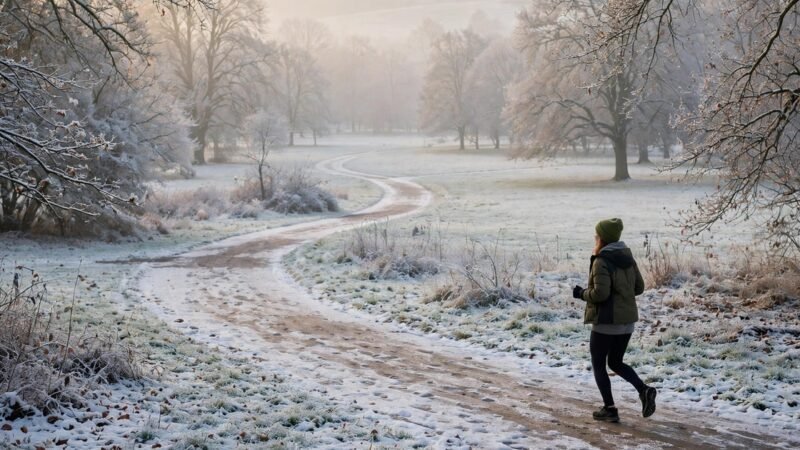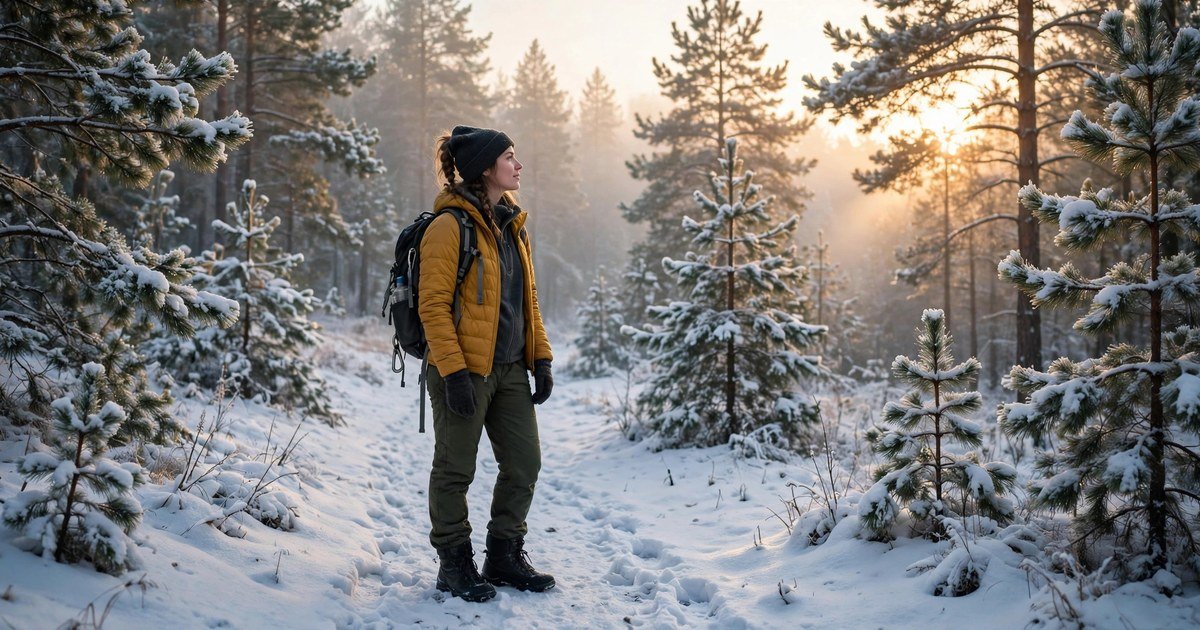
10 winter hiking tips for beginners can turn a cold, quiet trail into one of the best mornings of your winter. A first winter hike does not need fancy gear or a mountain summit, just warm layers, steady footing, and a simple plan. This guide walks you through all three, step by step.
The 10 winter hiking tips for beginners in this guide are written for someone who has hiked in summer and wants to try snow for the first time. Nothing here asks you to climb a peak or cross a glacier. Each tip keeps you warm, safe, and comfortable on a short, easy trail close to home.
Each tip below tells you what it is, who it suits, how to do it, a pro tip, and a mistake to avoid. The 10 winter hiking tips for beginners here cover the trail, the layers, the boots, the footing, the daylight, and the safety habits that matter most. Read them in order, pack your bag the night before, and enjoy the quiet of a snowy forest.
Table of Contents
Why Your First Winter Hike Feels Different
A winter trail looks the same as a summer trail on a map, but it feels very different under your feet. Snow hides rocks and roots, ice turns a gentle slope into a slide, and the cold changes how fast you tire. The 10 winter hiking tips for beginners in this guide start with that simple truth, and they build every habit around it.
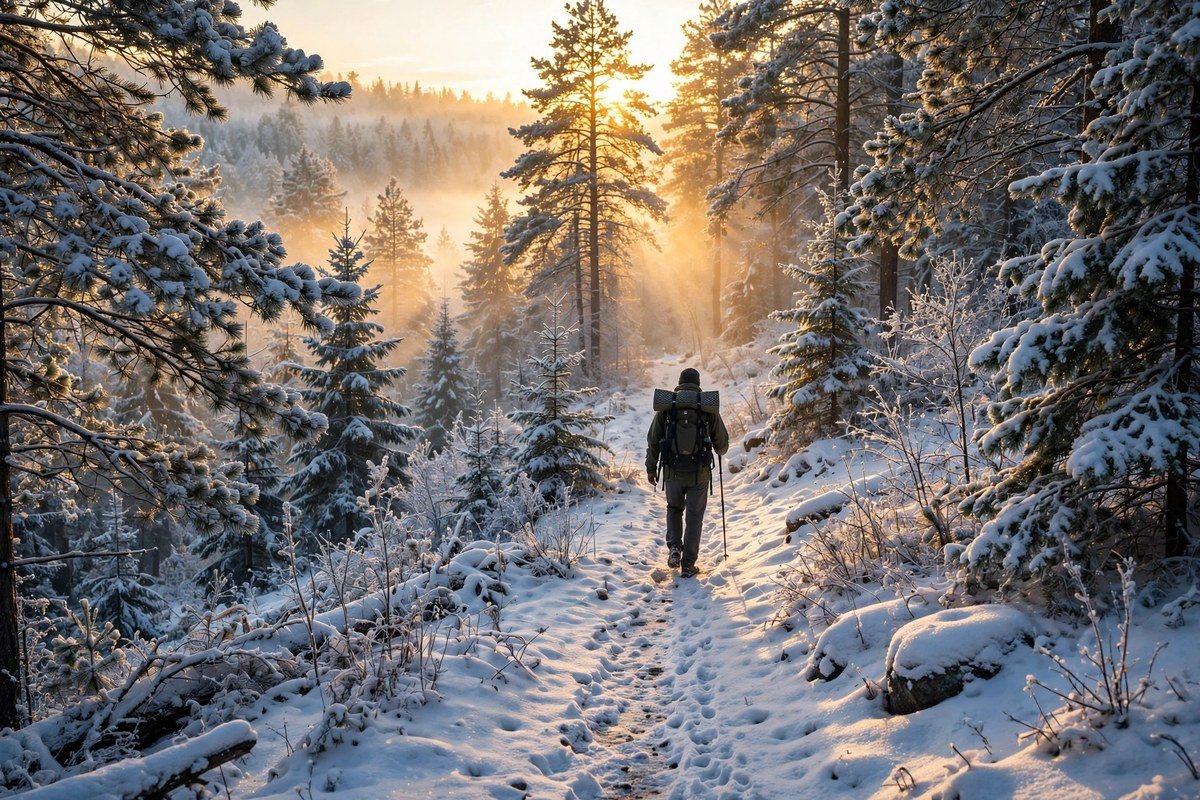
Cold air also changes how your body works. You burn more energy staying warm, you feel less thirsty even when you need water, and your fingers and toes cool down fast when you stop moving. A short winter hike can feel like a much longer summer walk, so a slow pace and regular snacks are part of the plan, not a sign of weakness.
Daylight is the other big change. In midwinter the sun sets early, and a trail that takes two hours in July can take three in January, because snow slows every step. If you love moving outside in the cold months, these winter running tips for beginners share the same cold-weather habits, from layering to warming up slowly. The 10 winter hiking tips for beginners here are written for that shorter, slower day, so you finish with daylight to spare.
The good news is that winter hiking rewards you right away. Trails are quiet, the air is crisp, and snow turns an ordinary forest into something calm and bright. With the right layers and a simple plan, and the 10 winter hiking tips for beginners as your checklist, your first winter hike can feel safe, warm, and surprisingly easy.
How to Dress and Pack for a Winter Hike
Dressing for a winter hike is a system, not a single heavy coat. Three thin layers trap warm air better than one thick jacket, and they let you adjust as you warm up or cool down. The 10 winter hiking tips for beginners in this guide use the same three-layer system for every hike, so you can pack it once and reuse it all winter.
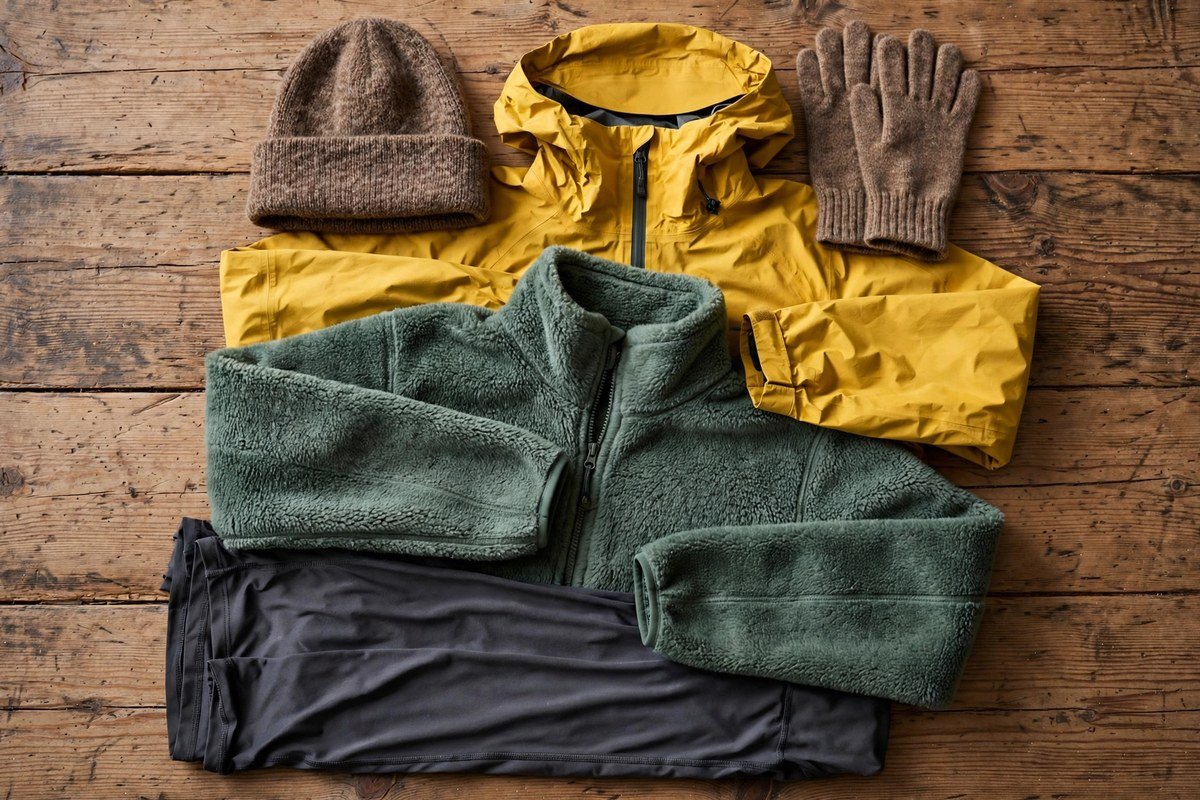
Start with a base layer that moves sweat away from your skin, add a warm middle layer such as fleece or wool, and finish with a waterproof shell that blocks wind and snow. Avoid cotton next to your skin, since cotton stays wet and cold once you sweat. The REI cold-weather hiking tips explain the same three-part layering system, and they are worth a quick read before you buy anything new.
Pack like you might stay out longer than planned. A small daypack with water, snacks, a warm hat, gloves, a headlamp, and a simple first aid kit covers most surprises on a short trail.
If you want stronger legs before your first snowy walk, these beginner indoor winter workouts build the balance and stamina a winter trail asks for. The 10 winter hiking tips for beginners here assume a short, easy trail, so the pack stays light and the walk stays fun.
Check the forecast the night before and again in the morning, and look at the trail conditions for the park or forest you plan to visit. If the forecast mentions heavy snow, high wind, or a sharp drop in temperature, pick a shorter trail or another day. A good first hike is one you finish smiling, not one you push through.
10 Winter Hiking Tips for Beginners
Use this list as a checklist for your first snowy walk, not a test. Each tip below tells you what it is, who it suits, how to do it, a pro tip, and a mistake to avoid. The 10 winter hiking tips for beginners cover the trail, the layers, the boots, the footing, the daylight, and the safety habits, so every kind of first hike has a match.
Start with the simplest tip on the list, and build your winter habits one hike at a time. Most of the 10 winter hiking tips for beginners here cost nothing, and the ones that do need gear use items you will reuse all winter.
1. Start with a Trail You Already Know
What it is: A short, familiar summer trail walked in winter, so you already know the turns, the hills, and the way back. Nothing about the route surprises you except the snow.
Who it suits: This tip suits every first-time winter hiker, and it is one of the 10 winter hiking tips for beginners that matters most on day one.
How to do it: Pick a trail you have walked in summer that takes under two hours, with clear signs and easy parking. Walk it in winter the same way, at a slower pace, and turn back at the halfway point of your daylight.
Pro tip: Walk the trail once more in late autumn if you can, so the route is fresh in your memory before snow covers the markers.
Mistake to avoid: Do not pick a new trail in winter, since snow hides signs and landmarks and a wrong turn costs far more time in the cold.
2. Layer in Three (Base, Insulation, Shell)
What it is: A three-layer clothing system: a base layer that wicks sweat, a warm middle layer, and a waterproof shell that blocks wind and snow.
Who it suits: This tip suits anyone who runs cold or sweats easily, and it is one of the 10 winter hiking tips for beginners that keeps you warm without overheating.
How to do it: Put on a snug synthetic or wool base layer, add a fleece or insulated jacket, and carry a waterproof shell in your pack. Add or remove a layer whenever you feel sweaty or chilled, and stop to adjust before you get wet.
Pro tip: Start the hike feeling slightly cool, since you will warm up within ten minutes of walking and a cool start keeps sweat down.
Mistake to avoid: Do not wear cotton as a base layer, since cotton holds sweat against your skin and leaves you cold and damp.
3. Wear Waterproof, Insulated Boots
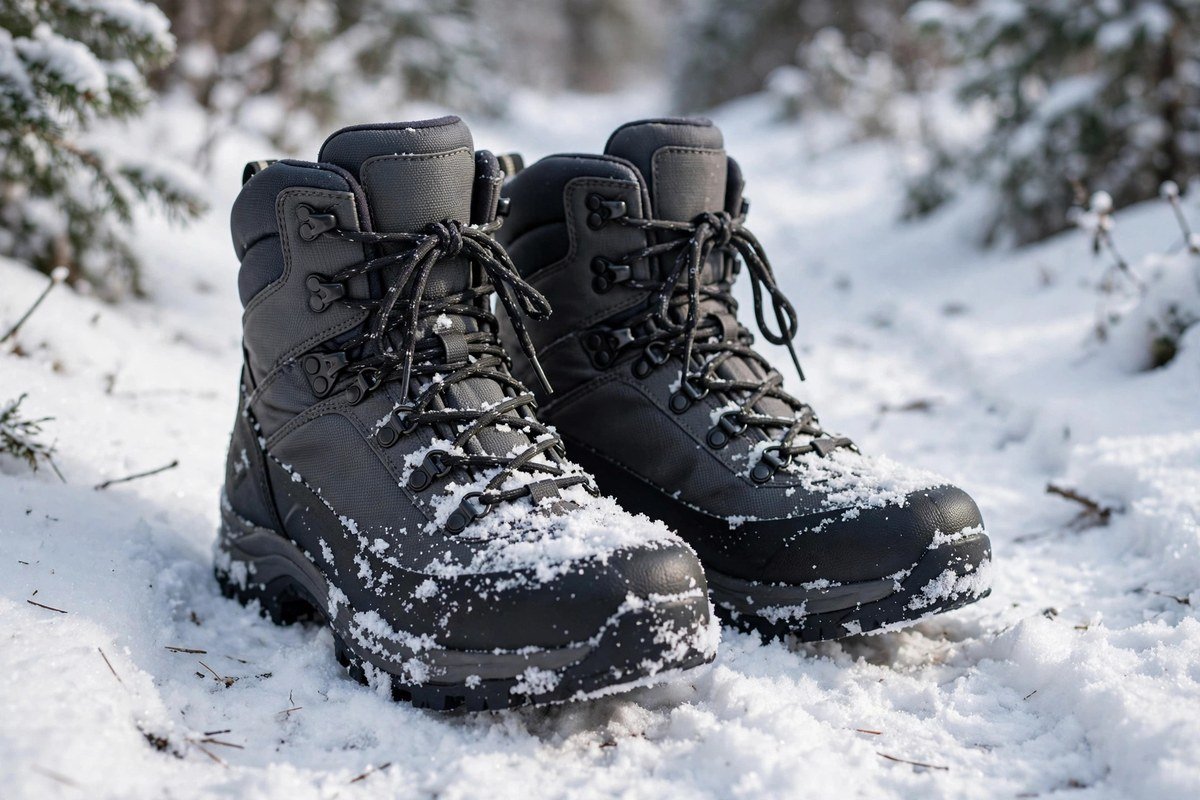
What it is: Sturdy boots with waterproof uppers and built-in insulation, worn with warm wool or synthetic socks, so your feet stay dry and warm in snow.
Who it suits: This tip suits anyone hiking in snow deeper than a dusting, and it is one of the 10 winter hiking tips for beginners that protects your feet all day.
How to do it: Choose boots that fit with thick socks, with room to wiggle your toes, and break them in on short walks before the hike. Add gaiters if the snow is deep, so snow stays out of the tops.
Pro tip: Carry a spare pair of dry socks in your pack, since dry socks can rescue a cold, damp hike in minutes.
Mistake to avoid: Do not wear summer hiking shoes or trainers in snow, since they soak through fast and leave your feet cold and numb.
4. Add Traction with Microspikes
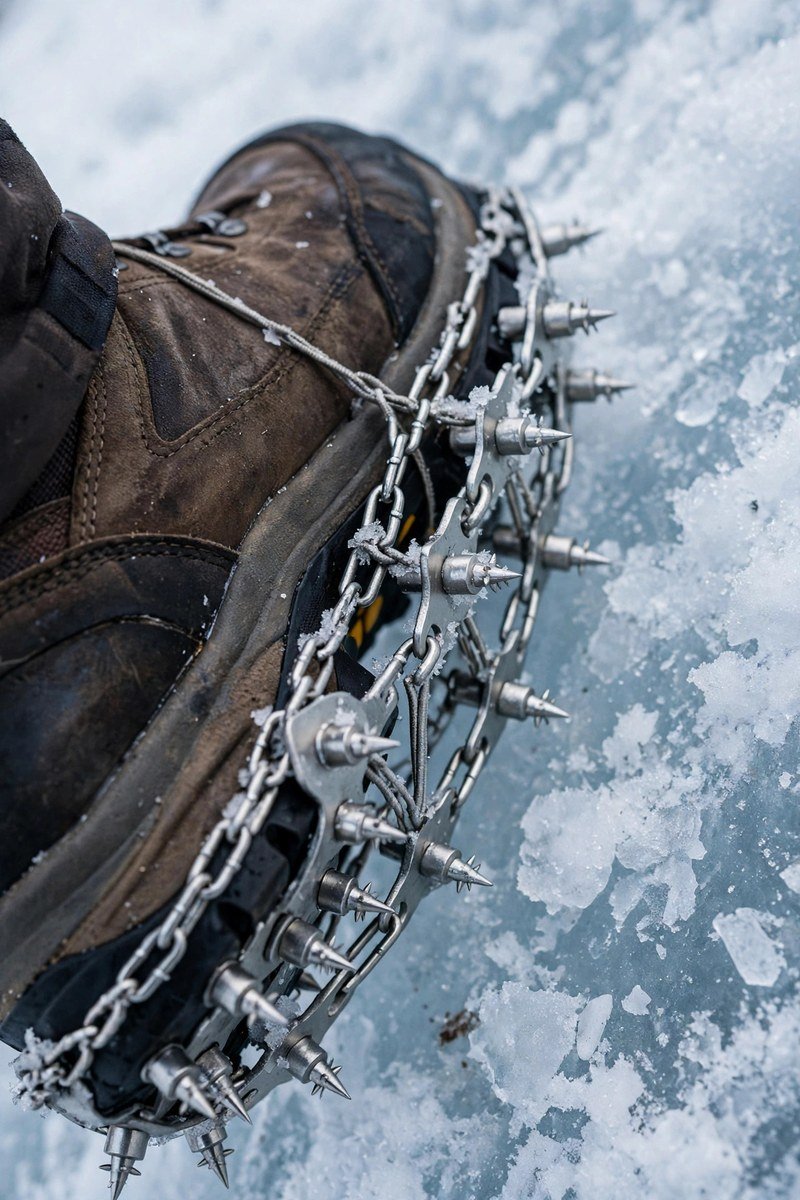
What it is: Lightweight chains with small metal spikes that stretch over your boots and grip ice and packed snow, so each step holds firm.
Who it suits: This tip suits anyone hiking on icy or well-trodden trails, and it is one of the 10 winter hiking tips for beginners that prevents the most common winter falls.
How to do it: Slip the microspikes over your boots before you reach the icy stretch, and take them off on bare rock or pavement so the spikes last longer. Walk with short, flat steps and plant your whole foot.
Pro tip: Practise putting them on at home first, since cold fingers and a windy trail make a first try much harder.
Mistake to avoid: Do not wait until you slip to put them on, since the first icy patch is often the one that catches you out.
5. Plan Around Short Daylight (Set a Turnaround Time)
What it is: A fixed turnaround time decided before you start, so you are back at the car with daylight to spare, even if the trail tempts you onward.
Who it suits: This tip suits every winter hiker, and it is one of the 10 winter hiking tips for beginners that keeps a short hike from becoming a dark one.
How to do it: Check the sunset time before you leave, subtract your walking time plus an hour of buffer, and set that as your turnaround time. When the time comes, turn back even if the view ahead looks inviting.
Pro tip: Write the turnaround time on a small card in your pocket, so you do not have to do the maths on a cold, windy trail.
Mistake to avoid: Do not trust your sense of time in the snow, since winter light fades fast and a trail that felt short on the way out feels much longer on the way back.
6. Pack a Small Safety Kit
What it is: A light kit in your daypack with a headlamp, a whistle, a basic first aid kit, a foil blanket, and a fully charged phone, so a small problem stays small.
Who it suits: This tip suits solo hikers most of all, and it is one of the 10 winter hiking tips for beginners that turns a worry into a backup plan.
How to do it: Pack the kit the night before and check the headlamp batteries before you leave. Keep the whistle and phone where you can reach them without taking your pack off.
Pro tip: Add a paper map of the trail, since a phone screen is hard to read with gloves and cold can drain a battery fast.
Mistake to avoid: Do not leave the kit in the car to save weight, since the kit only helps if it is on your back when you need it.
7. Eat and Drink More Than in Summer
What it is: Regular snacks and sips through the whole hike, because cold weather hides thirst and your body burns extra fuel just staying warm.
Who it suits: This tip suits anyone who skips meals on the trail, and it is one of the 10 winter hiking tips for beginners that keeps your energy steady.
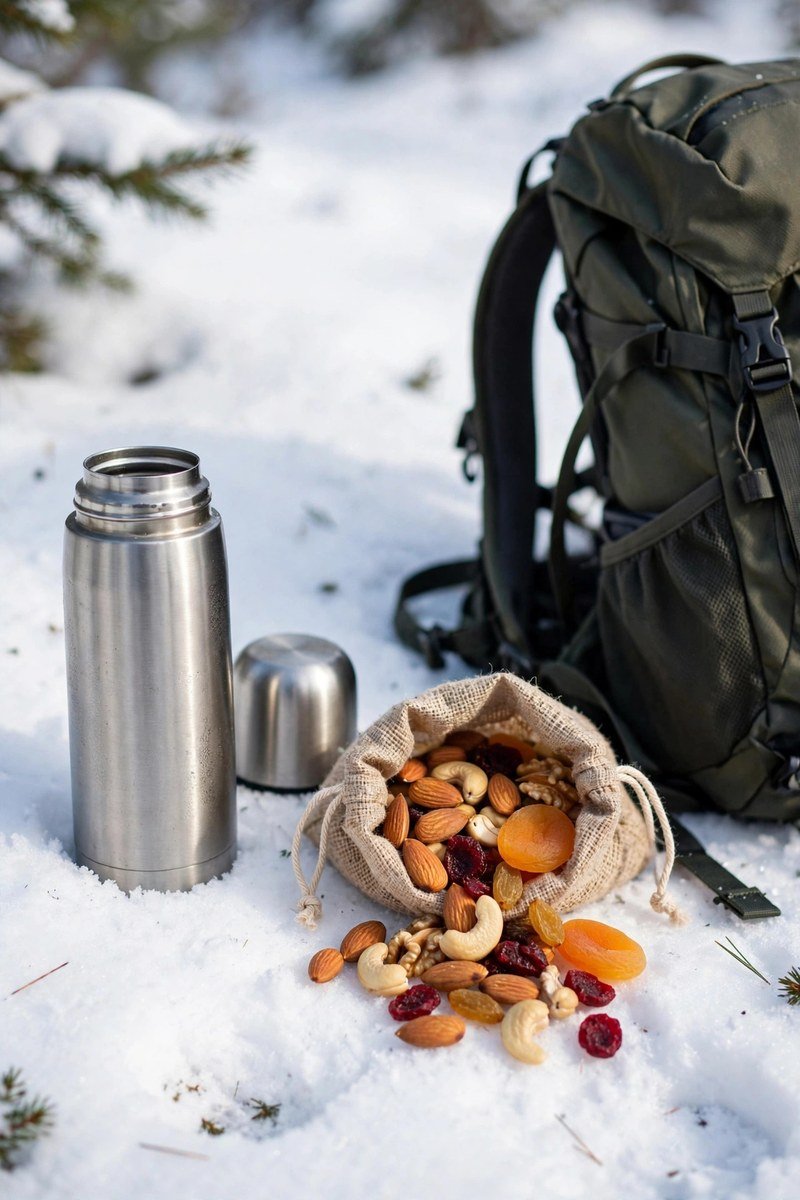
How to do it: Eat a good breakfast before you leave, then snack every hour on nuts, dried fruit, cheese, or an energy bar. Sip water often, even when you do not feel thirsty, and carry a warm drink in a flask for the halfway stop.
Pro tip: Keep snacks in a pocket close to your body, since a bar kept warm stays soft and easy to eat in the cold.
Mistake to avoid: Do not wait until you feel hungry or thirsty, since cold dulls both signals and by then your energy has already dipped.
8. Keep Your Phone and Batteries Warm
What it is: A habit of keeping your phone, spare batteries, and headlamp close to your body, so the cold does not drain them when you need them most.
Who it suits: This tip suits anyone who relies on a phone for maps or photos, and it is one of the 10 winter hiking tips for beginners that protects your backup plan.
How to do it: Carry your phone in an inside pocket against your body, and keep spare batteries in a warm pocket too. If the phone gets cold and shuts down, warm it in your hands or a pocket for a few minutes before switching it on again.
Pro tip: Take your photos quickly and put the phone away again, since a phone held out in cold wind loses charge far faster than one kept warm.
Mistake to avoid: Do not keep your phone in an outer pack pocket, since it will cool down fast and may switch off just when you need the map.
9. Tell Someone Your Plan
What it is: A simple message to a friend or family member with your trail, your start time, and the time you expect to be back, so someone knows where you are.
Who it suits: This tip suits every hiker, solo or in a group, and it is one of the 10 winter hiking tips for beginners that costs nothing and matters most.
How to do it: Before you leave, send a short message with the trail name, the car park, and your expected return time. Text again when you are back at the car. The National Park Service winter hiking tips make the same point, and they remind hikers to discuss plans with family, friends, and park staff before heading out.
Pro tip: Leave a note in your car too, with the trail and your return time, so anyone passing by can see where you went.
Mistake to avoid: Do not change your trail at the last minute without telling anyone, since a rescue starts with the plan you shared.
10. Know When to Turn Around
What it is: A clear decision, made before you start, to turn back if the weather changes, the trail disappears, or you feel cold, tired, or unsure.
Who it suits: This tip suits every beginner, and it is one of the 10 winter hiking tips for beginners that keeps a good day good.
How to do it: Before you start, agree with yourself that heavy snow, rising wind, fading light, or numb fingers all mean turn back. Check the forecast and the avalanche conditions for your area where relevant, and trust your gut when something feels wrong.
Pro tip: Treat turning around as a win, not a failure, since the trail will still be there next weekend and a safe return is the whole point.
Mistake to avoid: Do not push on because you have already walked a long way, since the hardest part of a winter hike is often the walk back.
A Simple Plan for Your First Winter Hike
A first winter hike goes best with a plan written down the night before. Pick a short, familiar trail, check the forecast and the trail conditions, and set your turnaround time before you leave the house. The 10 winter hiking tips for beginners above are the checklist, and this plan is how you use it.
Lay out your layers, boots, socks, and safety kit the night before, so the morning stays calm. Charge your phone and headlamp, fill your water bottle, and pack snacks and a warm drink. The 10 winter hiking tips for beginners in this guide work best when the bag is packed the night before, and a relaxed start means a better hike.
On the morning of the hike, eat a good breakfast, check the forecast once more, and send your plan to a friend. Walk slowly for the first ten minutes while your body warms up, then settle into a steady pace. If you want to build walking stamina before the weekend, these indoor walking workouts for 10000 steps are an easy way to train at home. Stop often for water and snacks, and enjoy the quiet.
At your turnaround time, head back, even if the trail ahead looks tempting. Back at the car, change into dry socks, drink something warm, and text your friend that you are safe. Then write down what worked and what you would change, so your second winter hike is even better.
Frequently Asked Questions About 10 Winter Hiking Tips for Beginners
The 10 winter hiking tips for beginners above cover the trail, the layers, the boots, and the safety habits, so here are answers to the questions new winter hikers ask most often. If you are planning your very first snowy walk, start with tip one and tip two, since a familiar trail and warm layers solve most first-timer worries.
What should a beginner wear for a winter hike?
Three layers: a moisture-wicking base layer, a warm middle layer, and a waterproof shell. Add a warm hat, gloves, and waterproof insulated boots with wool socks. The 10 winter hiking tips for beginners in this guide use that system because it keeps you warm without overheating, and you can adjust a layer whenever the trail or the weather changes.
Avoid cotton next to your skin, and carry a spare pair of dry socks. If you run cold, add a second thin base layer rather than one very thick coat.
Do I need microspikes for my first winter hike?
Not always, but they are one of the cheapest ways to stay safe on ice. If your trail is flat, well-trodden, and free of ice, good boots may be enough. If the trail has icy patches, frozen puddles, or packed snow, microspikes grip where boots slip. Try them on a short local walk first, so you know how they feel before a real hike.
How long should a first winter hike be?
Keep it short, around one to two hours of walking, on a trail you already know. Winter walking is slower than summer walking, and the cold takes more energy, so a short hike still feels like a full morning out. Set a turnaround time before you start, and build up to longer hikes over a few weekends.
What do the 10 winter hiking tips for beginners say about food and drink?
Eat more than you would in summer, and drink even when you do not feel thirsty. Pack nuts, dried fruit, cheese, and a warm drink in a flask, and snack every hour. For more ideas on staying hydrated in the cold, these winter hydration tips for better energy explain how to drink enough when the cold hides your thirst. The 10 winter hiking tips for beginners here treat food and water as fuel for warmth, not just hunger.
Is it safe to hike alone in winter?
A short, familiar trail in settled weather can be fine alone, as long as someone knows your plan and your return time. Tell a friend where you are going, carry a charged phone and a headlamp, and turn around early if anything changes. If the forecast is uncertain or the trail is remote, hike with a friend instead. When in doubt, pick the easier trail.
10 Winter Hiking Tips for Beginners to Try This Weekend
The 10 winter hiking tips for beginners in this guide prove that a first winter hike can feel safe, warm, and easy. A familiar trail, three warm layers, steady boots, and a simple plan are enough to enjoy the quiet of a snowy forest.
Pick a trail you already know, pack your bag tonight, and set a turnaround time before you leave. The 10 winter hiking tips for beginners here are written to be used, not just read, so take them with you on your first snowy walk.
Then keep exploring the guides on Well Fit Look for more gentle, practical ideas for staying active and warm all winter long.